
Loading, please wait...

LOT 0897
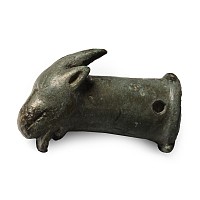
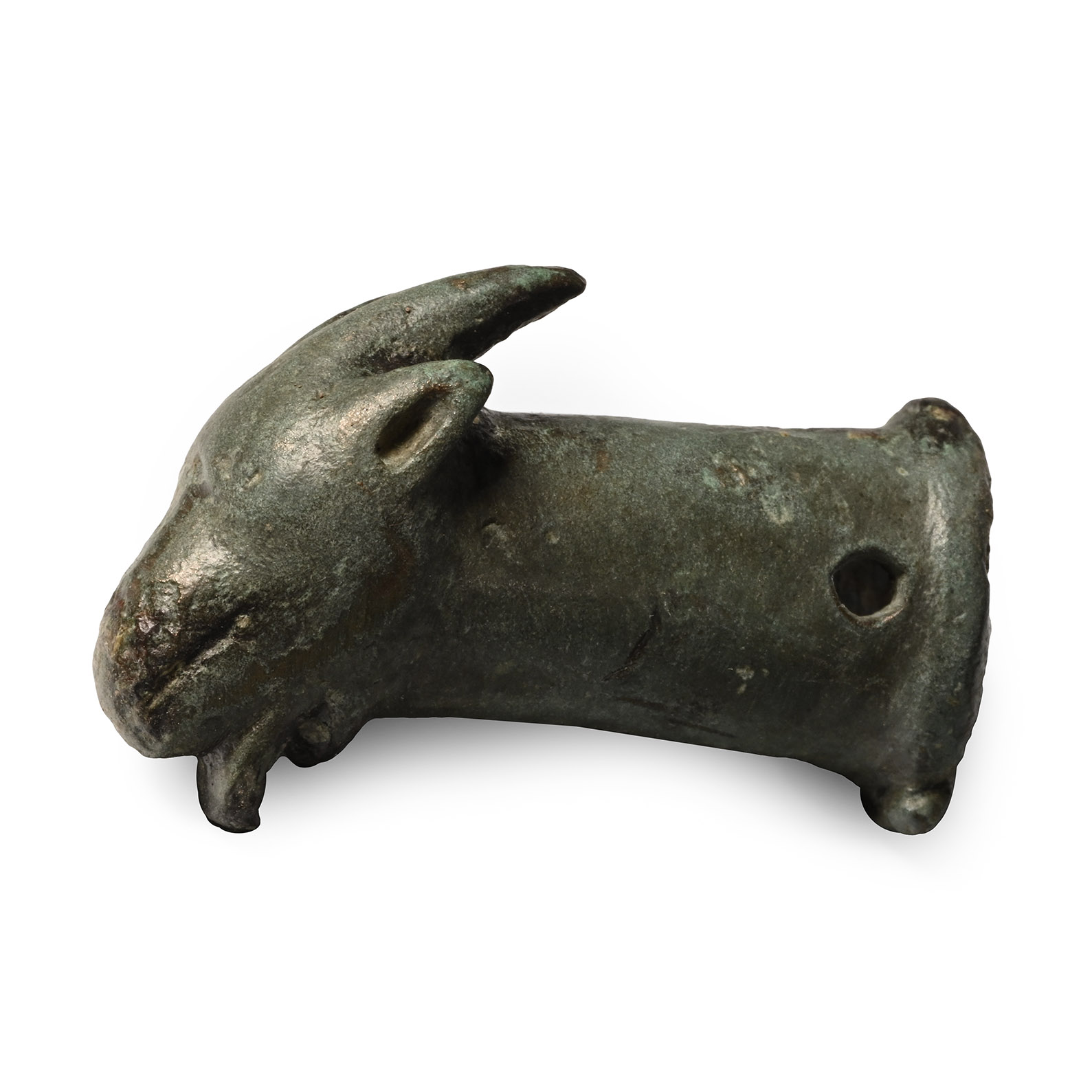
Roman Bronze Ram's Head Terminal
2ND-3RD CENTURY A.D.
1 3/4 in. (43.1 grams, 44 mm).
Hollow-formed with ribbed mouth to the socket. ram-head finial with swept horns, pierced to accept an attachment stud.
ProvenanceEx German art market, 2000s.
Acquired from an EU collector living in London.
From the collection of Surrey, UK, gentleman.
TimeLine Auctions follows a vetting process to ensure the authenticity and legality of all items, reinforcing our commitment to integrity and responsible trading. Each antiquity, antique, and coin lot undergoes thorough examination by a vetting committee of at least ten external specialists, professional trade association members, scientists, and archaeologists: Our Vetting Process
AUCTIONS:
TimeLine is a leading auction house specialising in antiquities, ancient art, collectables, natural history, coins, medals, and books. Our auctions offer museums, collectors, historians, and enthusiasts the opportunity to acquire unique and historically significant pieces.
-
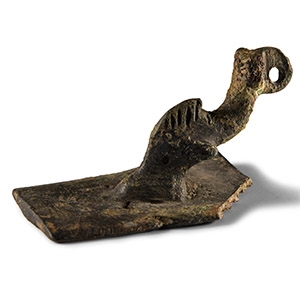
Roman Bronze Mount with Dolphin
1st-3rd century A.D.Estimate: £180 - 240 (‡+bp*)
Opening Bid: £90
Fragment of a vessel with integral dolphin modelled in the round with hatched fins, pellet eyes, looped tail for attachment of a cord or light chain. 94 grams, 72 mm
Acquired in Europe in 1990. European private collection. -
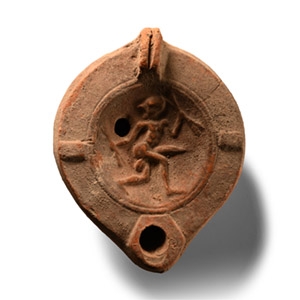
Roman Terracotta Oil Lamp with Ithyphallic Entertainer
2nd-3rd century A.D.Sold for (Inc. bp): £468
With lug handle and short nozzle, low-relief scene of a nude dancer running brandishing batons. 72 grams, 87 mm
From a London collection of erotica, formerly in the collection of the late Mr S.M., London, UK. -
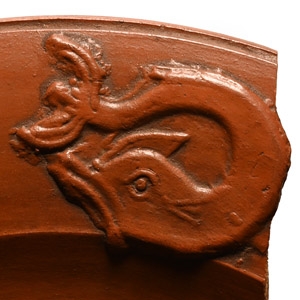
Roman Redware Plate Sherd with Dolphin
4th-5th century A.D.Sold for (Inc. bp): £124
Section of the rim with carination below, high-relief dolphin with its tail curled over above its head. 77 grams, 13 cm
From the collection of a late East Anglian teacher and antiquarian who retired to the Isle of Wight in Hampshire, UK. He amassed a large collection of objects between the 1960s-1980s.
