
Loading, please wait...
LOT 0669
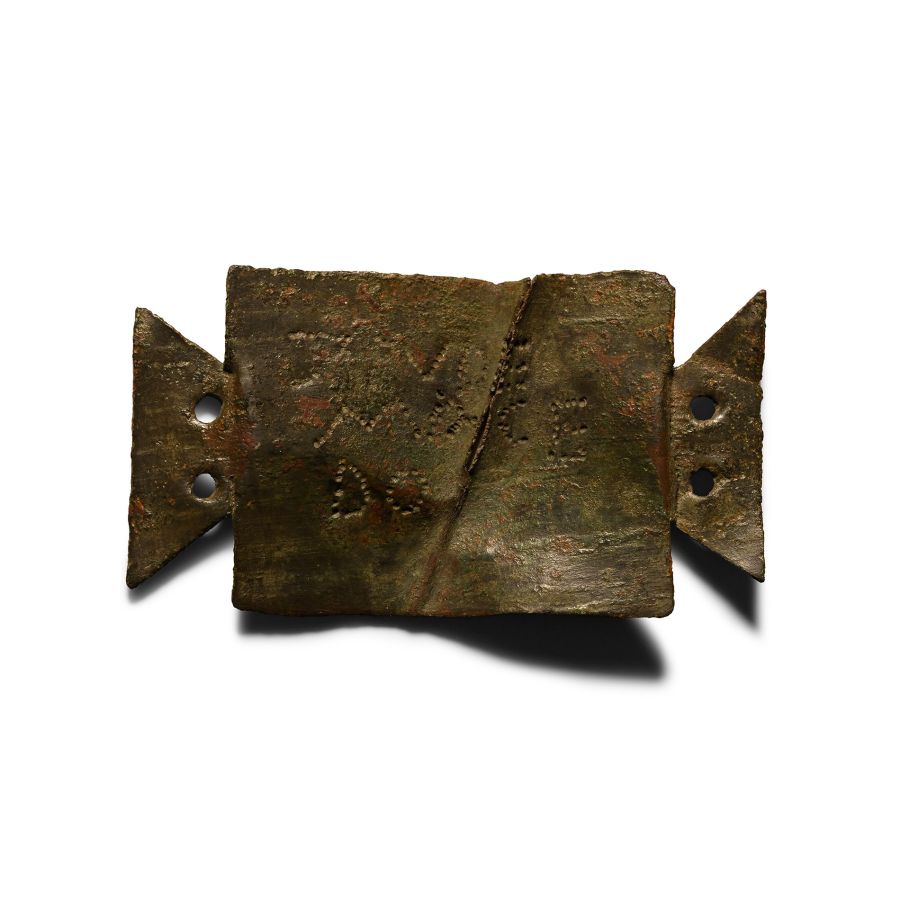
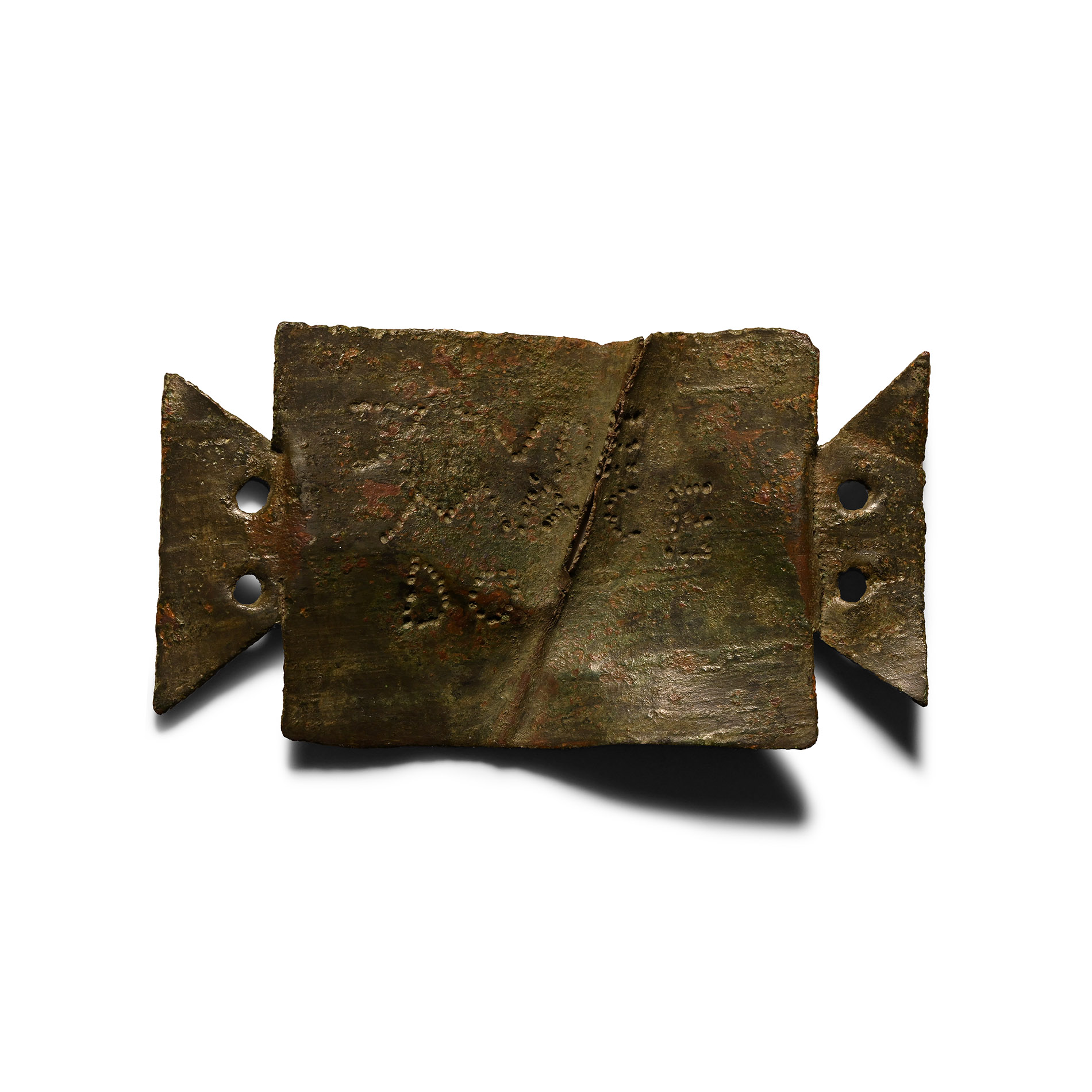
Roman Bronze Punched Tabula Ansata for Titus of Legio V Macedonica
2ND-3RD CENTURY A.D.
2 1/8 in. (5.56 grams, 54 mm).
Sheet bronze appliqué with lateral tabs pierced for attachment, pointillé legend 'T[I] V LE[GIO] / MACE / DO [NICA]' translating to: Titus, member of the Legio V Macedonica.
ProvenanceEx British private collection, acquired 1980s.
with Art Ancient, 2016.
Property of a North London collector.
Cf. Beutler, F. et al., Der Adler Roms. Carnuntum und die Armee der Cäsaren, Bad-Deutsch-Altenburg, 2017, item 68, for a tabula ansata in similar style.
FootnotesThese tabulae ansatae with pointillé decoration were used for votive inscriptions to the gods, offered on the occasion of a vow made during a situation of danger or an invocation of help to the gods. They were often used in the military field, as appliques to indicate the ownership of the weapons. A particularly important example is the one found in Carnuntum dedicated to Jupiter Dolichenus, offered by the centurion Titius Moderatus of the Legio XI Gemina. In our case the inscription could refer to a certain Titus, member of the Legio V Macedonica.
CONDITIONTimeLine Auctions follows a vetting process to ensure the authenticity and legality of all items, reinforcing our commitment to integrity and responsible trading. Each antiquity, antique, and coin lot undergoes thorough examination by a vetting committee of at least ten external specialists, professional trade association members, scientists, and archaeologists: Our Vetting Process
AUCTIONS:
TimeLine is a leading auction house specialising in antiquities, ancient art, collectables, natural history, coins, medals, and books. Our auctions offer museums, collectors, historians, and enthusiasts the opportunity to acquire unique and historically significant pieces.
LOT 0669
Roman Bronze Punched Tabula Ansata for Titus of Legio V Macedonica
Sold for (Inc. bp): £780
-
.jpg)
Roman Bronze Ring with Mythical Animal
1st-3rd century A.D.Sold for (Inc. bp): £130
With pointillé design to each shoulder and rim of bezel, low-relief long-necked zoomorph with tail raised; provincial workmanship. 6.39 grams, 25.60 mm overall, 20.93 mm internal diameter (approximate size British S 1/2, USA 9 1/4, Europe 20.63, Japan 19)
Ex German art market, 2000s. Acquired from an EU collector living in London. From the collection of Surrey, UK, gentleman. -
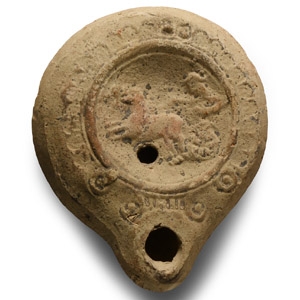
Roman Terracotta Oil Lamp with Charioteer
2nd century A.D.Sold for (Inc. bp): £104
Squat lamp with broad discus displaying stamped scrolls and leaf-motifs, central low-relief biga with traces of red pigment; stub nozzle. 45 grams, 82 mm
Acquired in the 1970s. From the private collection of a retired East Anglian teacher. -
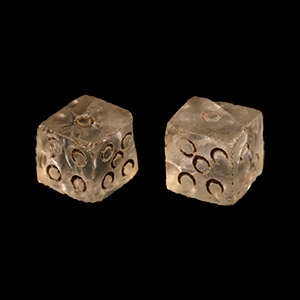
Roman Rock Crystal Gaming Dice Pair
1st-2nd century A.D.Sold for (Inc. bp): £312
Comprising two miniature dice with annulet markings arranged 1:6, 2:4, 3:5. 0.95 grams total, 5-6 mm
Ex German art market, 2000s. Acquired from an EU collector living in London. From the collection of Surrey, UK, gentleman.
