
Loading, please wait...
LOT 0149
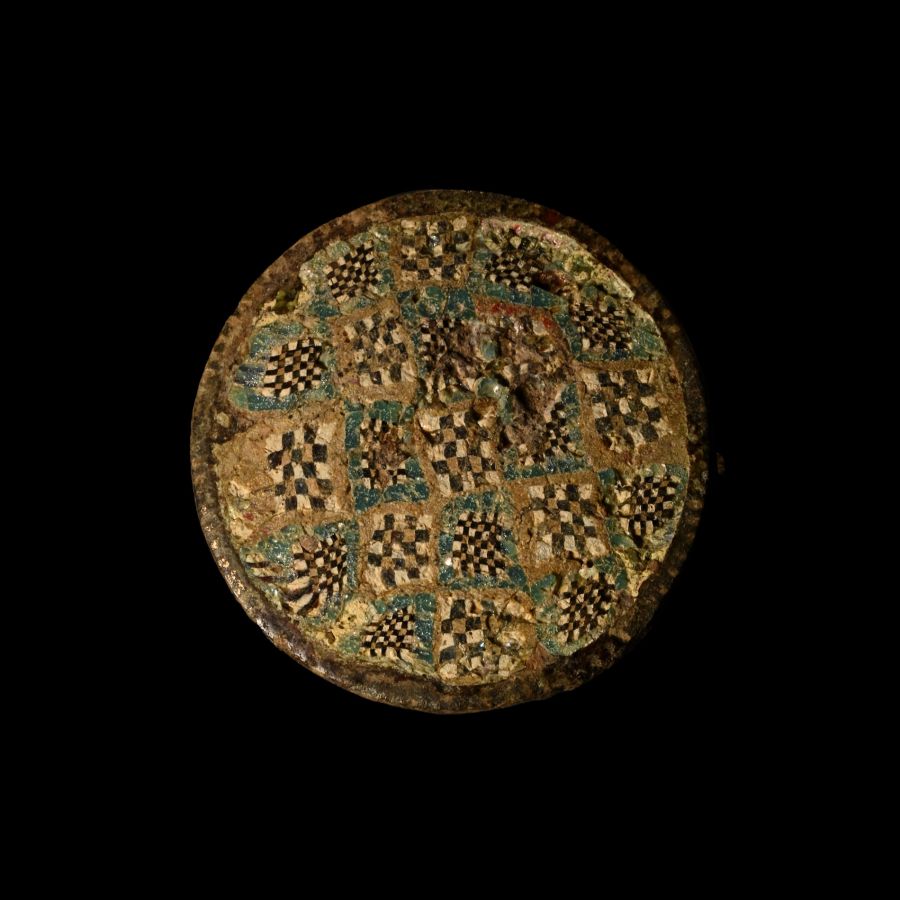
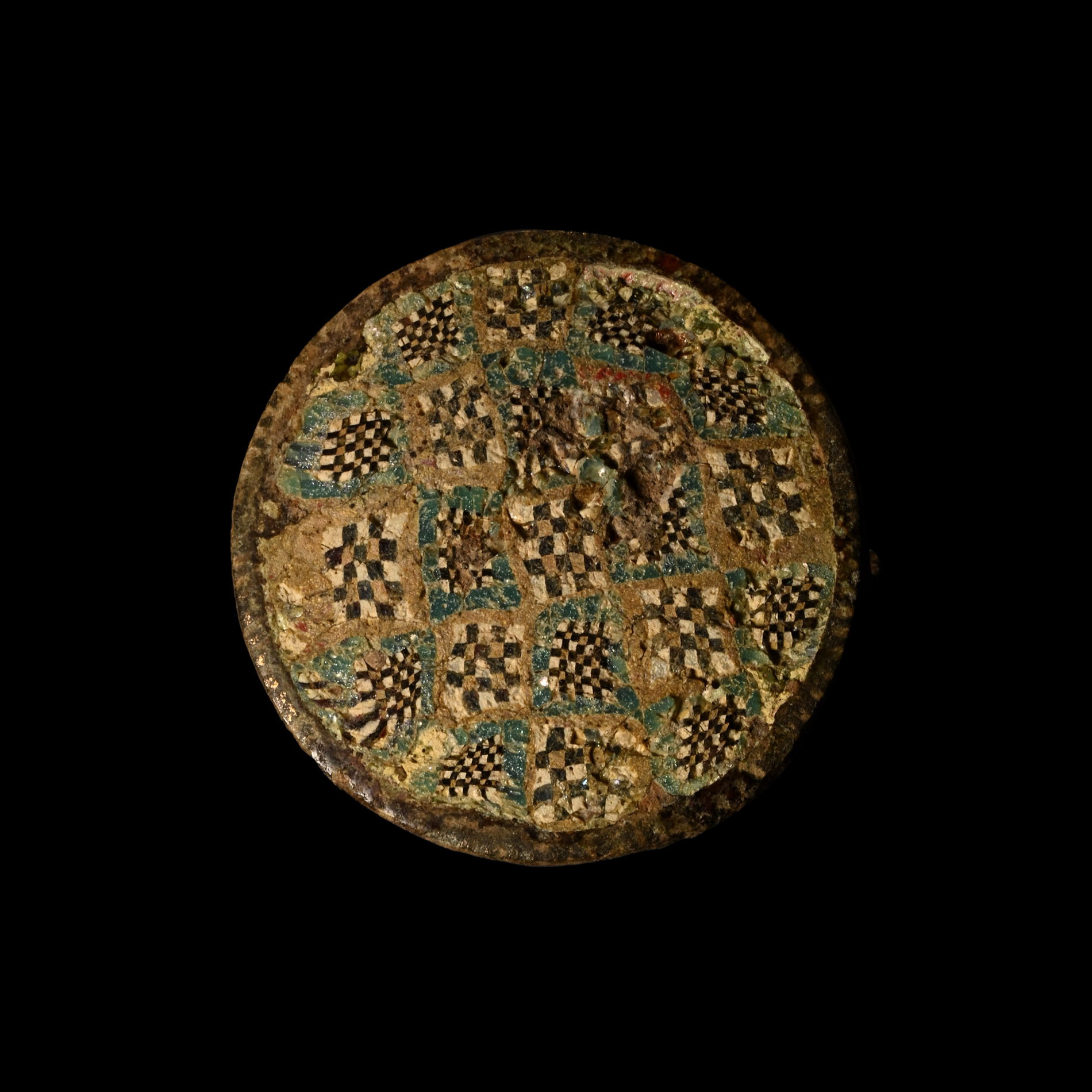
Roman Bronze Plate Brooch
2ND CENTURY A.D.
1 in. (5.61 grams, 24 mm).
Comprising a discoid plaque and hinged S-curved pin to the reverse, the obverse with a millefiori glass insert.
ProvenanceAcquired in the mid 1980s-1990s.
From the family collection of Mr S.A., Switzerland, thence by descent.
Private collection since the late 1990s.
Cf. Hattatt, R., Iron Age and Roman Brooches, Oxford, 1985, item 523.
CONDITIONTimeLine Auctions follows a vetting process to ensure the authenticity and legality of all items, reinforcing our commitment to integrity and responsible trading. Each antiquity, antique, and coin lot undergoes thorough examination by a vetting committee of at least ten external specialists, professional trade association members, scientists, and archaeologists: Our Vetting Process
AUCTIONS:
TimeLine is a leading auction house specialising in antiquities, ancient art, collectables, natural history, coins, medals, and books. Our auctions offer museums, collectors, historians, and enthusiasts the opportunity to acquire unique and historically significant pieces.
LOT 0149
Roman Bronze Plate Brooch
Estimate £600 - 800€700 - 930 (for guidance only)$810 - 1,080 (for guidance only)
-
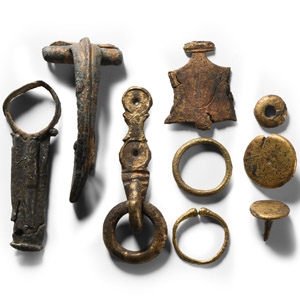
Roman Bronze Artefact Group
Circa 1st century A.D.Sold for (Inc. bp): £52
Including a military belt plate and suspension ring, a penannular finger ring, a Polden Hill type bow brooch and other items. 75 grams total, 12-69 mm
Found City of London, UK. Acquired from mudlark Steve Brooker in the early 2000s. Ian Wilkinson collection, Nottinghamshire, UK, formed since 1985. -
.jpg)
Roman Bronze Ring with Mythical Animal
1st-3rd century A.D.Sold for (Inc. bp): £130
With pointillé design to each shoulder and rim of bezel, low-relief long-necked zoomorph with tail raised; provincial workmanship. 6.39 grams, 25.60 mm overall, 20.93 mm internal diameter (approximate size British S 1/2, USA 9 1/4, Europe 20.63, Japan 19)
Ex German art market, 2000s. Acquired from an EU collector living in London. From the collection of Surrey, UK, gentleman. -
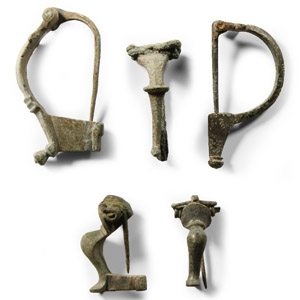
Roman Bronze Bow Brooch Collection
1st-4th century A.D.Sold for (Inc. bp): £195
Including knee, P-shaped and other types. 67 grams total, 35-59 mm
Ex German art market, 2000s. Acquired from an EU collector living in London. From the collection of Surrey, UK, gentleman.
