
Loading, please wait...
LOT 0761
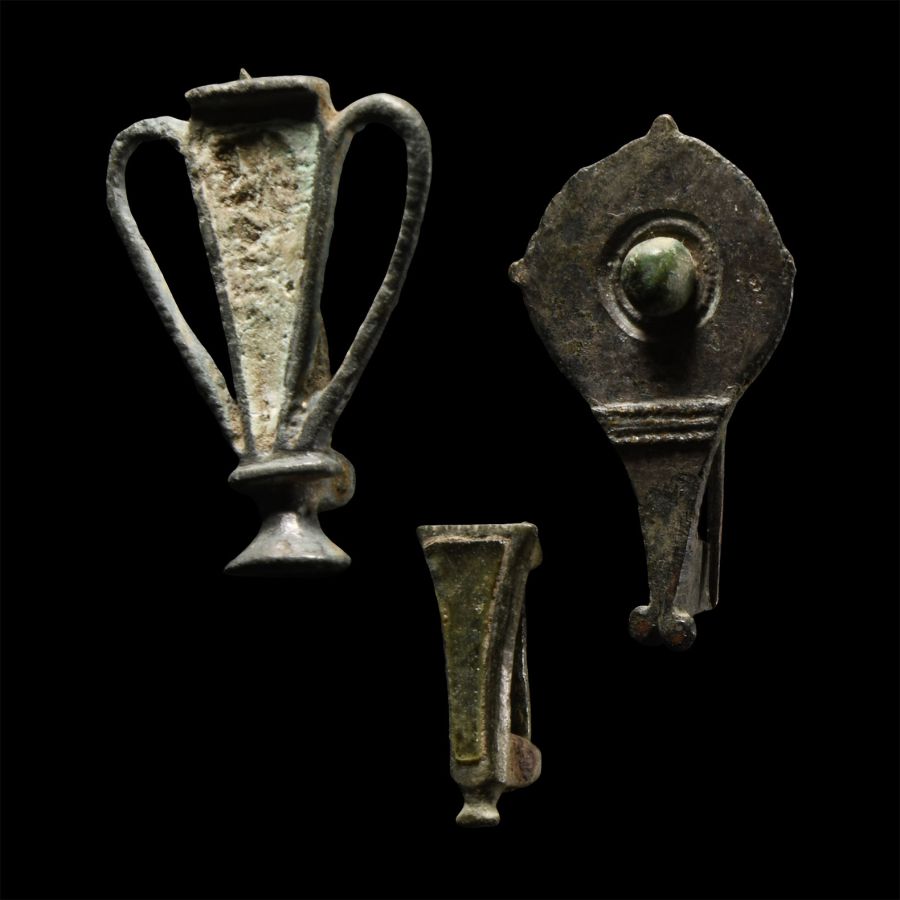
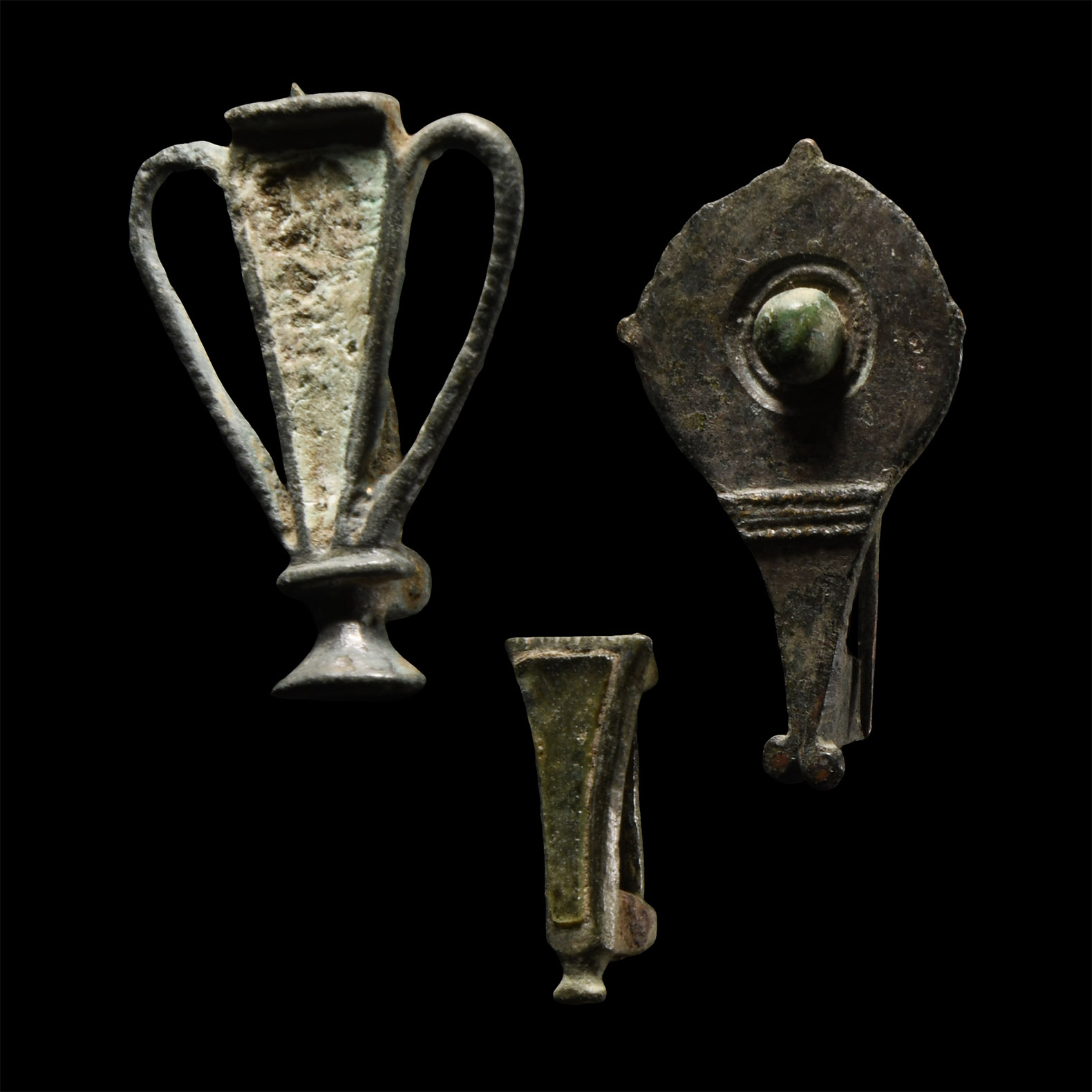
Roman Bronze Plate Brooch Colection
2ND CENTURY A.D.
7/8 - 1 1/2 in. (12 grams total, 22-38 mm).
One tinned with central boss; one bell-shaped with glass inlay; another shaped as an amphora with remains of enamelling. [3, No Reserve]
ProvenanceEx property of an Austrian private collector since the 1970s.
CONDITIONTimeLine Auctions follows a vetting process to ensure the authenticity and legality of all items, reinforcing our commitment to integrity and responsible trading. Each antiquity, antique, and coin lot undergoes thorough examination by a vetting committee of at least ten external specialists, professional trade association members, scientists, and archaeologists: Our Vetting Process
AUCTIONS:
TimeLine is a leading auction house specialising in antiquities, ancient art, collectables, natural history, coins, medals, and books. Our auctions offer museums, collectors, historians, and enthusiasts the opportunity to acquire unique and historically significant pieces.
-
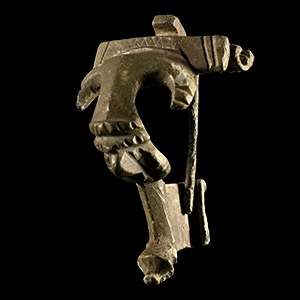
Roman Bronze Bow Brooch
1st-3rd century A.D.Sold for (Inc. bp): £78
Of kräftig profilierte 'anchor' type, with a broad plaque in front of the spring and pin, trumpet-type bow; broad footplate with catch to the rear. 23 grams, 45 mm
Property of a gentleman from Vienna; from his private collection formed since 1970. -
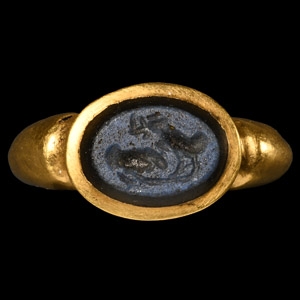
Roman Gold Ring with Pair of Birds on Nicolo Gemstone
2nd-3rd century A.D.Estimate: £1,500 - 2,000 (+bp*)
Opening Bid: £800
With a hollow-form hoop expanding at the shoulders, raised bezel set with a dark blue nicolo intaglio engraved with a pair of birds, one standing and the other stooped to pick something from the ground with its beak. 5.75 grams, 25.12 mm overall, 14.69 x 18.30 mm internal diameter (approximate size British J, USA 4 3/4, Europe 8.69, Japan 8)
From the collection of late AB, London, UK, 1990s. Accompanied by a previous catalogue information slip.
The type of ring (type II, variant I of Ruseva-Slokoska classification) is characterised by the ellipsoid hoop, rounded on the outside, widening to a horizontal triangular shape. The nicolo was often employed in rings of the 2nd-3rd century A.D. -
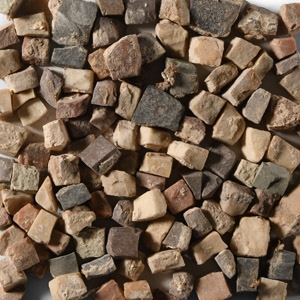
Roman Mosaic Stone Tesserae Group
1st-4th century A.D.Estimate: £120 - 170 (+bp*)
Opening Bid: £65
A mixed group of over hundred single tesserae of various colours and sizes. 76 grams total, 6-14 mm
Acquired 1980-2015. Ex Abelita family collection.
