
Loading, please wait...
LOT 0164
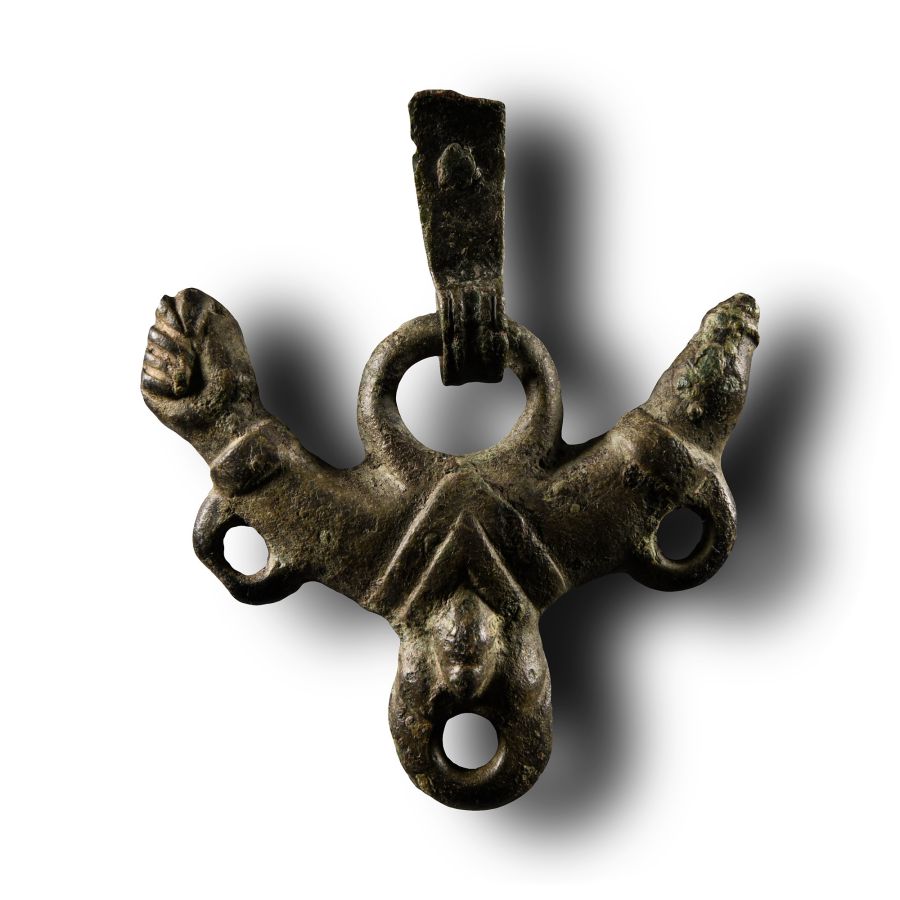
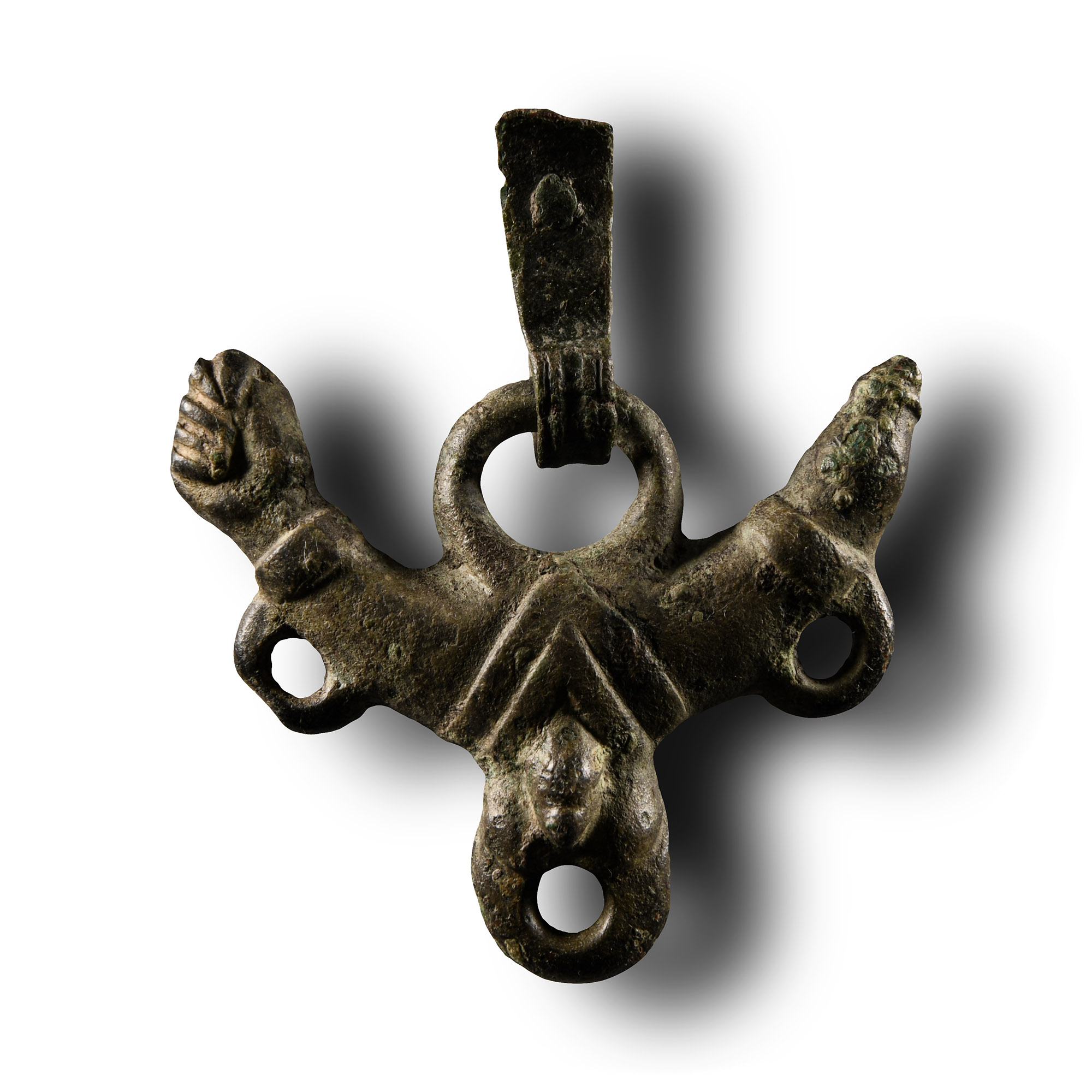
Roman Bronze Phallic Pendant
1ST-2ND CENTURY A.D.
2 5/8 in. (81.5 grams, 68 mm).
Amuletic fascinum formed as a crescent with phallus to the right, hand in the fica gesture to the left and male genitals below; each with a loop beneath for attachment of another pendant; large loop above and attachment strap with stud.
ProvenanceAcquired in Europe in 1990s.
European private collection.
Cf. Beutler, F. et al., Der Adler Roms. Carnuntum und der Armee der Cäsaren, Bad-Deutsch Altenberg, 2017, item 768, for type.
CONDITIONTimeLine Auctions follows a vetting process to ensure the authenticity and legality of all items, reinforcing our commitment to integrity and responsible trading. Each antiquity, antique, and coin lot undergoes thorough examination by a vetting committee of at least ten external specialists, professional trade association members, scientists, and archaeologists: Our Vetting Process
AUCTIONS:
TimeLine is a leading auction house specialising in antiquities, ancient art, collectables, natural history, coins, medals, and books. Our auctions offer museums, collectors, historians, and enthusiasts the opportunity to acquire unique and historically significant pieces.
LOT 0164
Roman Bronze Phallic Pendant
Estimate £800 - 1,000€930 - 1,160 (for guidance only)$1,080 - 1,350 (for guidance only)
-
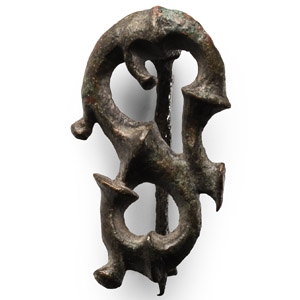
Roman Silver Trumpet Whorl Brooch
2nd-4th century A.D.Sold for (Inc. bp): £234
Plate brooch formed as an S-shaped La Tène scroll with trumpet and bulb detailing, catch and pin to the reverse. 10 grams, 39 mm
Acquired in the mid 1980s-1990s. Private collection, Switzerland, thence by descent. Private collection, since the late-1990s. -
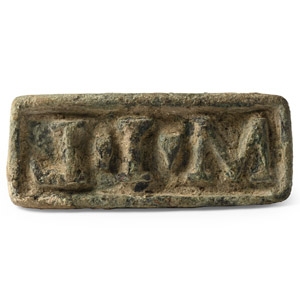
Roman Bronze Bread Stamp
2nd-4th century A.D.Sold for (Inc. bp): £234
Rectangular with raised rim and reserved inscription 'M.I.L'; repaired handle to the reverse. 23 grams, 40 mm
Acquired in the mid 1980s-1990s. Private collection, Switzerland, thence by descent. Private collection, since the late 1990s. -
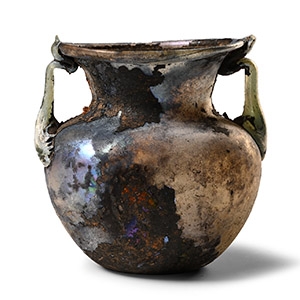
Roman Glass Double-Handled Iridescent Flask
4th century A.D.Estimate: £800 - 1,000 (+bp*)
Opening Bid: £400
With squat bulbous body, dimple base, flared trumpet neck; applied trails to the shoulder, applied strap handles to the shoulders. 47 grams, 72 mm
From an important London, UK, collection, 1970-1990s.
