
Loading, please wait...

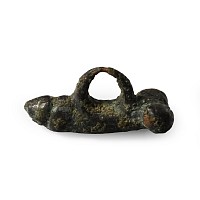
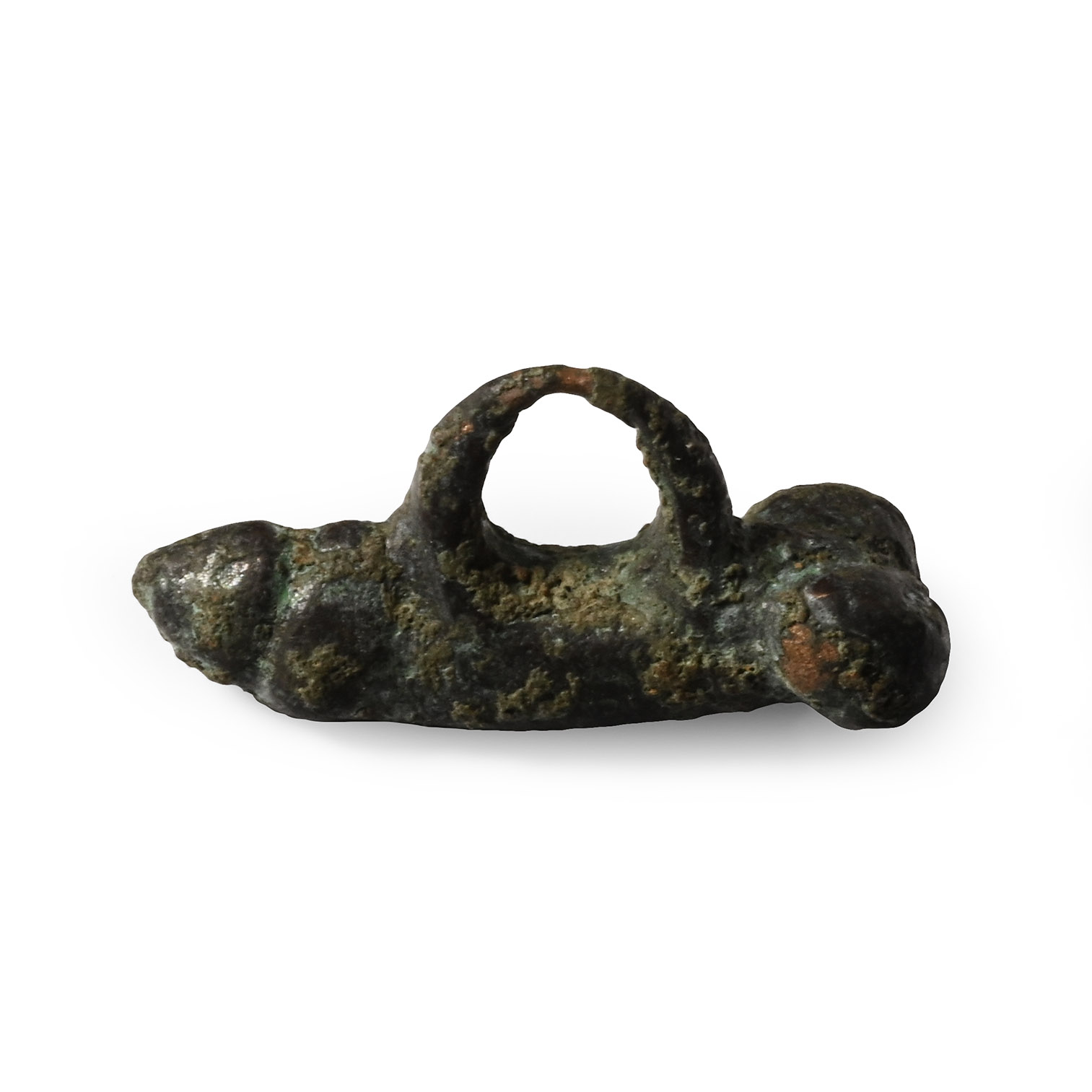
LOT 0962
Roman Bronze Phallic Pendant
1ST-3RD CENTURY A.D.
1 1/8 in. (7.9 grams, 29 mm).
Comprising a thick, elongated body with lateral testes, thin suspension loop above. [No Reserve]
ProvenanceEx German art market, 2000s.
Acquired from an EU collector living in London.
From the collection of Surrey, UK, gentleman.
Cf.Beutler, F. et al., Der Adler Roms. Carnuntum und der Armee der Cäsaren, Bad-Deutsch Altenberg, 2017, item 758, for type.
CONDITIONTimeLine Auctions follows a vetting process to ensure the authenticity and legality of all items, reinforcing our commitment to integrity and responsible trading. Each antiquity, antique, and coin lot undergoes thorough examination by a vetting committee of at least ten external specialists, professional trade association members, scientists, and archaeologists: Our Vetting Process
AUCTIONS:
TimeLine is a leading auction house specialising in antiquities, ancient art, collectables, natural history, coins, medals, and books. Our auctions offer museums, collectors, historians, and enthusiasts the opportunity to acquire unique and historically significant pieces.
-
.jpg)
Roman Bronze Horse Brooch
Circa 2nd century A.D.Sold for (Inc. bp): £111
Formed as a standing horse, the hindlegs forming crossbar, tail forming hinged pin, forelegs forming catchplate; ring-and-dot motifs to shoulders, linear detailing to the mane. 11.8 grams, 35 mm
From a collection acquired on the UK art market from various auction houses and collections mostly before 2000. From an important Cambridgeshire estate; thence by descent. -
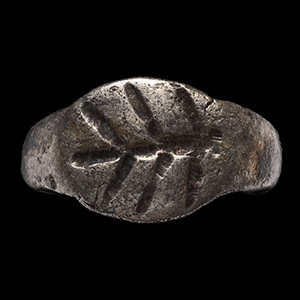
Roman Silver Child's Ring with Palm Branch
1st-2nd century A.D.Sold for (Inc. bp): £33
With lentoid-profile hoop, ellipsoid bezel with incuse frond motif. 2.31 grams, 16.88 mm overall, 13.87 mm internal diameter (approximate size British E, USA 2 1/4, Europe 2.41, Japan 2)
UK private collection before 2000. Acquired on the UK art market. Property of a London gentleman. -
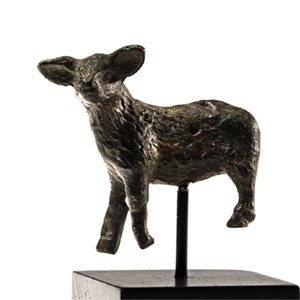
Roman Bronze Sheep Statuette
2nd-3rd century A.D.Sold for (Inc. bp): £312
Modelled standing with head turned, fleece texture to the flanks; mounted on a custom-made stand. 42.8 grams total, 53 mm including stand
From a collection acquired on the UK art market from various auction houses and collections mostly before 2000. From an important Cambridgeshire estate; thence by descent.
