
Loading, please wait...
LOT 0702
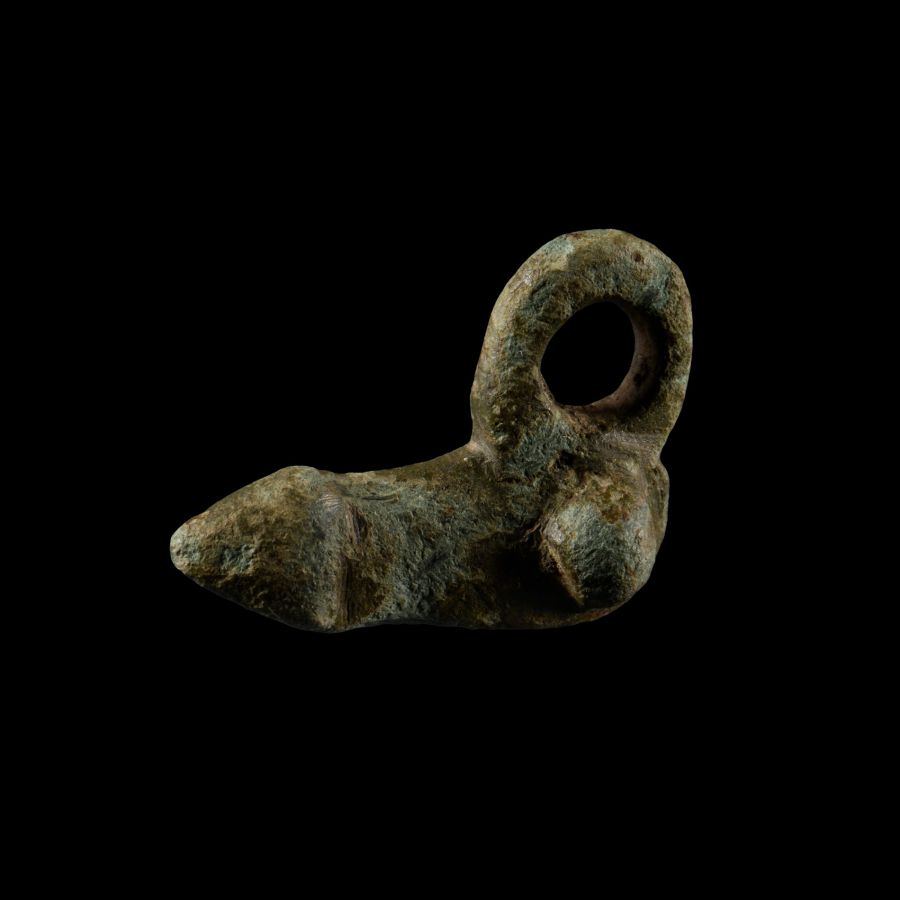
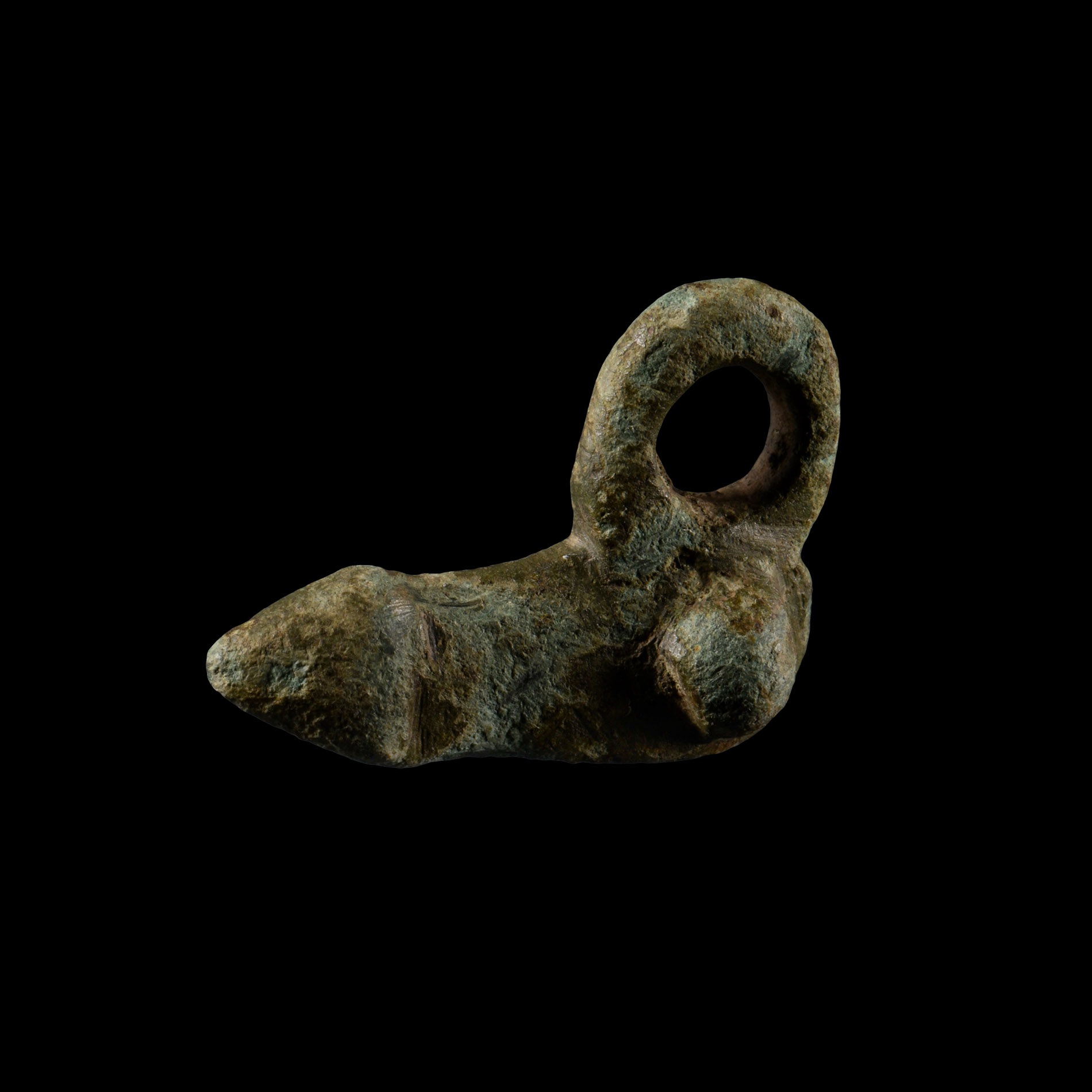
Roman Bronze Phallic Pendant
1ST-4TH CENTURY A.D.
1 in. (6.53 grams, 25 mm).
A phallic amulet with loop to the rear. [No Reserve]
ProvenanceFound near Bainton, East Riding of Yorkshire, UK.
Accompanied by a copy of the British Museum's Portable Antiquities Scheme (PAS) report no.YORYM-051F22.
TimeLine Auctions follows a vetting process to ensure the authenticity and legality of all items, reinforcing our commitment to integrity and responsible trading. Each antiquity, antique, and coin lot undergoes thorough examination by a vetting committee of at least ten external specialists, professional trade association members, scientists, and archaeologists: Our Vetting Process
AUCTIONS:
TimeLine is a leading auction house specialising in antiquities, ancient art, collectables, natural history, coins, medals, and books. Our auctions offer museums, collectors, historians, and enthusiasts the opportunity to acquire unique and historically significant pieces.
-

Roman Piriform Glass Flask
1st century A.D.Estimate: £100 - 140 (+bp*)
Opening Bid: £50
An iridescent glass unguentarium with piriform body, tubular neck with everted rolled rim. 6.65 grams, 69 mm
Acquired 1980-2015. Ex Abelita family collection. -

Bronze Age to Roman Bronze Artefact Collection
11th century B.C.-3rd century A.D.Sold for (Inc. bp): £26
Comprising two arrowheads with foliate head and square-sectioned tang and three awls. 45 grams total, 3.6-10.8 cm
Acquired prior to 2000. Ex private collection, Cambridgeshire, UK.
The two arrowheads are similar to specimens found in Luristan. They belong to the type V of the Khorasani classification. The bow was widely used by the Luristan people. The shape of the blade is often flat or ovate in the cross section with lanceolate profile and two cutting edges. -
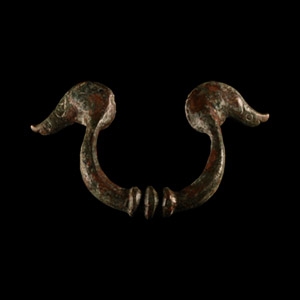
Roman Bronze Helmet Handle
1st-2nd century A.D.Sold for (Inc. bp): £104
Comprising a crescentic tapering shank with ribbed baluster to the centre; attachment points formed as wings with punched detailing. 65 grams, 92 mm
From a collection acquired on the UK art market from various auction houses and collections mostly before 2000. From an important Cambridgeshire estate; thence by descent.
Many such handles are formed as a pair of opposed dolphins, whence the conventional name 'dolphin mounts'. They were attached to infantry helmets so that they could be carried when not in use, or slung from a strap.
