
Loading, please wait...
LOT 0924
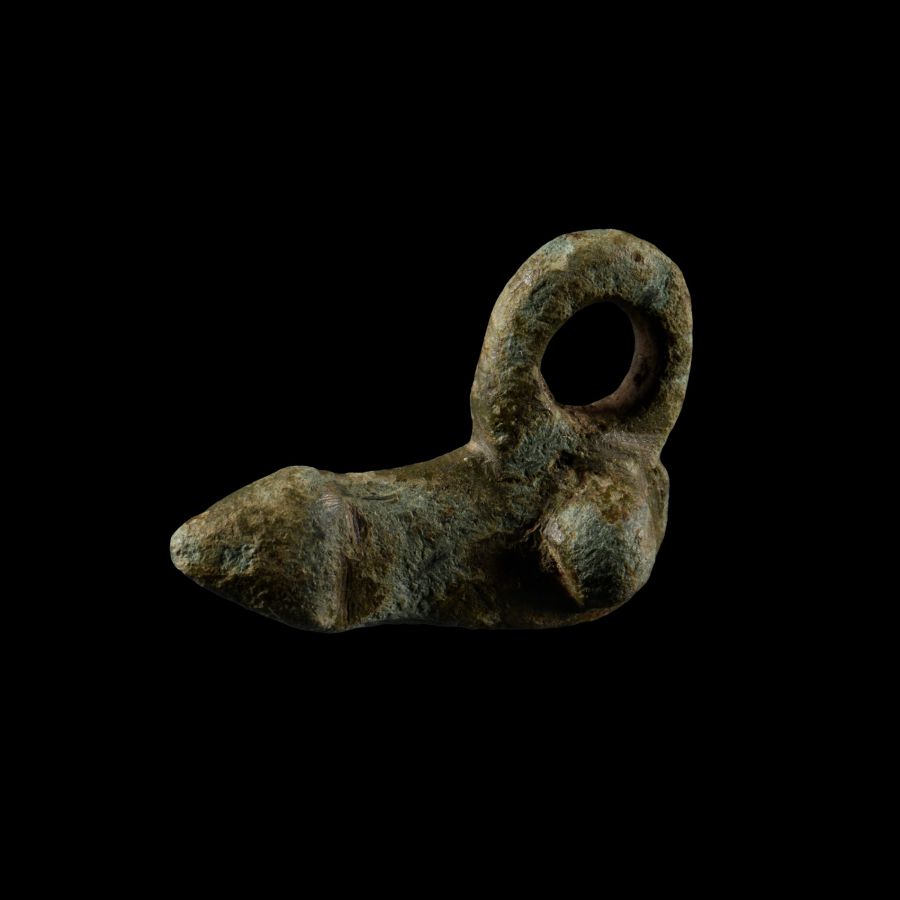
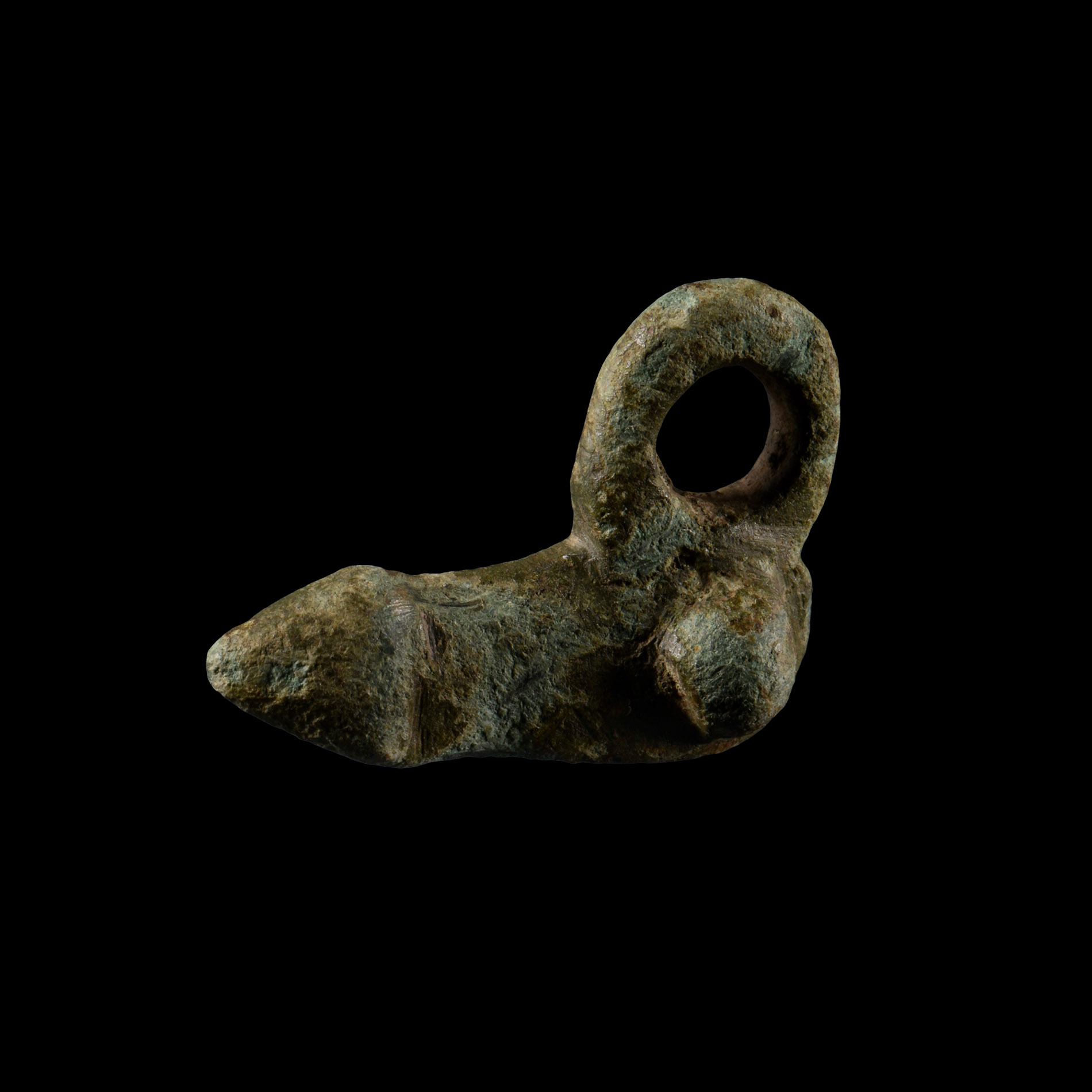
Roman Bronze Phallic Pendant
1ST-4TH CENTURY A.D.
1 in. (6.53 grams, 25 mm).
A phallic amulet with loop to the rear. [No Reserve]
ProvenanceFound near Bainton, East Riding of Yorkshire, UK.
Accompanied by a copy of the British Museum's Portable Antiquities Scheme (PAS) report no.YORYM-051F22.
TimeLine Auctions follows a vetting process to ensure the authenticity and legality of all items, reinforcing our commitment to integrity and responsible trading. Each antiquity, antique, and coin lot undergoes thorough examination by a vetting committee of at least ten external specialists, professional trade association members, scientists, and archaeologists: Our Vetting Process
AUCTIONS:
TimeLine is a leading auction house specialising in antiquities, ancient art, collectables, natural history, coins, medals, and books. Our auctions offer museums, collectors, historians, and enthusiasts the opportunity to acquire unique and historically significant pieces.
-
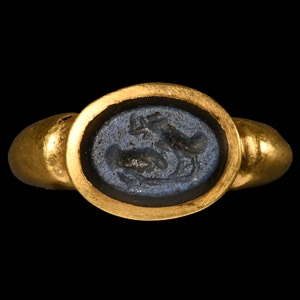
Roman Gold Ring with Pair of Birds on Nicolo Gemstone
2nd-3rd century A.D.Estimate: £1,500 - 2,000 (+bp*)
Opening Bid: £800
With a hollow-form hoop expanding at the shoulders, raised bezel set with a dark blue nicolo intaglio engraved with a pair of birds, one standing and the other stooped to pick something from the ground with its beak. 5.75 grams, 25.12 mm overall, 14.69 x 18.30 mm internal diameter (approximate size British J, USA 4 3/4, Europe 8.69, Japan 8)
From the collection of late AB, London, UK, 1990s. Accompanied by a previous catalogue information slip.
The type of ring (type II, variant I of Ruseva-Slokoska classification) is characterised by the ellipsoid hoop, rounded on the outside, widening to a horizontal triangular shape. The nicolo was often employed in rings of the 2nd-3rd century A.D. -
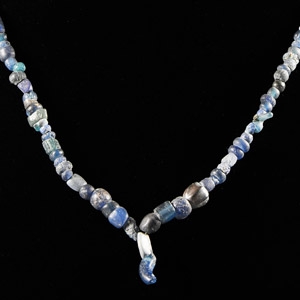
Roman Deep Blue Glass and Other Bead Necklace String
1st century A.D. and laterSold for (Inc. bp): £52
Assorted old blue glass beads restrung to a Y-shape with a crescentic-shaped pendant. 16.1 grams, 50 cm long
UK gallery, early 2000s.
The mass production of glass in Ancient Rome prompted the development of glass jewellery of unique qualities. The ancient Romans considered jewellery to be an essential accessory, being a public display of the wealth of high social classes. Roman jewellery at first followed trends set by the Etruscans, using gold and glass beads, but as the power and spread of the Roman Empire increased, jewellery designs became increasingly elaborate, incorporating elements from different cultural styles. -
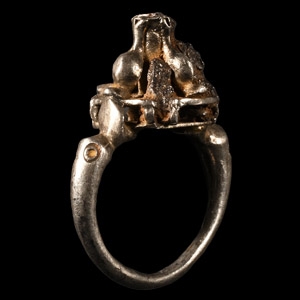
Roman Silver Key Ring with Dolphins
3rd-4th century A.D.Estimate: £600 - 800 (+bp*)
Opening Bid: £300
The hoop formed with dolphin-head shoulders supporting an openwork tiered bezel with four outward-facing dolphins on a disc, their tails joining to form a tube with inset garnet cloison; possibly originally a key-ring with the tune forming a mandrel. 7.13 grams, 31.06 mm overall, 19.89 mm internal diameter (approximate size British N, USA 6 1/2, Europe 13.72, Japan 13)
Ex Cotswold collection, UK, 1990s. Accompanied by a copy of a statement of opinion from Striptwist Ltd, a London-based company run by precious metal specialist Dr Jack Ogden, reference number 221202.
