
Loading, please wait...

LOT 0944
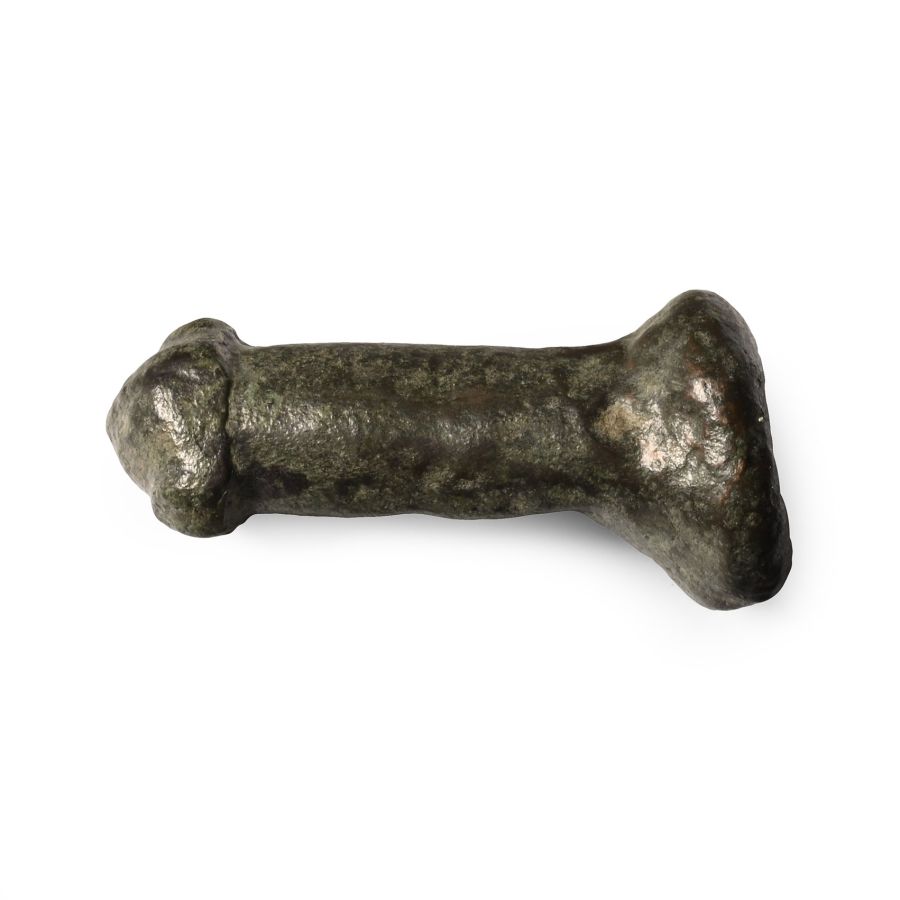
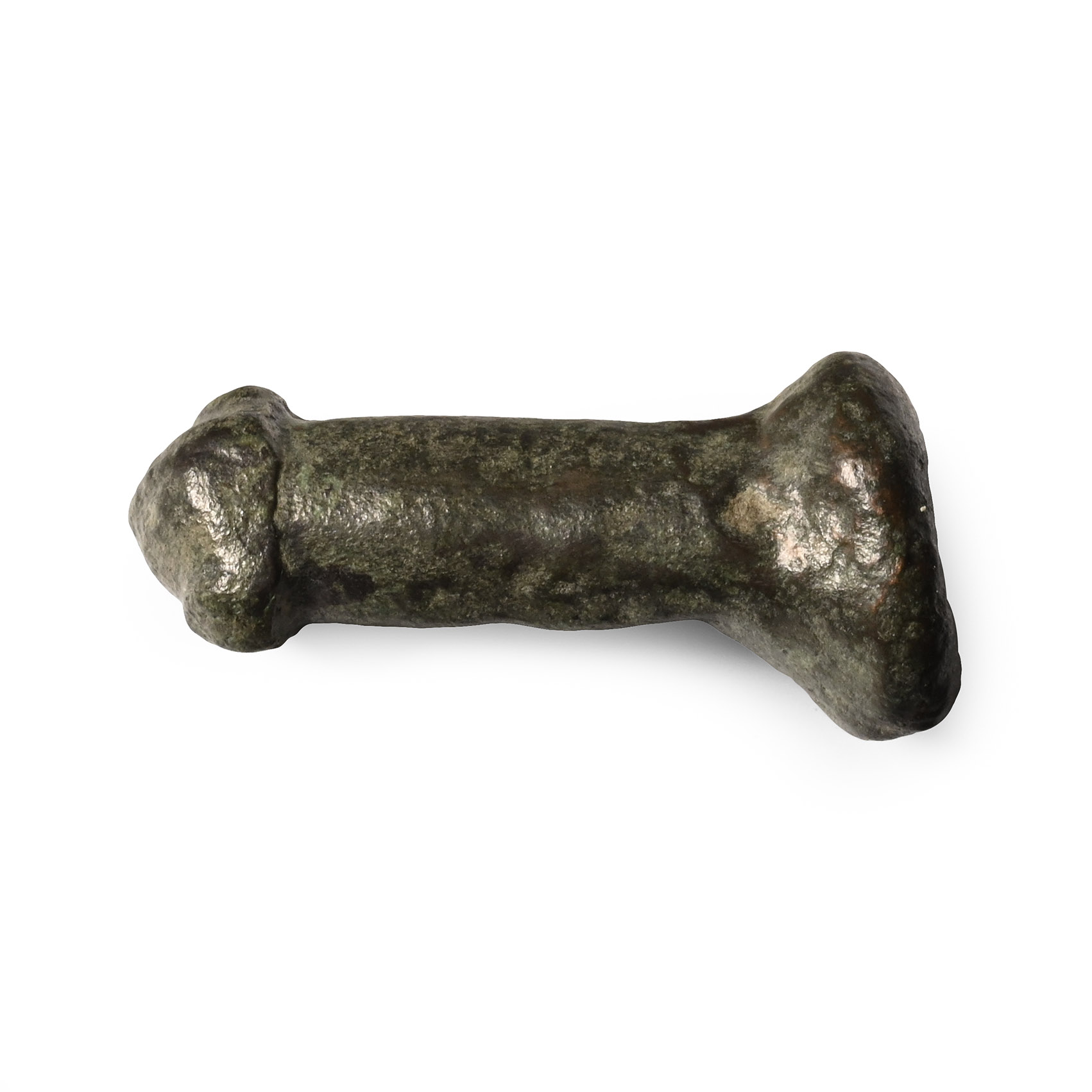
Roman Bronze Phallic Mount
1ST-4TH CENTURY A.D.
1 1/2 in. (26.9 grams, 38 mm).
Modelled in the round with a discoid base. [No Reserve]
ProvenanceEx German art market, 2000s.
Acquired from an EU collector living in London.
From the collection of Surrey, UK, gentleman.
TimeLine Auctions follows a vetting process to ensure the authenticity and legality of all items, reinforcing our commitment to integrity and responsible trading. Each antiquity, antique, and coin lot undergoes thorough examination by a vetting committee of at least ten external specialists, professional trade association members, scientists, and archaeologists: Our Vetting Process
AUCTIONS:
TimeLine is a leading auction house specialising in antiquities, ancient art, collectables, natural history, coins, medals, and books. Our auctions offer museums, collectors, historians, and enthusiasts the opportunity to acquire unique and historically significant pieces.
-
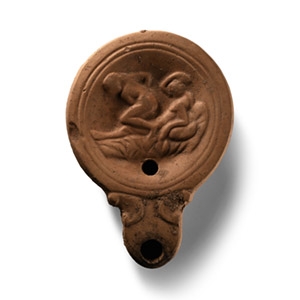
Roman Terracotta Oil Lamp with Erotic Scene
2nd century A.D.Sold for (Inc. bp): £1,235
With broad discus and long nozzle flanked by volute scrolls, low-relief scene with two lovers on a bed. 44 grams, 95 mm
From a London collection of erotica, formerly in the collection of the late Mr S.M., London, UK. -
.jpg)
Late Roman Glass Pendant with Rearing Lions
Mid 4th-5th century A.D.Sold for (Inc. bp): £117
Discoid in plan with impressed image of two lions rampant flanking a vase with a tree emerging. 1.49 grams, 18 mm
Collected from 1970-1999. From the collection of the late Mr S.M., London, UK. -
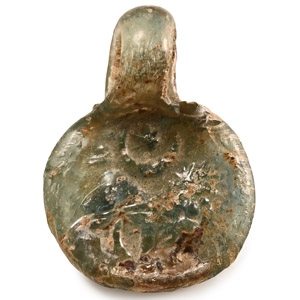
Late Roman Glass Lion Pendant with Star and Crescent
Mid 4th-mid 5th century A.D.Sold for (Inc. bp): £117
Discoid with integral loop, impressed image of an advancing lion below a crescent with star above. 1.81 grams, 24 mm
Collected from 1970-1999. From the collection of the late Mr S.M., London, UK.
