
Loading, please wait...
LOT 0806
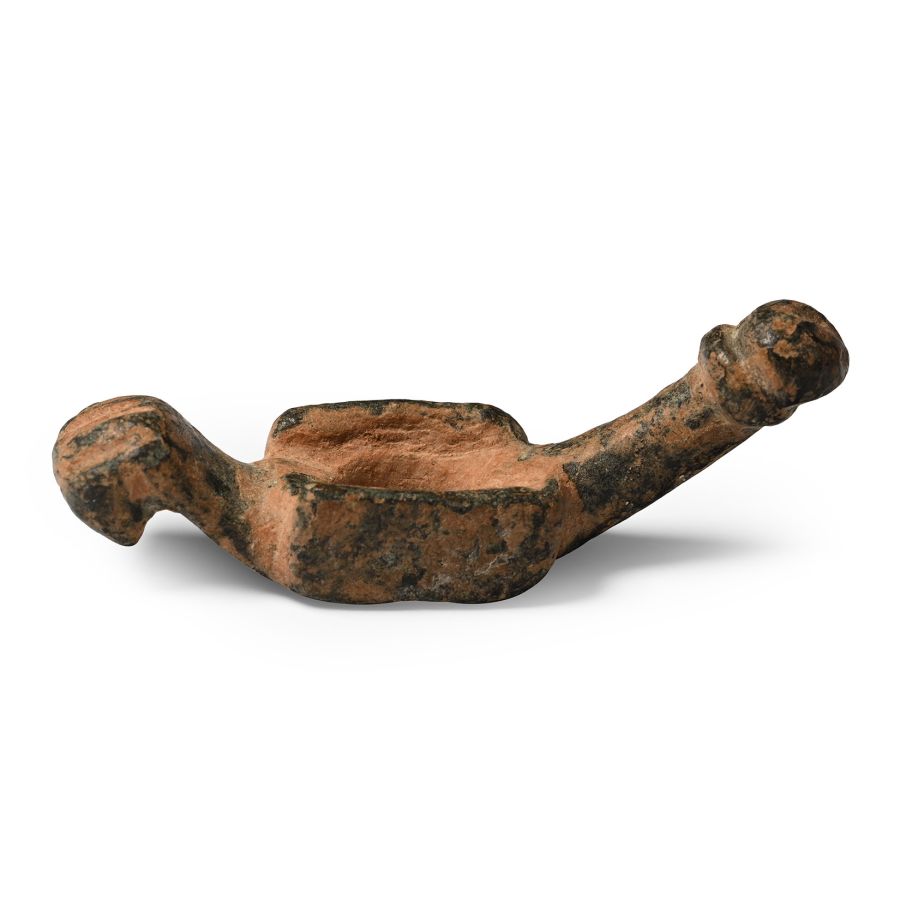
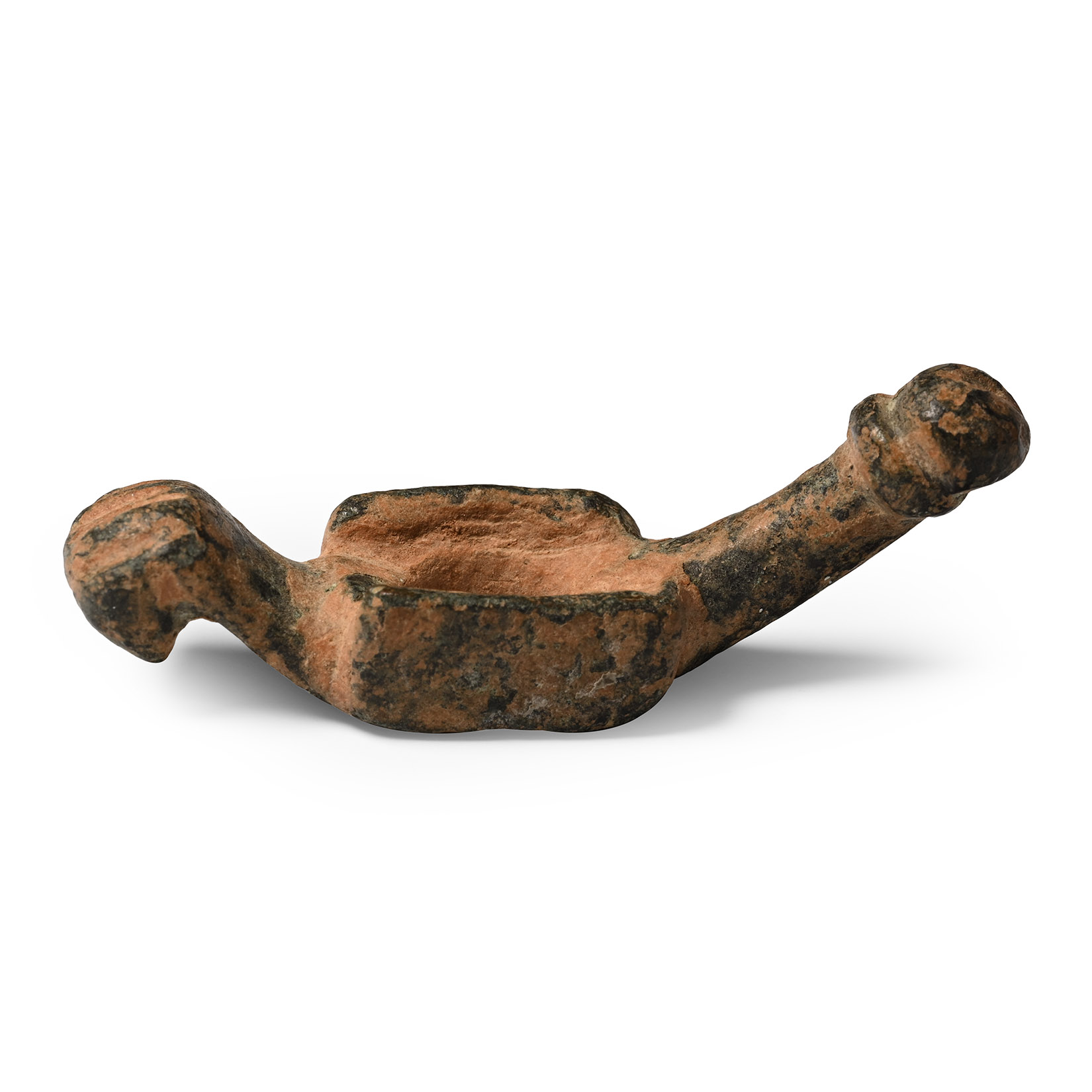
Roman Bronze Phallic Dagger Quillon or Pendant
1ST-2ND CENTURY A.D.
2 1/8 in. (25.5 grams, 55 mm).
With a rectangular plaque with central void, phallus to one short edge and a stylised fist to the other.
ProvenanceAcquired 1980-2015.
Ex Abelita family collection.
This lot is accompanied by an illustrated lot declaration signed by the Head of the Antiquities Department, Dr Raffaele D’Amato.
See for a bronze phallic element of same typology, Metropolitan Museum of Art, no.60.11.71.
FootnotesIn the Roman world the phallus was symbol of luck or fertility, and it as well was believed to have apotropaic functions. Pendants, amulets and small objects were worn by all sorts of people as symbols of protection, especially from young children according to Varro and Pliny the Elder. The phallus is commonly found on reliefs, frescoes and lamps from the Graeco-Roman world. This object can have been the quillon of a small dagger, but also hung as a charm from a tintinnabulum, a wind chime adorned with bells and intended to ward off evil.
CONDITIONTimeLine Auctions follows a vetting process to ensure the authenticity and legality of all items, reinforcing our commitment to integrity and responsible trading. Each antiquity, antique, and coin lot undergoes thorough examination by a vetting committee of at least ten external specialists, professional trade association members, scientists, and archaeologists: Our Vetting Process
AUCTIONS:
TimeLine is a leading auction house specialising in antiquities, ancient art, collectables, natural history, coins, medals, and books. Our auctions offer museums, collectors, historians, and enthusiasts the opportunity to acquire unique and historically significant pieces.
LOT 0806
Roman Bronze Phallic Dagger Quillon or Pendant
Estimate £100 - 140€120 - 160 (for guidance only)$140 - 190 (for guidance only)
-
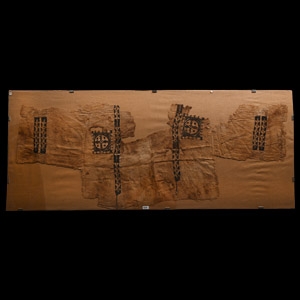
Large Mounted Roman Linen Tunic
Circa 4th-5th century A.D.Sold for (Inc. bp): £5,200
Comprising half of the upper part of a tunica manicata in light fabric, S-twist tapestry, ornamented with dark purple clavi with orbiculi and tablia, wool over linen; mounted in fabric backing and perspex display frame. 7.7 kg total, mount: 1.64 m
Acquired 1970s-1996. Property of a North American collector. London collection, 2016.
The tunic is decorated in purple with opus phrygium embroidery. The archaeological evidence from the dry desert cemeteries of Egypt offers striking confirmation of pictorial sources about late Roman clothing around the empire. -
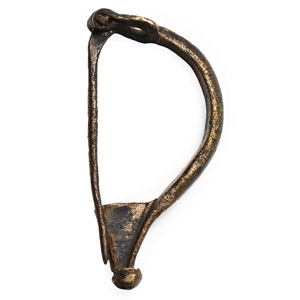
Romano-British Aucissa 'Cyclopean Eye' Bow Brooch
Circa 50-70 A.D.Sold for (Inc. bp): £65
Comprising a depp slender bow with linear decoration, circular opening above the spring and conical knop on the footplate. 1.82 grams, 31 mm
Found East Anglia, UK. From a Kent collection formed in the 1990s. -
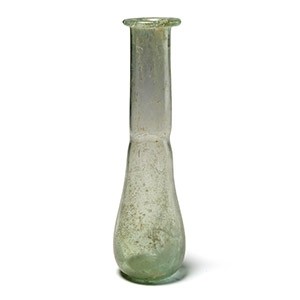
Roman Glass Unguentarium
1st-2nd century A.D.Sold for (Inc. bp): £130
With piriform lower body, extended cylindrical neck and rolled flange rim. 31 grams, 11.3 cm
Previously with Astarte Gallery, London W1, UK, 1983. From the private collection of T.R. Elley, West Sussex, UK, 1980s. Accompanied by the original invoice dated 18 October 1983.
