
Loading, please wait...
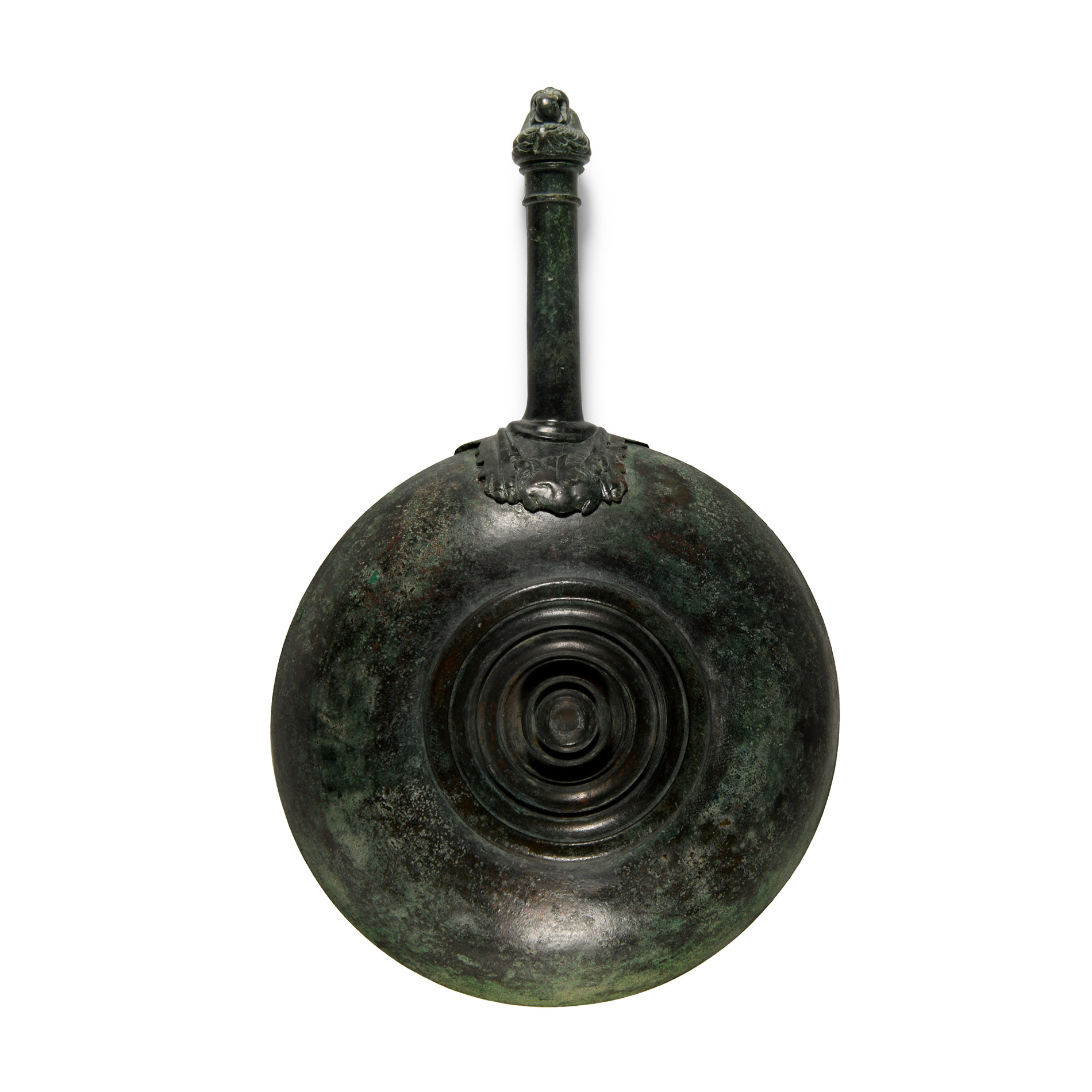
LOT 0173
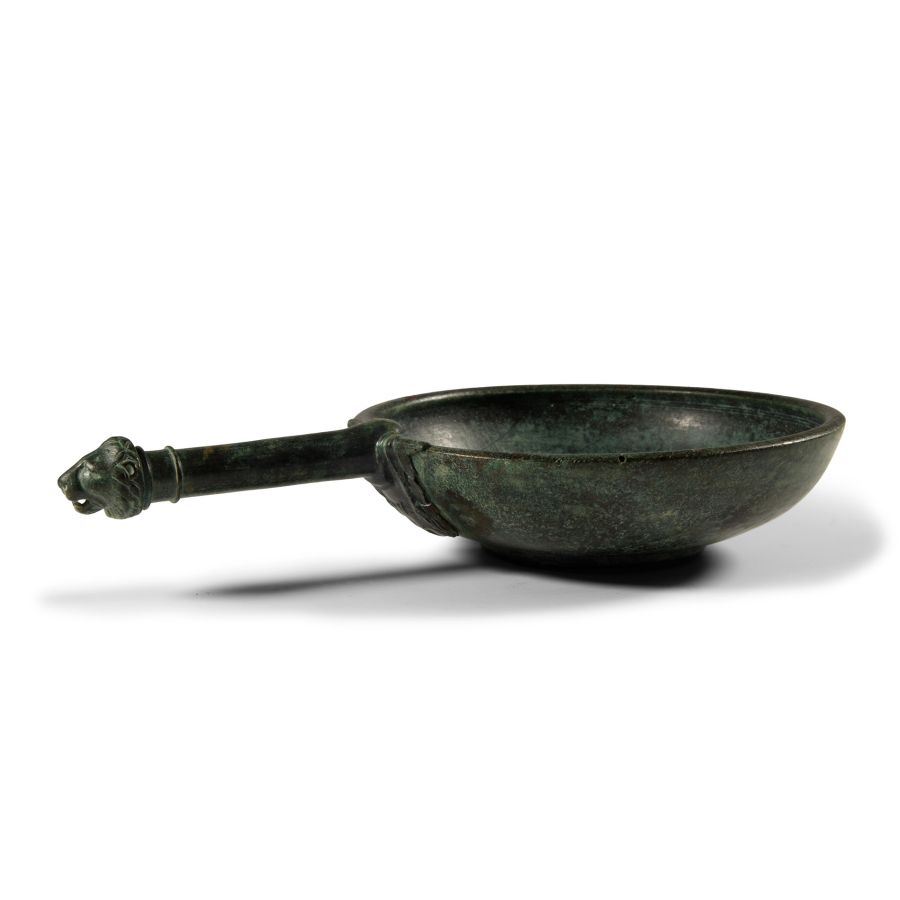
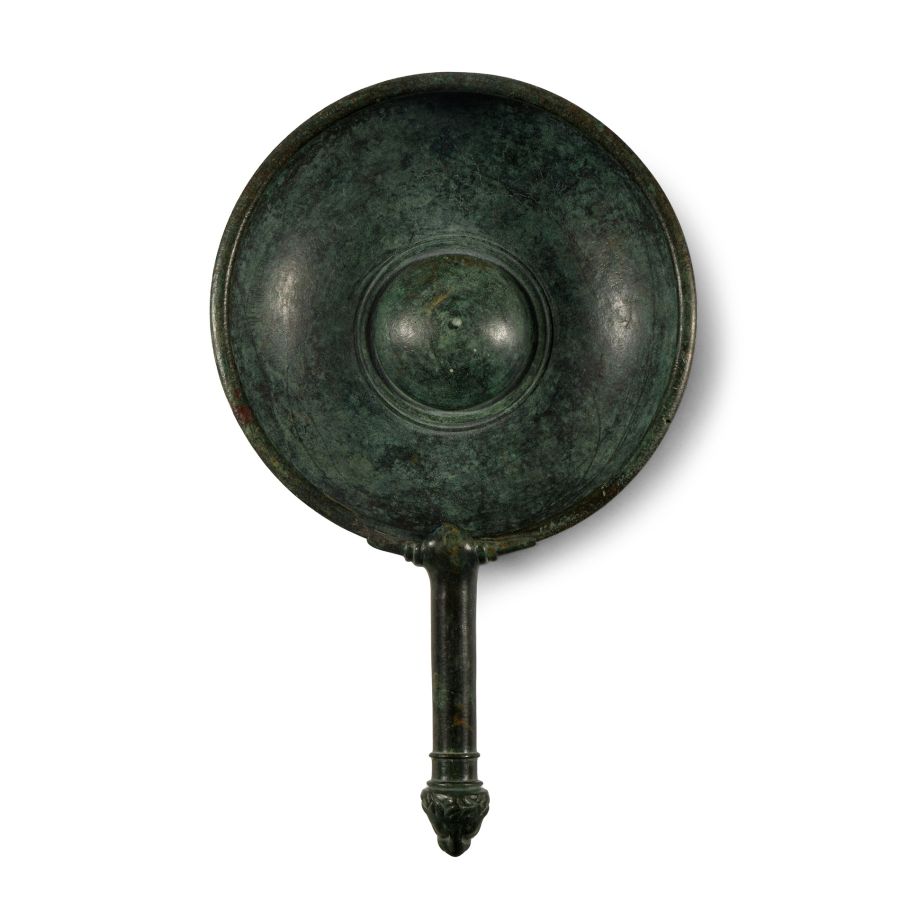
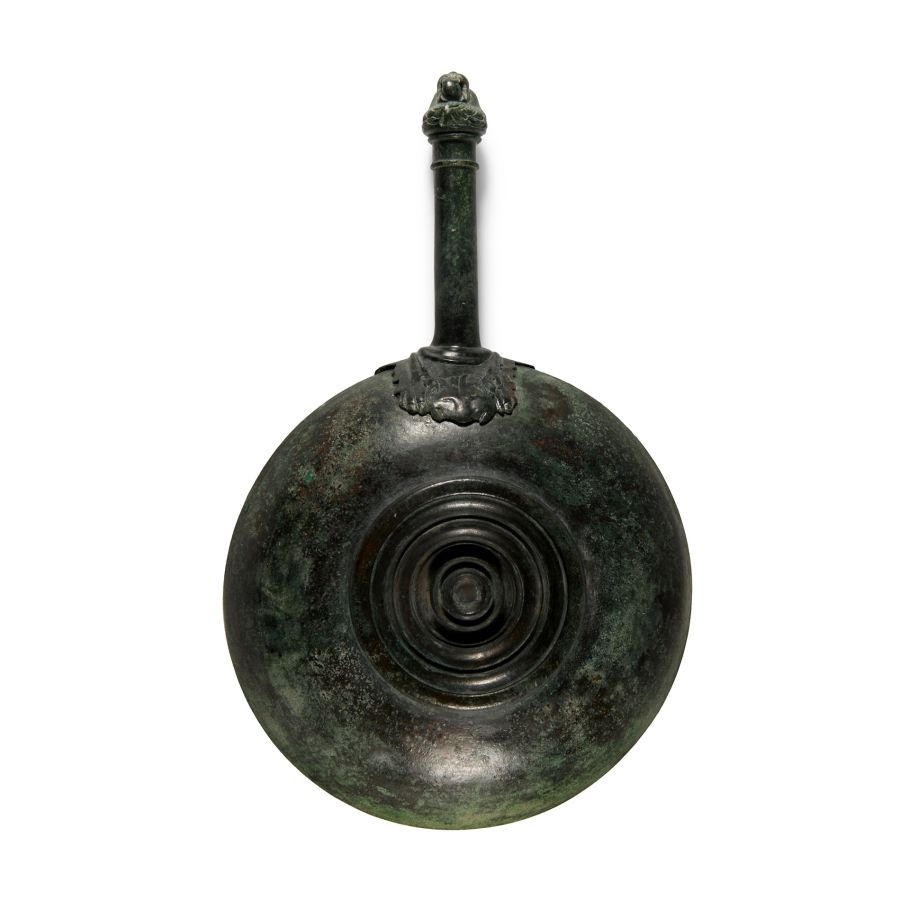
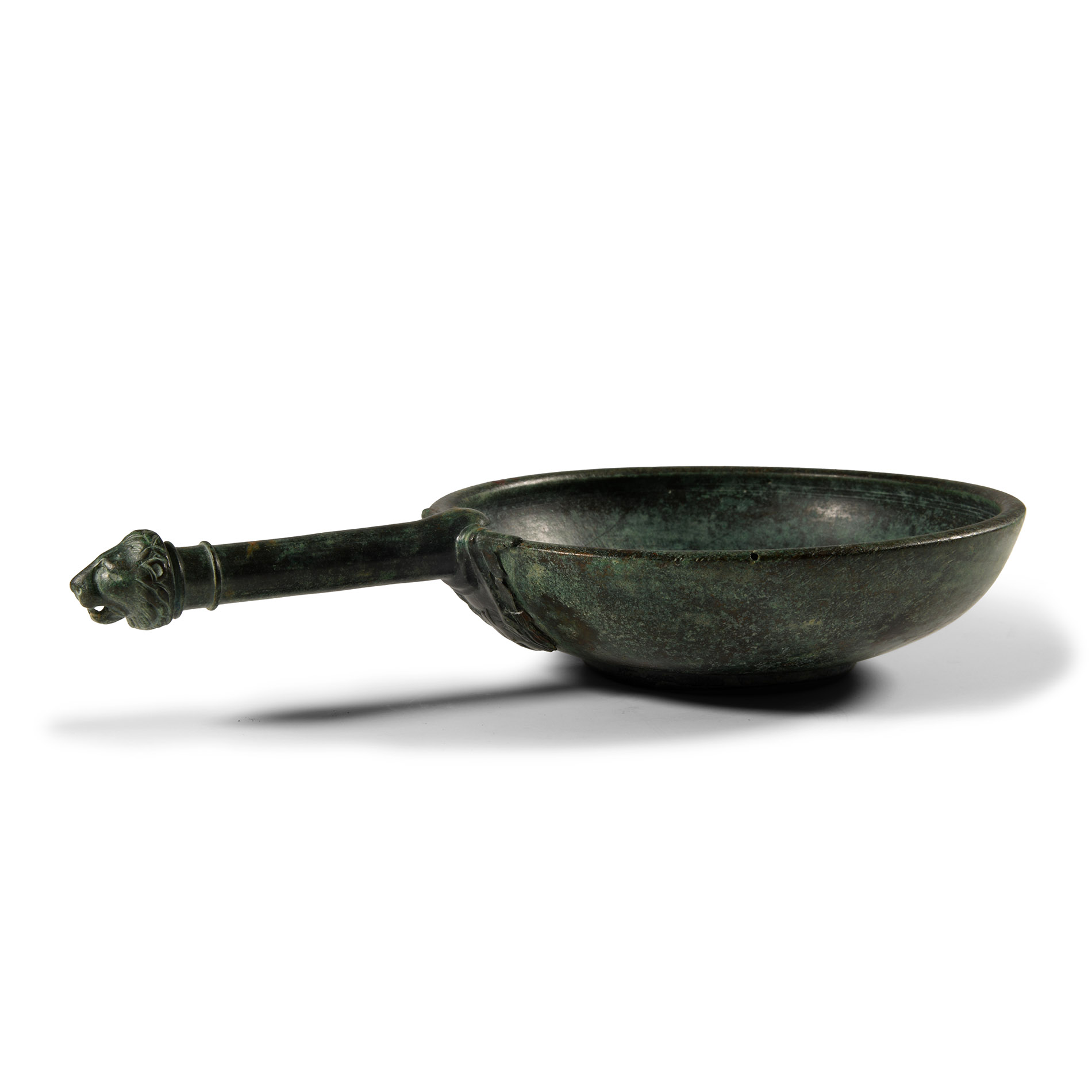
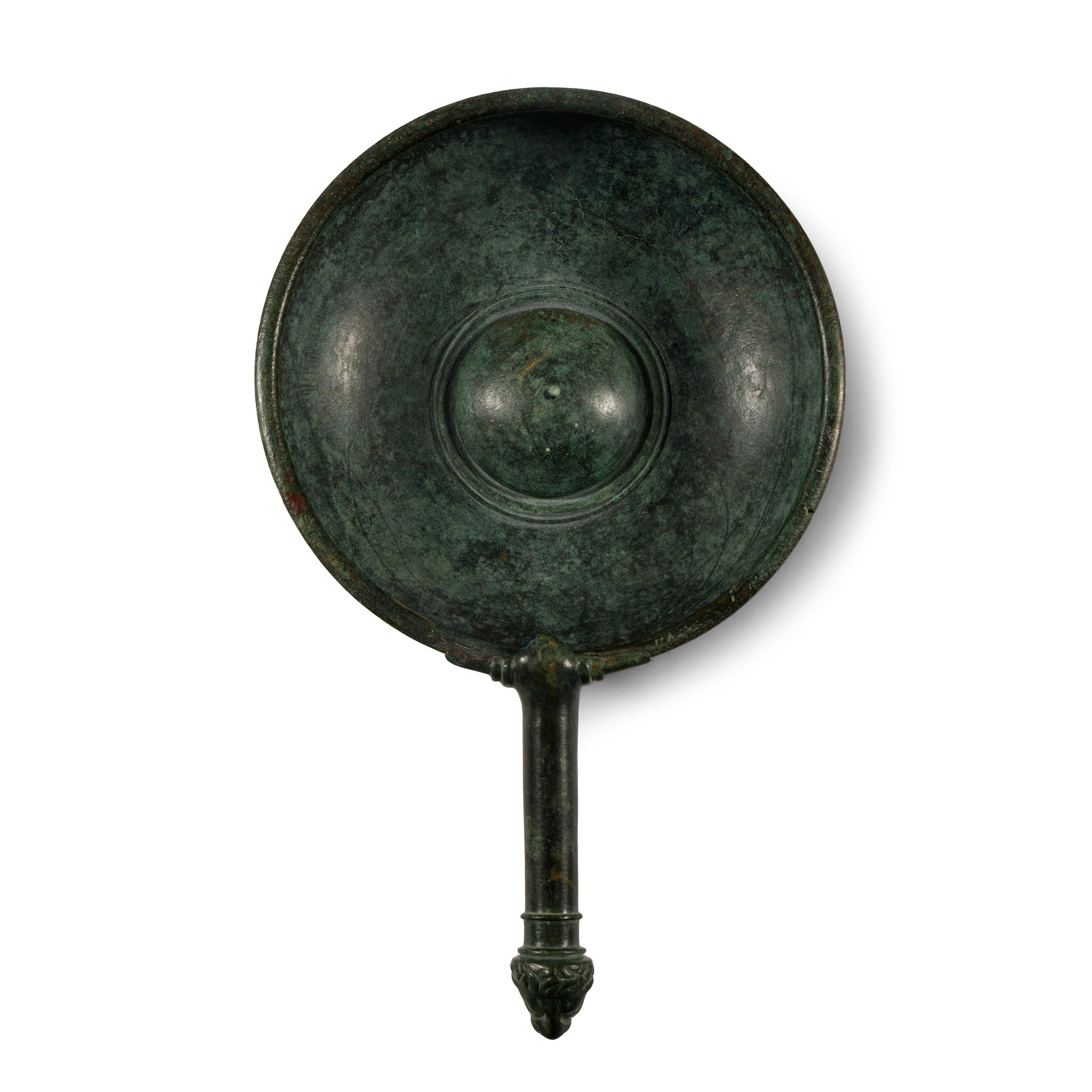
Roman Bronze Patera with Lion Head Handle
1ST CENTURY A.D.
8 3/8 in. (410 grams, 21.2 cm).
Comprising a shallow discoid bowl with inverted lip, central dome with concentric ring ornament, basal ring; the handle columnar with foliage to the junction, lion-head finial with gaping mouth.
ProvenanceAcquired Gorny & Mosch, Munich, 25 June 2014, no.86.
From the Horton collection, UK.
Accompanied by a copy of the relevant Gorny & Mosch catalogue pages.
This lot has been checked against the Interpol Database of stolen works of art and is accompanied by search certificate no.12062-214252.
Exhibited at Harwich Museum, Harwich, Essex, UK, 3rd February-9th March 2024; accompanied by a copy of a photograph of the artefact on display.
CONDITIONTimeLine Auctions follows a vetting process to ensure the authenticity and legality of all items, reinforcing our commitment to integrity and responsible trading. Each antiquity, antique, and coin lot undergoes thorough examination by a vetting committee of at least ten external specialists, professional trade association members, scientists, and archaeologists: Our Vetting Process
AUCTIONS:
TimeLine is a leading auction house specialising in antiquities, ancient art, collectables, natural history, coins, medals, and books. Our auctions offer museums, collectors, historians, and enthusiasts the opportunity to acquire unique and historically significant pieces.
-
.jpg)
Roman Mosaic and Other Glass Necklace Bead Group
Circa 1st-4th century A.D.Sold for (Inc. bp): £117
Comprising thirty glass beads of various sizes, including mosaic beads and some with drawn decoration. 49 grams total, 7-13 mm
UK gallery, early 2000s.
The mass production of glass in Ancient Rome prompted the development of glass jewellery of unique qualities. The ancient Romans considered jewellery to be an essential accessory, being a public display of the wealth of high social classes. Recent excavations have provided better information on the use of glass beads for necklaces and bracelets, and in some case has been possible to understand the exact arrangement of a necklace or other jewellery made of glass. Many of the examples here presented belongs to the so-called category of ‘eye-beads’. -
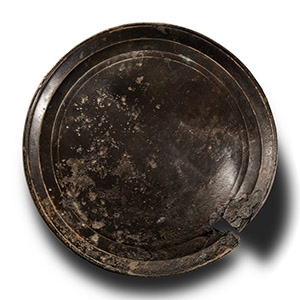
Roman Bronze Disc Mirror
1st-3rd century A.D.Sold for (Inc. bp): £72
With one flat surface, reverse with thick flared rim, incised concentric rings, carinated profile. 514 grams, 18.5 cm
From a collection acquired on the UK art market from various auction houses and collections mostly before 2000. From an important Cambridgeshire estate; thence by descent. -
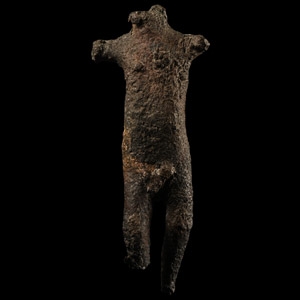
Roman Bronze Apollo Statuette
1st century B.C.-1st century A.D.Sold for (Inc. bp): £39
Standing nude with arms raised, legs in advancing pose. 37 grams, 60 mm
From a collection acquired on the UK art market from various auction houses and collections mostly before 2000. From an important Cambridgeshire estate; thence by descent.
