
Loading, please wait...
LOT 0656
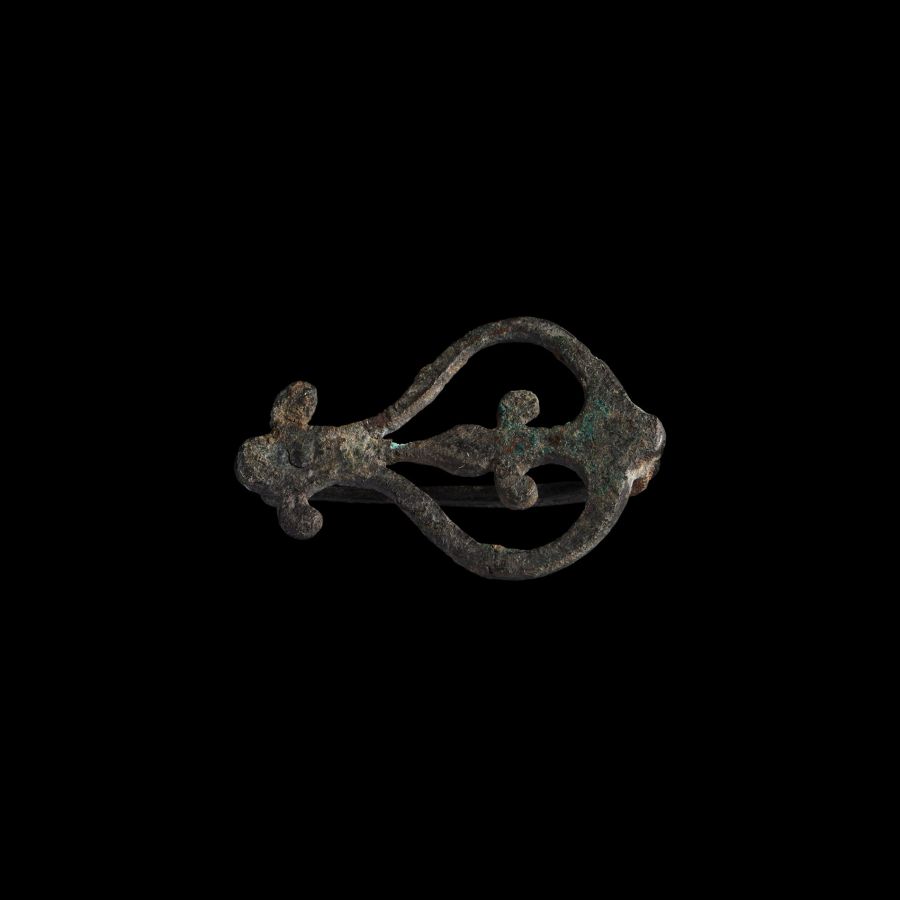
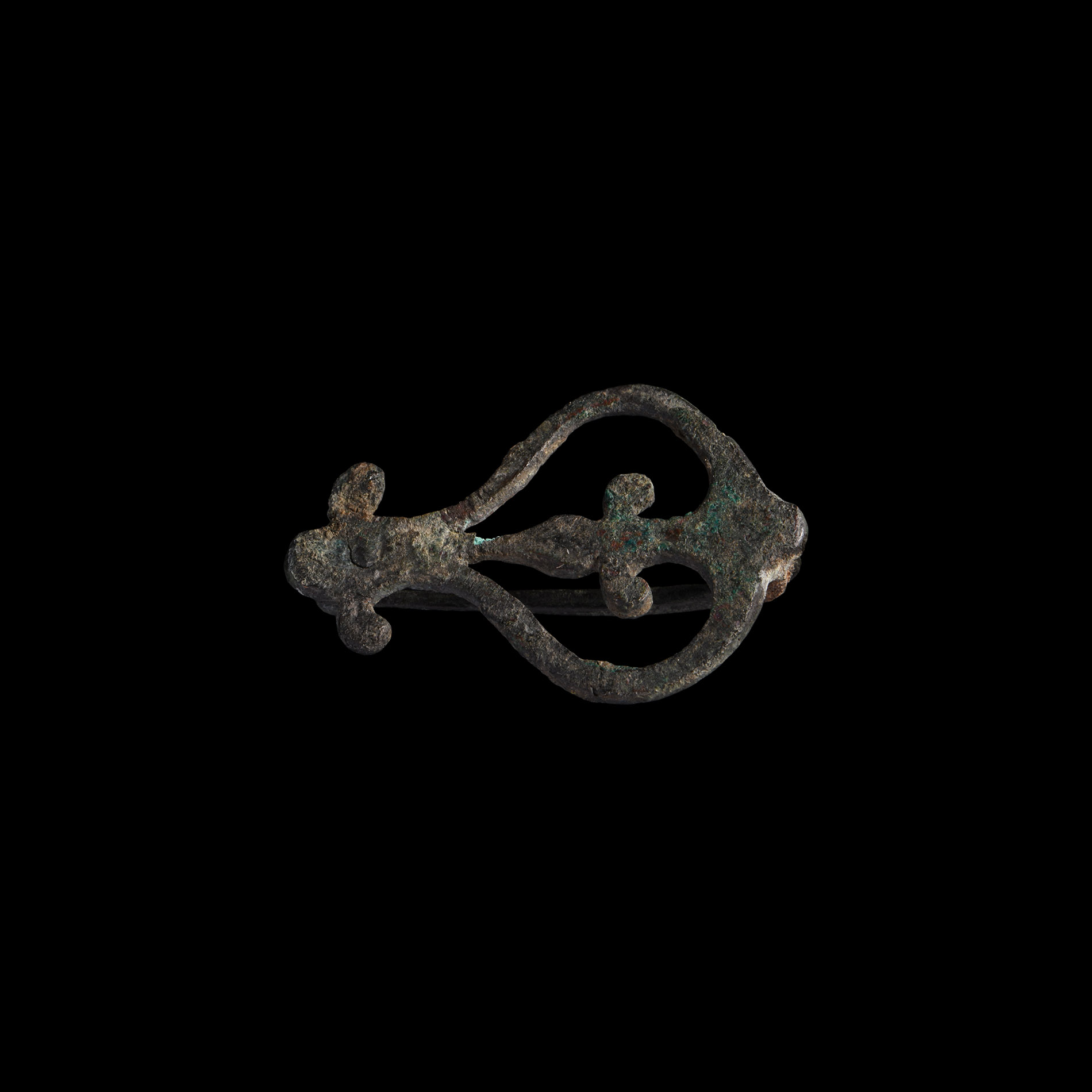
Roman Bronze Openwork Plate Brooch
CIRCA 2ND CENTURY A.D.
1 1/4 in. (2.99 grams, 31 mm).
Comprising an openwork piriform frame enclosing a fleur, leading to a trilobite finial; complete with pin and catchplate to reverse. [No Reserve]
ProvenanceAcquired from York Antiques Centre.
Accompanied by a certificate of authenticity signed by Gary Edwards.
TimeLine Auctions follows a vetting process to ensure the authenticity and legality of all items, reinforcing our commitment to integrity and responsible trading. Each antiquity, antique, and coin lot undergoes thorough examination by a vetting committee of at least ten external specialists, professional trade association members, scientists, and archaeologists: Our Vetting Process
AUCTIONS:
TimeLine is a leading auction house specialising in antiquities, ancient art, collectables, natural history, coins, medals, and books. Our auctions offer museums, collectors, historians, and enthusiasts the opportunity to acquire unique and historically significant pieces.
-
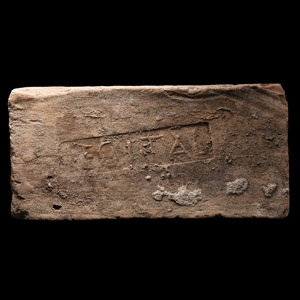
Roman Ceramic Brick with Military Stamp for Legio I Italica
1st-4th century A.D.Sold for (Inc. bp): £494
Of rectangular form, a recessed stamp to one face bearing letters in relief 'LEG I ITAL' for First Italic Legion. 2.5 kg, 27.5 x 13 cm
Acquired 1960s-1990s. Late Alison Barker collection, a retired London barrister.
The Legio I Italica ('of Italy') was a Roman legion formed by Nero on September 20, 66 or 67 A.D. and it was active until the 5th-6th century AD. The emblems of the legion were a running boar and sometimes a bull. Troops of this legion appear on Trajan's Column bridging a river. The main camp of the Legio was Novae, modern Bulgaria, but it operated in most of the imperial provinces, including Britain, where a vexillatio fought in the wars of Septimius Severus between 202 and 204 A.D. -

Roman Enamelled Bronze Miniature Votive Altar
3rd-4th century A.D.Sold for (Inc. bp): £293
Formed with four out-turned legs and sub-square top with knop to each corner and central circular void, rectangular panel to each side face with arched lower edge and alternating foliate and geometric polychrome enamelled design. 22.8 grams, 34 mm
Fine condition.
Found Cambridgeshire, pre 2000. -
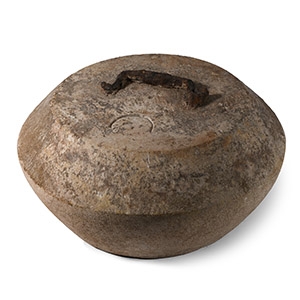
Large Roman Stone Centenarius Weight with Handle
2nd-3rd century A.D.Sold for (Inc. bp): £2,106
Of biconical form and bearing an engraved letter 'C' to the top face; slightly concave base; iron handle showing some corrosion. 30.3 kg, 35 cm wide
Ex Gorny & Mosch 11th July 2006, auction 150, lot 543. East Anglian private collection. This lot has been checked against the Interpol Database of stolen works of art and is accompanied by search certificate no.199905.
The letter C likely represents the Roman numeral Centenarius, or 100 Roman lbs.
