
Loading, please wait...
LOT 0727
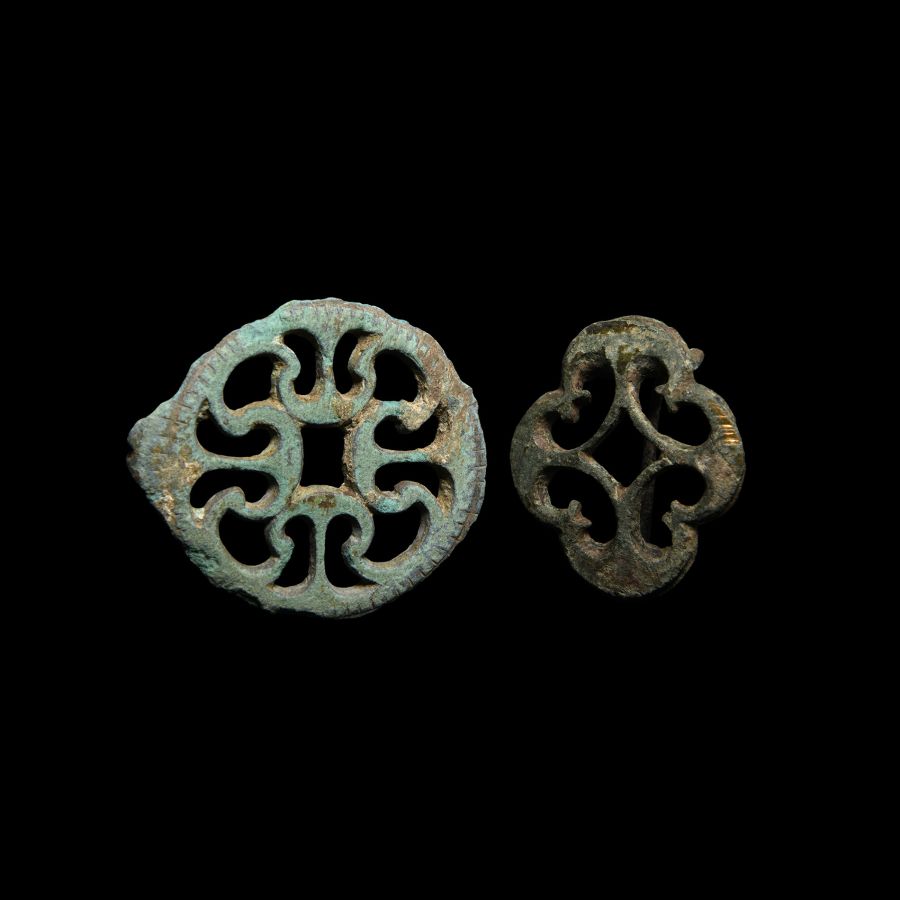
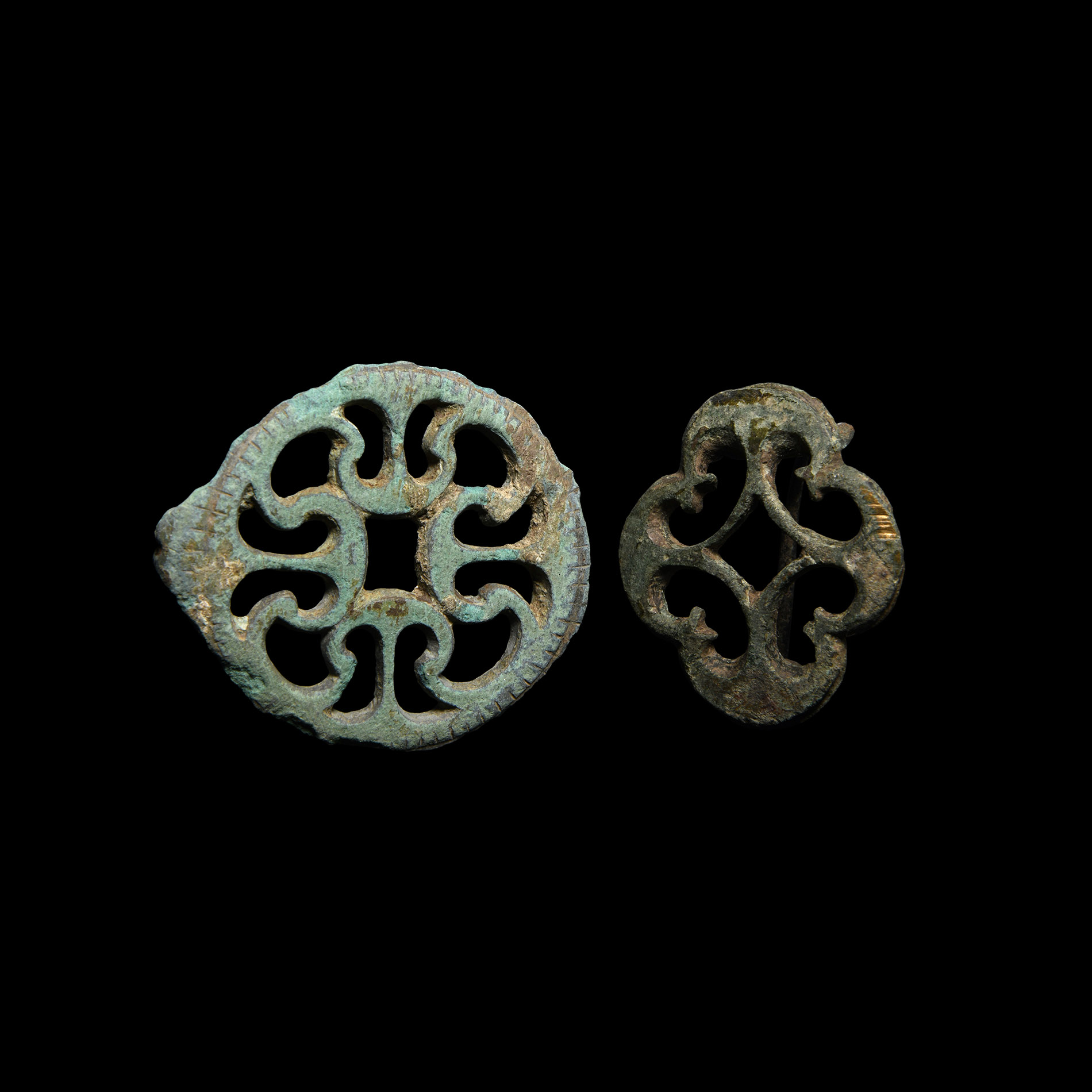
Roman Bronze Openwork Brooch Group
2ND-3RD CENTURY A.D.
1 1/4 - 1 5/8 in. (18.5 grams total, 32-40 mm).
Comprising: one of four crescents around central lozenge, complete with pin and catchplate to reverse; a discoid example displaying crescent and comma-shaped openwork. [2, No Reserve]
ProvenanceFrom the collection of a North American gentleman, formed in the 1990s.
CONDITIONTimeLine Auctions follows a vetting process to ensure the authenticity and legality of all items, reinforcing our commitment to integrity and responsible trading. Each antiquity, antique, and coin lot undergoes thorough examination by a vetting committee of at least ten external specialists, professional trade association members, scientists, and archaeologists: Our Vetting Process
AUCTIONS:
TimeLine is a leading auction house specialising in antiquities, ancient art, collectables, natural history, coins, medals, and books. Our auctions offer museums, collectors, historians, and enthusiasts the opportunity to acquire unique and historically significant pieces.
-
.jpg)
Roman Tinned Bronze Decorated Casket Key
1st-3rd century A.D.Sold for (Inc. bp): £85
With broad circular bow, barrel-type shank with pierced bit, mandrel to the upper bow. 4.49 grams, 41 mm
Fine condition.
Found Cambridgeshire, UK. -
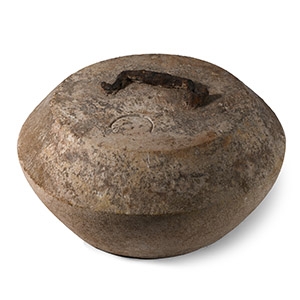
Large Roman Stone Centenarius Weight with Handle
2nd-3rd century A.D.Sold for (Inc. bp): £2,106
Of biconical form and bearing an engraved letter 'C' to the top face; slightly concave base; iron handle showing some corrosion. 30.3 kg, 35 cm wide
Ex Gorny & Mosch 11th July 2006, auction 150, lot 543. East Anglian private collection. This lot has been checked against the Interpol Database of stolen works of art and is accompanied by search certificate no.199905.
The letter C likely represents the Roman numeral Centenarius, or 100 Roman lbs. -
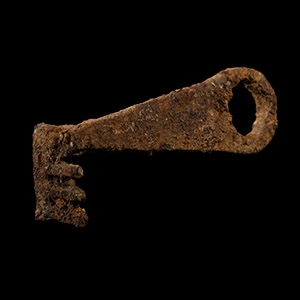
Roman Iron Latch Key
1st-5th century A.D.Sold for (Inc. bp): £7
The broad tapering stem with rounded terminal and circular bow, the rectangular bit with three slender teeth. 22.2 grams, 66 mm
Acquired on the London art market, 1980s-1990s.
