
Loading, please wait...
LOT 1034
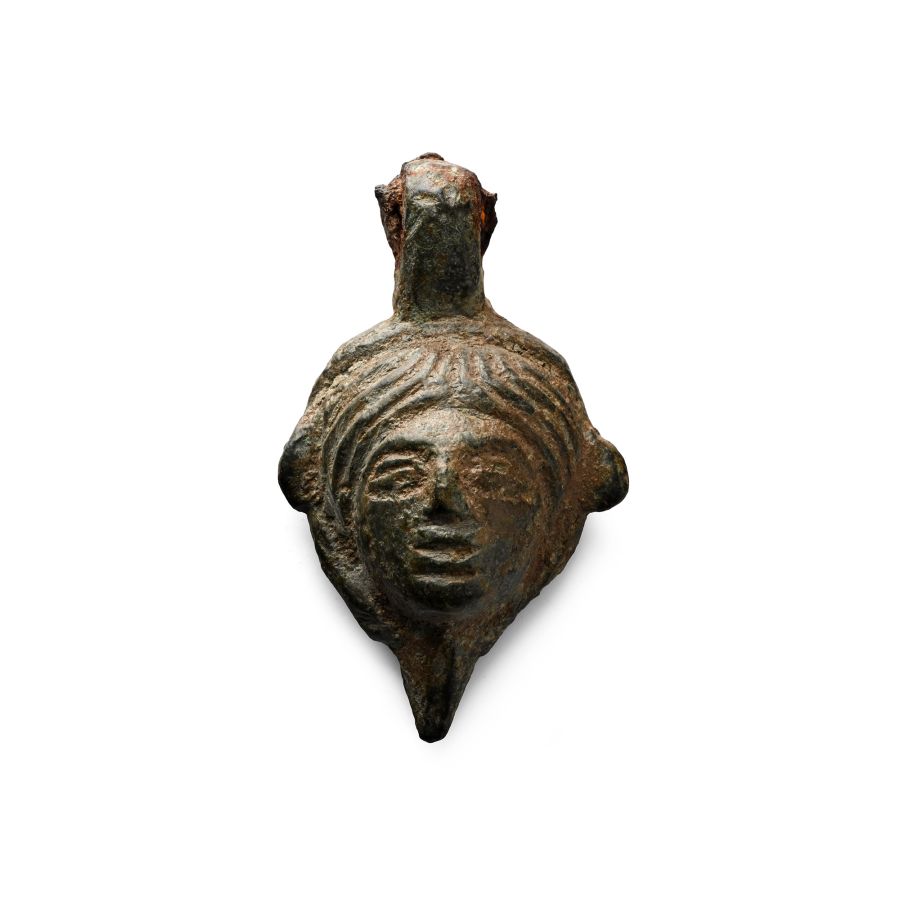
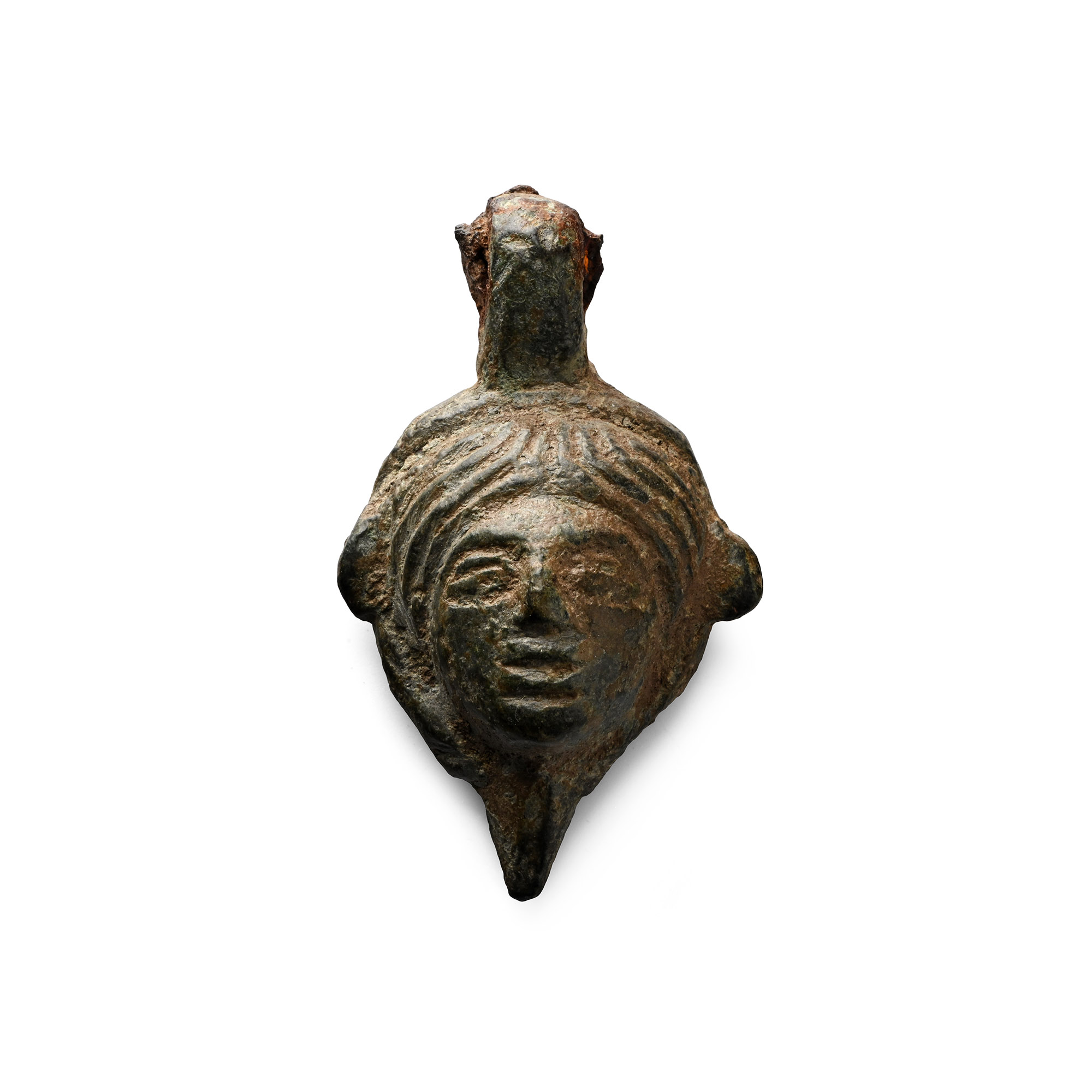
Roman Bronze Oil Lamp Lid with Face
1ST-4TH CENTURY A.D.
2 1/2 in. (69 grams, 63 mm).
Domed lid with remains of ferrous pin on the hinge, modelled as a female face with neatly arranged hair framing the face. [No Reserve]
ProvenanceEx German art market, 2000s.
Acquired from an EU collector living in London.
From the collection of a Surrey, UK, gentleman.
This lot is accompanied by an illustrated lot declaration signed by the Head of the Antiquities Department, Dr Raffaele D'Amato.
TimeLine Auctions follows a vetting process to ensure the authenticity and legality of all items, reinforcing our commitment to integrity and responsible trading. Each antiquity, antique, and coin lot undergoes thorough examination by a vetting committee of at least ten external specialists, professional trade association members, scientists, and archaeologists: Our Vetting Process
AUCTIONS:
TimeLine is a leading auction house specialising in antiquities, ancient art, collectables, natural history, coins, medals, and books. Our auctions offer museums, collectors, historians, and enthusiasts the opportunity to acquire unique and historically significant pieces.
-
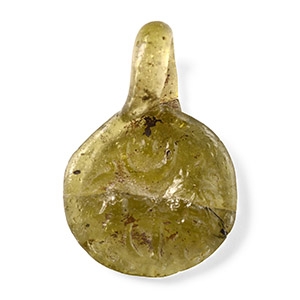
Late Roman Glass Pendant
5th-7th century A.D.Sold for (Inc. bp): £117
Discoid with impressed motif of a lion surmounted by a crescent and pellet. 1.23 grams, 24 mm
From the private collection of the late Mr S.M., 1969-1999. -
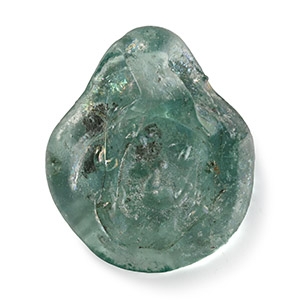
Roman Glass Pendant
1st-4th century A.D.Estimate: £100 - 140 (+bp*)
Opening Bid: £50
Discoid with impressed design of a bull's heads with cross above, objects in the field. 3.38 grams, 26 mm
From the private collection of the late Mr S.M., 1969-1999. -
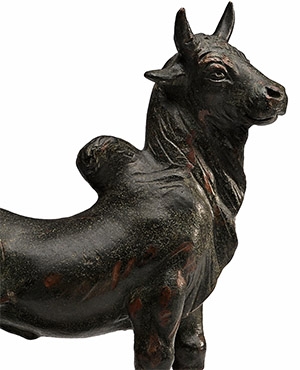
Bronze Figure of a Zebu Bull
Roman Imperial Period, 2nd-3rd century A.D.Sold for (Inc. bp): £11,700
Modelled in the round in alert pose with head raised and slightly turned; hair texture to the forehead, neck and shoulders; mounted on a custom-made stand. 2.3 kg total, 20 cm including stand
Art market, Bavaria, 1990s. with Christie's, New York, 7 December 2011, no.188. Accompanied by copies of the relevant Christie's catalogue pages. Accompanied by a copy of an Art Loss Register certificate, no.S00122050. This lot has been checked against the Interpol Database of stolen works of art and is accompanied by search certificate number no.12962-245248.
After the Roman annexation of Egypt, Egyptian cults such as that of the Apis bull were syncretised, becoming part of a distinctively Egyptian form of Roman polytheism. Representations of prancing Apis bulls, turned either left or right, have been found throughout the Roman Empire. However, it is also possible that this beautiful statuette is connected with the cult of Jupiter Dolichenus, where the armed god is usually standing upon a bull.
