
Loading, please wait...
LOT 0775
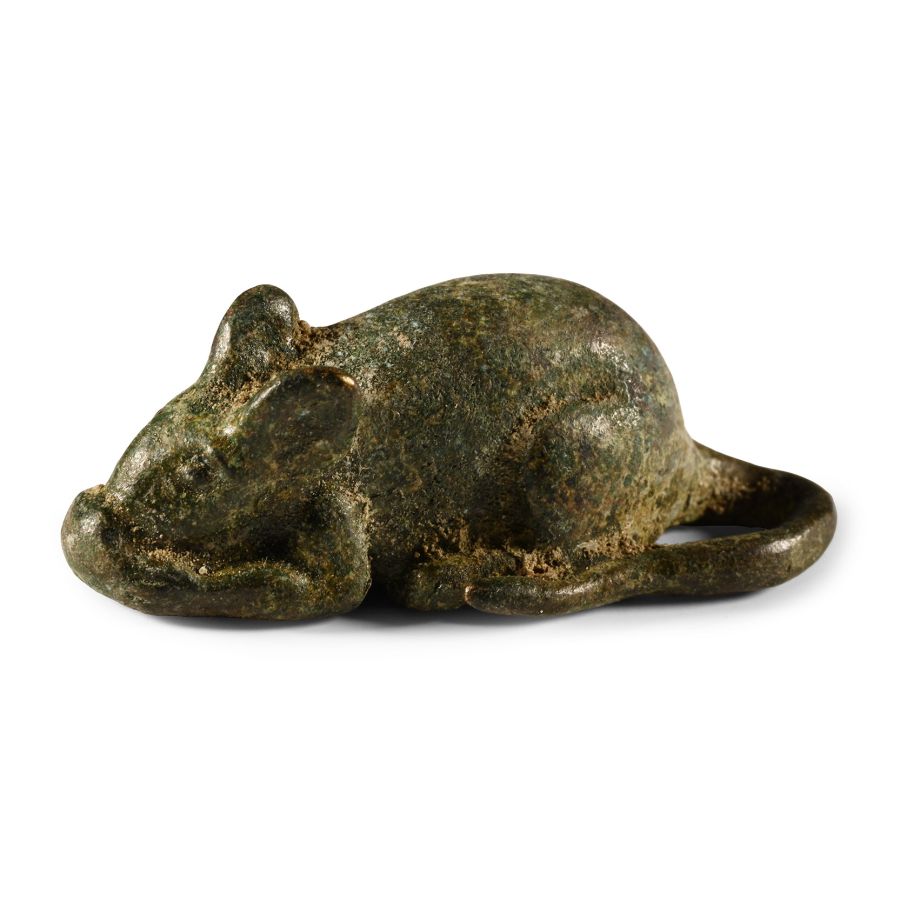
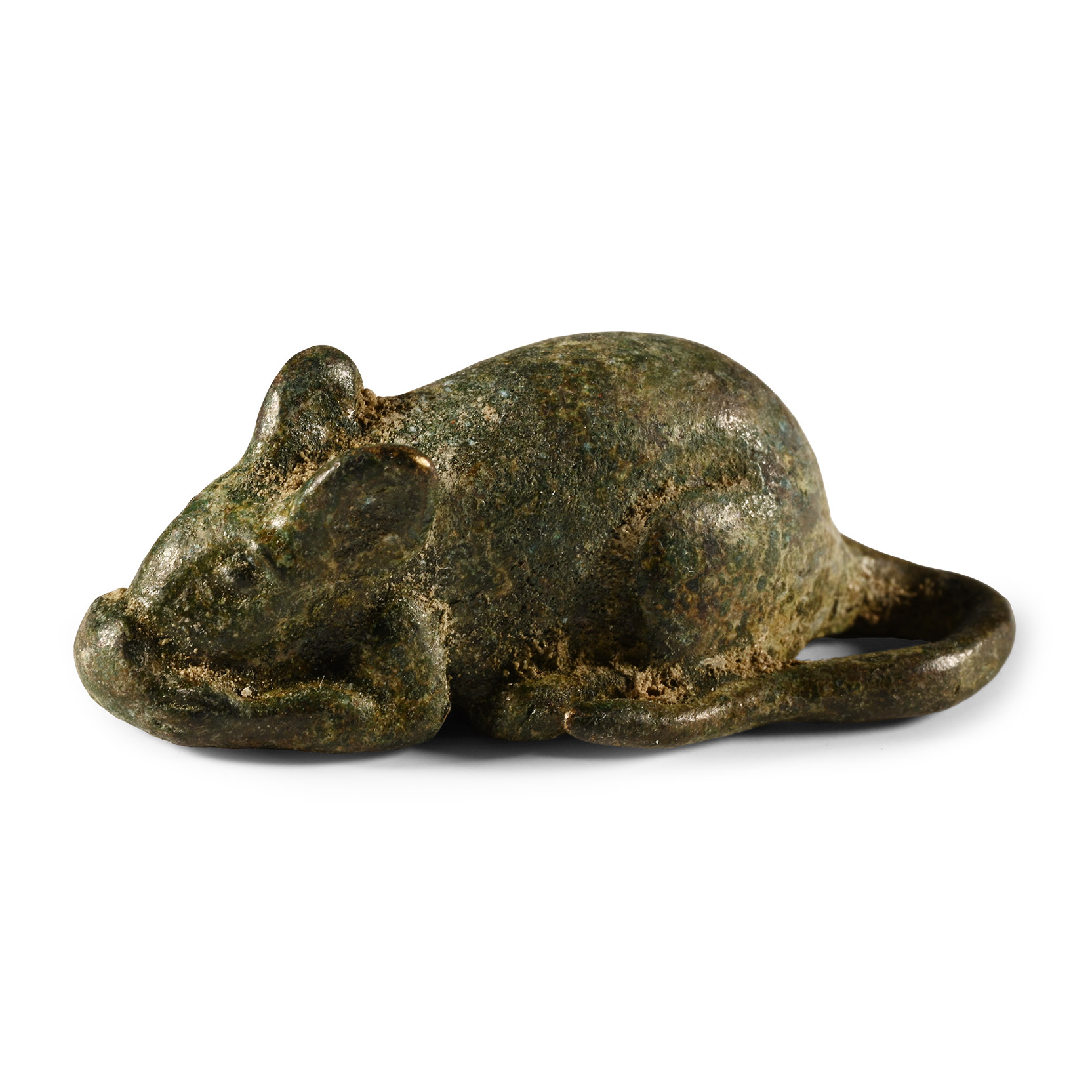
Roman Bronze Mouse Statuette
2ND-3RD CENTURY A.D.
1 1/2 in. (29.2 grams, 40 mm).
Shown with semi-naturalistic detailing in a crouching posture, eating a nut held in its front paws. [No Reserve]
ProvenanceFrom a London collection; acquired on the UK and European art markets before 2001.
LiteratureCf. Durham, E., Metal Figurines in Roman Britain, vol. 2, Reading, 2010, item 293, for type.
CONDITIONTimeLine Auctions follows a vetting process to ensure the authenticity and legality of all items, reinforcing our commitment to integrity and responsible trading. Each antiquity, antique, and coin lot undergoes thorough examination by a vetting committee of at least ten external specialists, professional trade association members, scientists, and archaeologists: Our Vetting Process
AUCTIONS:
TimeLine is a leading auction house specialising in antiquities, ancient art, collectables, natural history, coins, medals, and books. Our auctions offer museums, collectors, historians, and enthusiasts the opportunity to acquire unique and historically significant pieces.
-
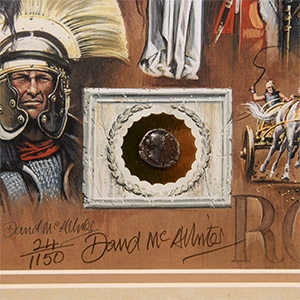
Roman Coin and Limited Edition Framed Print
3rd century A.D. and laterSold for (Inc. bp): £7
The coin mounted on 22 carat gold foil, framed with an art print signed by the artist David McAllister, depicting scenes of Roman military activity; limited edition number 24/1150. 1.3 kg, 49 x 36 cm
UK gallery, early 2000s. Accompanied by an old certificate of authenticity.
David McAllister's exciting design is a 'one of a kind' work that portrays the might and riches of the Roman civilisation. This limited edition print is a celebration of the award winning artist's lifetime dedication to historical paintings of the ancient world. To enhance appreciation of this rare and historic work, each individual print is signed and numbered by the artist. -
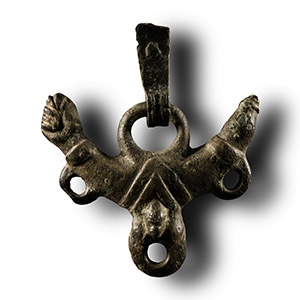
Roman Bronze Phallic Pendant
1st-2nd century A.D.Estimate: £1,000 - 1,400 (‡+bp*)
Opening Bid: £500
Amuletic fascinum formed as a crescent with phallus to the right, hand in the fica gesture to the left and male genitals below; each with a loop beneath for attachment of another pendant; large loop above and attachment strap with stud. 81.5 grams, 68 mm
Acquired in Europe in 1990s. European private collection. -
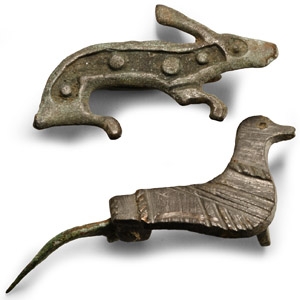
Roman Animal Brooch Collection
2nd century A.D.Sold for (Inc. bp): £143
Comprising: bird plate brooch with hinged pin and catch to the reverse; running hare plate brooch with recessed body to accept enamel fill, pin and catch to the reverse. 18.8 grams, 46-58 mm
Ex UK art market. Property of a Scottish collector, acquired in 2013.
