
Loading, please wait...
LOT 0108
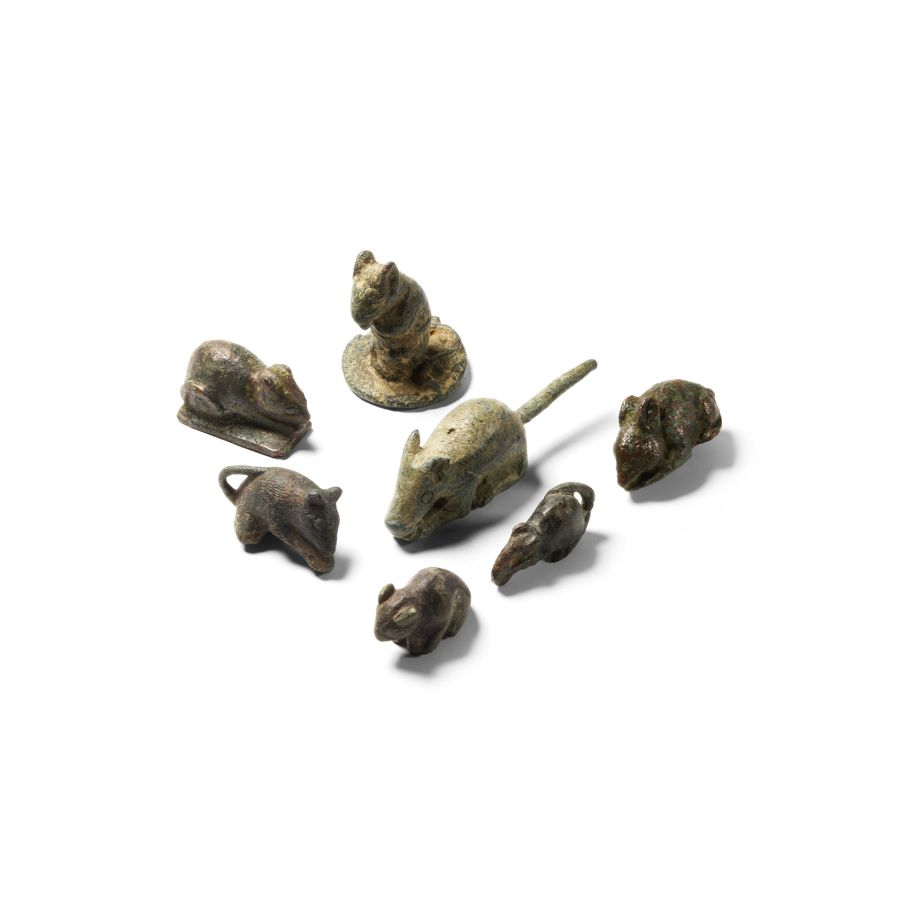
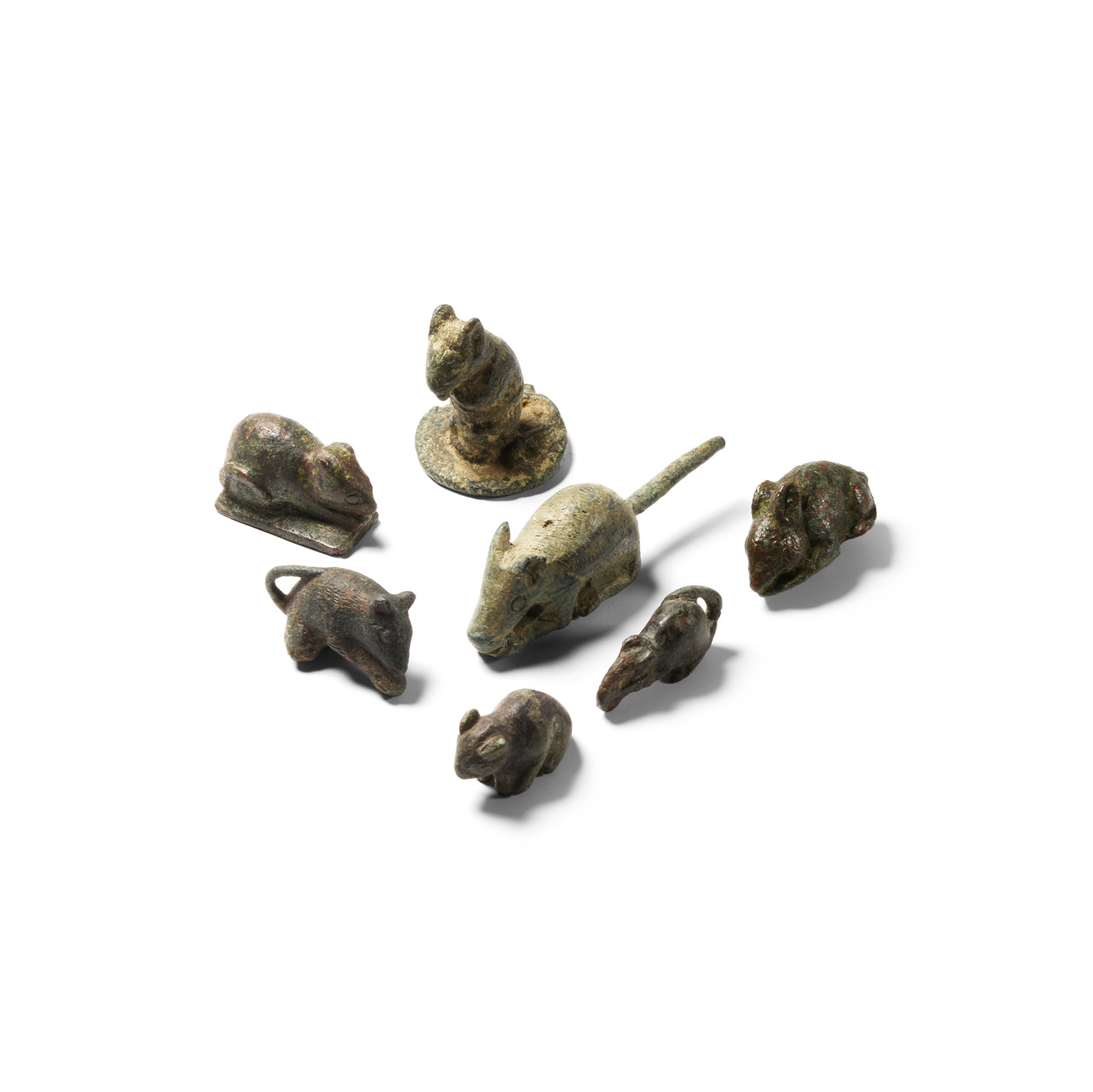
Roman Bronze Mouse Collection
1ST-4TH CENTURY A.D.
1 - 2 1/2 in. (212 grams total, 25-64 mm).
Modelled with semi-naturalistic detailing either standing or crouching, each nibbling at food held between their forepaws. [7]
Provenance‘The Ancient Menagerie Collection’ formerly the property of a Cambridgeshire lady, collected since the 1990s and acquired from auctions and dealers throughout Europe and the USA, now ex London collection.
CONDITIONTimeLine Auctions follows a vetting process to ensure the authenticity and legality of all items, reinforcing our commitment to integrity and responsible trading. Each antiquity, antique, and coin lot undergoes thorough examination by a vetting committee of at least ten external specialists, professional trade association members, scientists, and archaeologists: Our Vetting Process
AUCTIONS:
TimeLine is a leading auction house specialising in antiquities, ancient art, collectables, natural history, coins, medals, and books. Our auctions offer museums, collectors, historians, and enthusiasts the opportunity to acquire unique and historically significant pieces.
LOT 0108
Roman Bronze Mouse Collection
Estimate £1,200 - 1,700€1,390 - 1,970 (for guidance only)$1,620 - 2,300 (for guidance only)
-
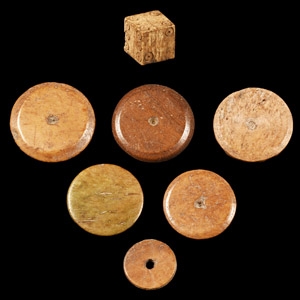
Roman 'Thames' Bone Gaming Piece and Dice Group
1st-4th century A.D.Sold for (Inc. bp): £124
Comprising six polished discoid counters and a single dice, the latter configured: 1:6; 2:5; 3:4 in punched ring-and-dot markers. 8 grams total, 7-18 mm
Found Billingsgate spoil from the Thames foreshore, London, UK. -
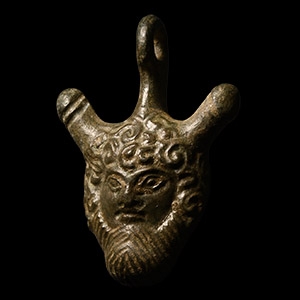
Roman Bronze Phallic Mask Pendant
1st-2nd century A.D.Sold for (Inc. bp): £416
Displaying the face of a bearded god, possibly Cernunnos or Pan, with curly hair and two horns in the shape of phallus; suspension ring to the top. 25.6 grams, 45 mm
Acquired in the 1990s. Ex property of a UK gentleman.
The head displays typical features associated with Romano-Celtic art, such as the lentoid eyes and the schematic rendering of the hair and beard. The head could be that of Pan, god of the wild countryside and of fertility in nature, thus making the phalli-shaped horns appropriate. It could also represent the Celtic god Cernunnos, a Gallic deity whose worship is known from Britain and the Continent from a number of monuments, inscriptions and figurines, as well as on the famous Gundestrup cauldron found in a bog in Denmark. His name means "the Horned One", and is depicted as a bearded male wearing a torc around his neck and with large horns or antlers on his head. Representations of him are known from as early as the fourth century B.C. from the Paspardo rock carving at Val Camonica, Northern Italy. Other representations include the monument set up by Parisian sailors which was discovered underneath Notre Dame cathedral, and the relief carving from Cirencester where his legs are in the form of two snakes. The Celts' preoccupation with fecundity caused them on occasions to represent their male gods with oversized phalli, and a bronze figure of Mercury from Tongres, France, depicts the god with two phalli on his head. -
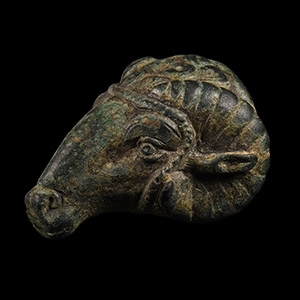
Roman Bronze Ram's Head Finial
1st century B.C.-3rd century A.D.Sold for (Inc. bp): £1,105
Naturalistically modelled in the round, coat formed of tightly-curled tufts, notched and curled horns; neck formed as oval-shaped socket. 87 grams, 37 mm
‘The Ancient Menagerie Collection’ formerly the property of a Cambridgeshire lady, collected since the 1990s and acquired from auctions and dealers throughout Europe and the USA, now ex London collection.
