
Loading, please wait...
LOT 0743
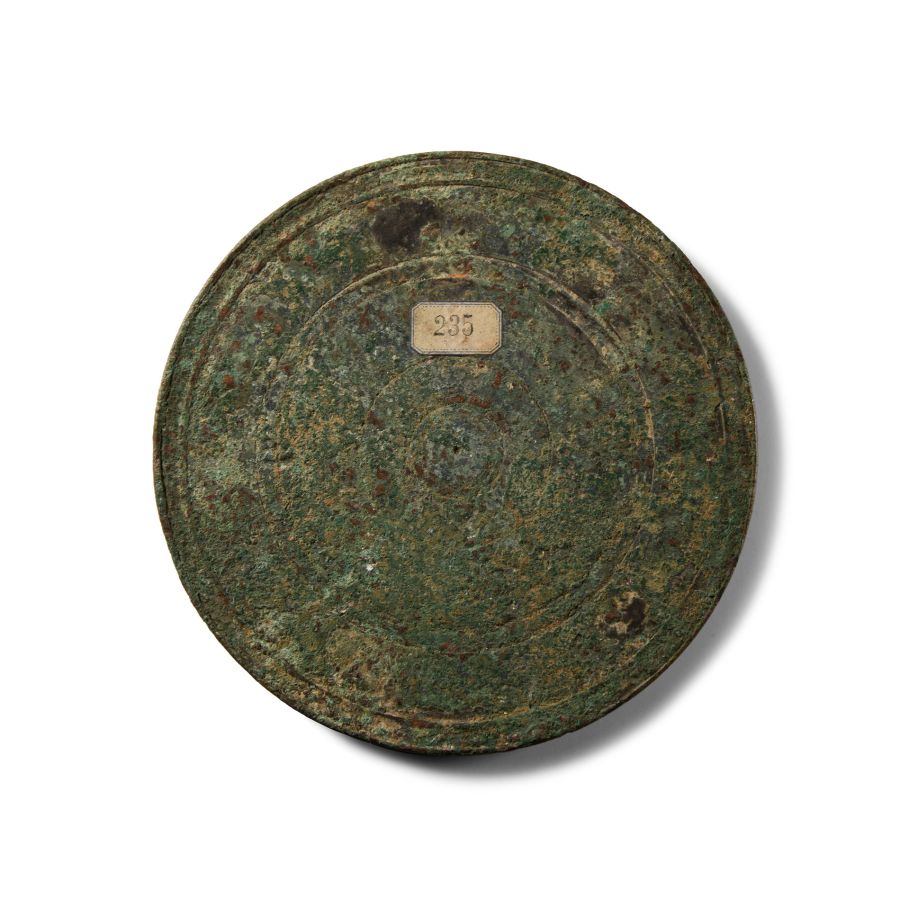
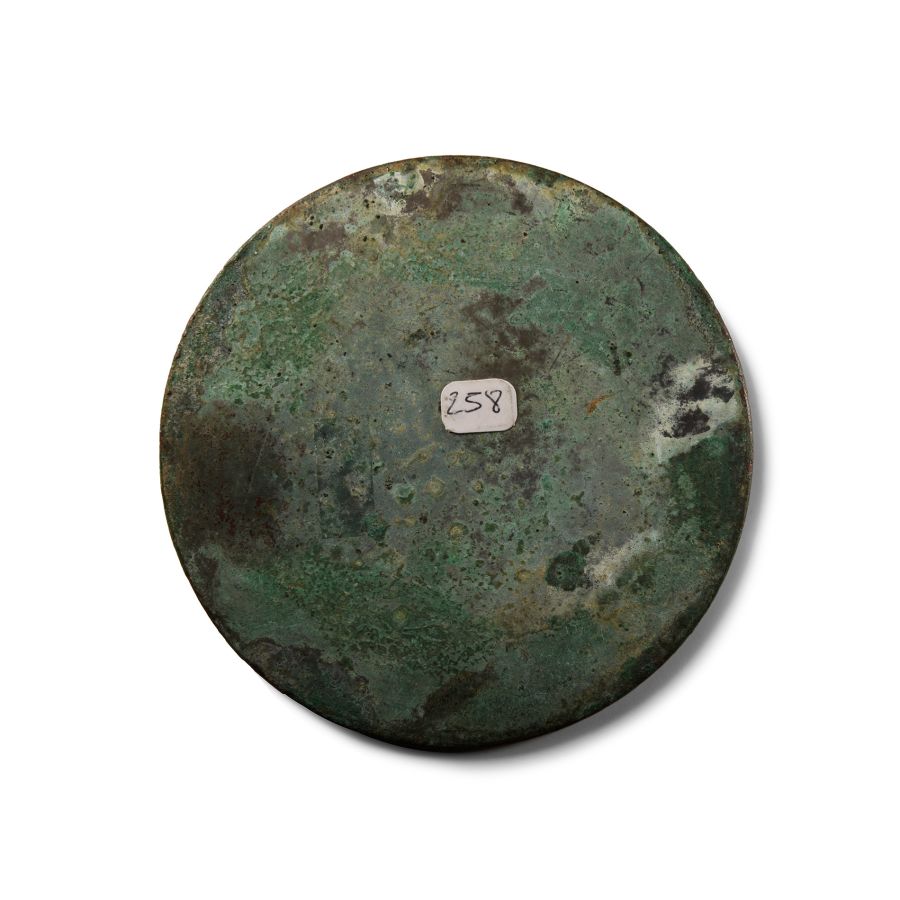
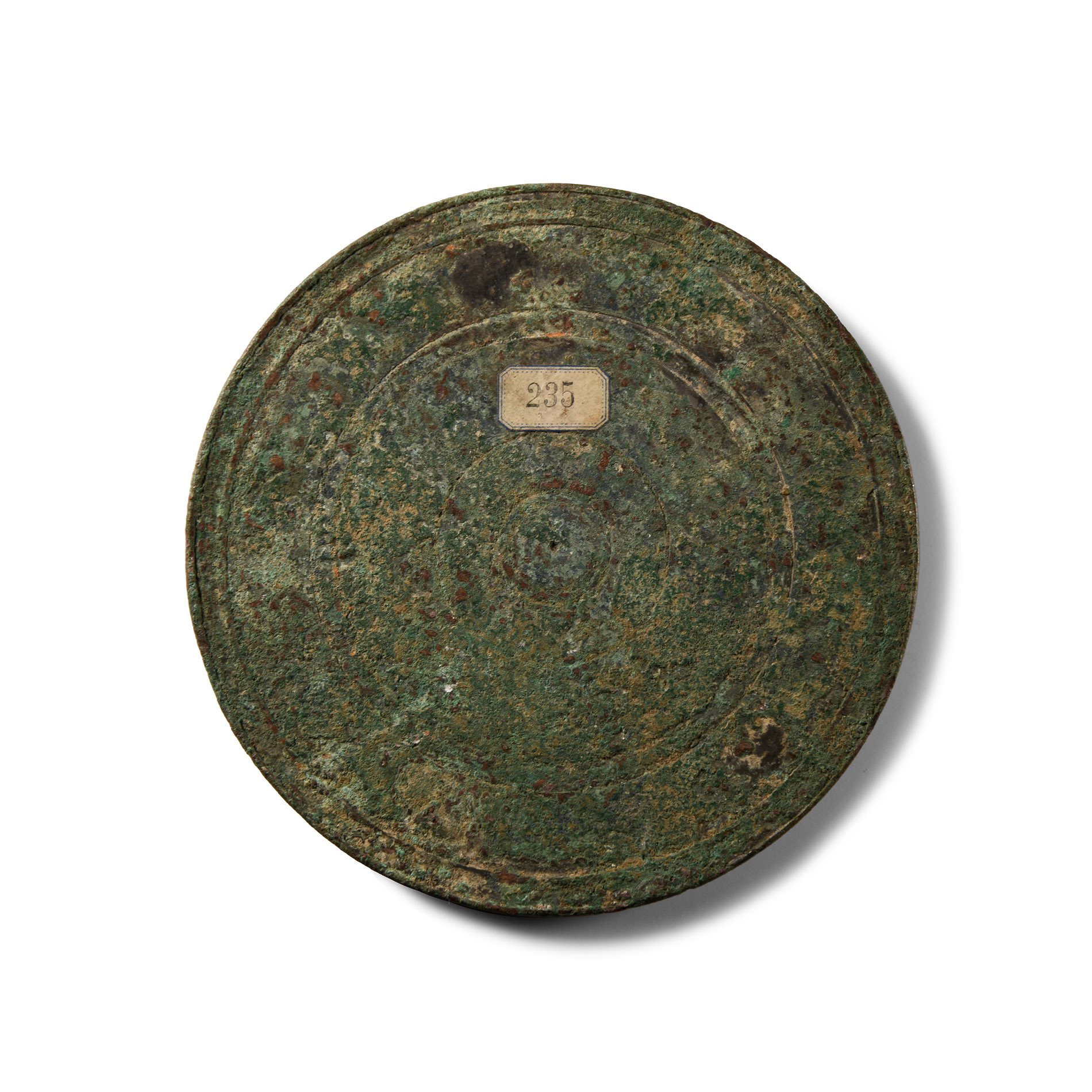
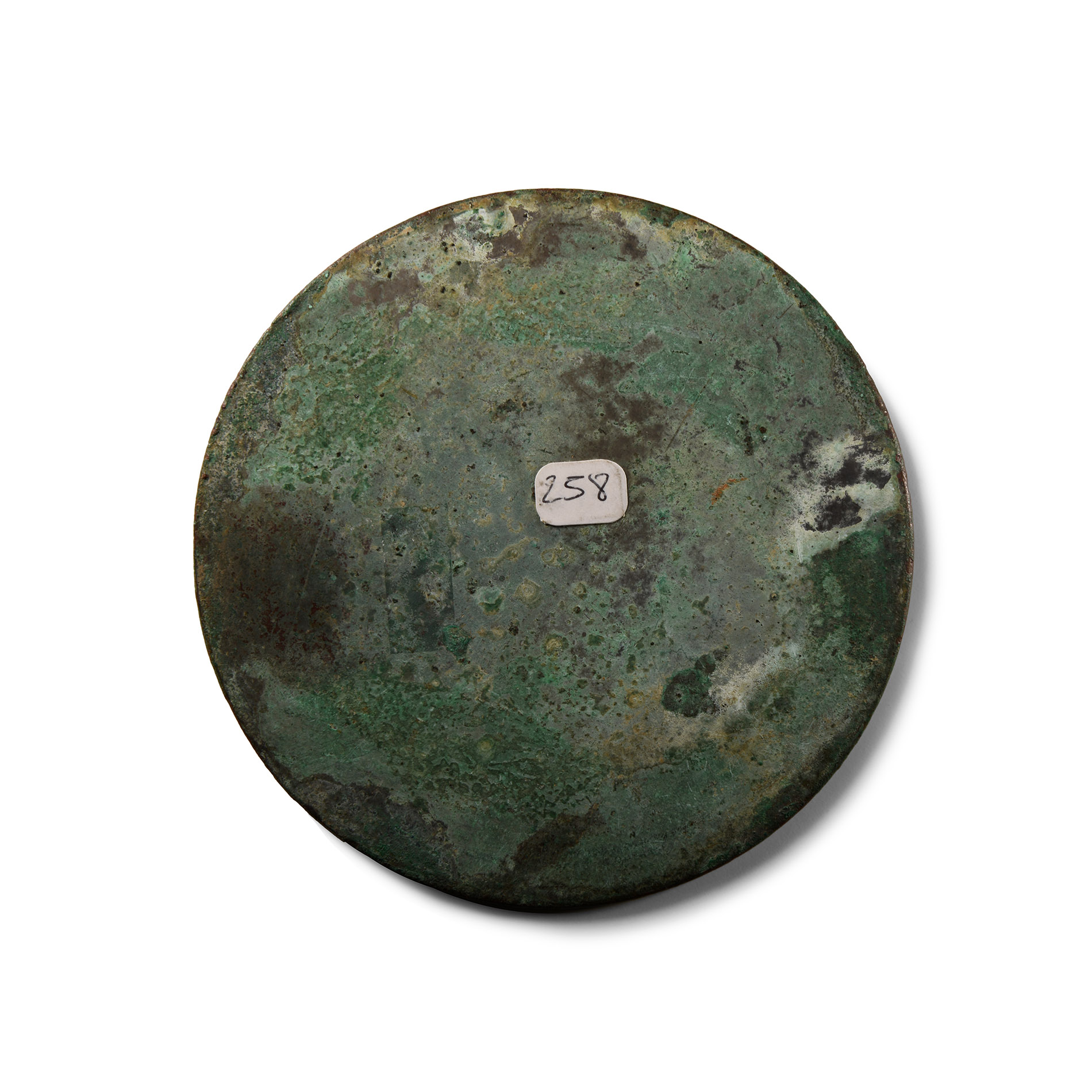
Roman Bronze Mirror
1ST-2ND CENTURY A.D.
4 in. (127 grams, 10.3 cm).
Discoid plaque with one polished face, slightly raised rim, incised concentric rings, old label '235' to one side '258' to the other.
ProvenanceEx Louis-Gabriel Bellon (1819?-1899), France.
Acquired from Jack-Philippe Ruellan, 4 April 2009, no.258.
Cf. The Metropolitan Museum of Art, New York, accession number 74.51.5413, for a similar mirror.
CONDITIONTimeLine Auctions follows a vetting process to ensure the authenticity and legality of all items, reinforcing our commitment to integrity and responsible trading. Each antiquity, antique, and coin lot undergoes thorough examination by a vetting committee of at least ten external specialists, professional trade association members, scientists, and archaeologists: Our Vetting Process
AUCTIONS:
TimeLine is a leading auction house specialising in antiquities, ancient art, collectables, natural history, coins, medals, and books. Our auctions offer museums, collectors, historians, and enthusiasts the opportunity to acquire unique and historically significant pieces.
-
.jpg)
Roman Marble Panther Protome Fragment
1st century A.D.Sold for (Inc. bp): £2,860
Sculpted as a panther with head turned on its long muscular neck, mouth open and teeth bared; highly polished finish; mounted on a custom-made stand. 758 grams total, 15 cm high including stand
Previously acquired from a USA collection, 1980s. Ex private German collection. This lot has been checked against the Interpol Database of stolen works of art and is accompanied by search certificate no.12082-213586. -
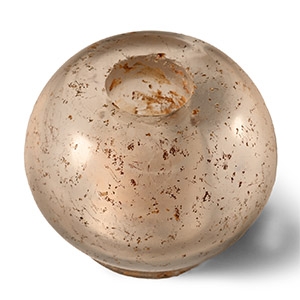
Roman Rock Crystal Vessel
1st-4th century A.D.Sold for (Inc. bp): £572
Globular in form with low basal disc, central socket. 36.7 grams, 32 mm
Acquired in the 1970s. Property of a London lady, part of her family's collection. -
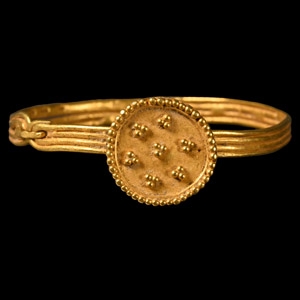
Late Roman Gold Bracelet for a Baby
Circa 4th-6th century A.D.Sold for (Inc. bp): £572
Comprising a penannular band formed of four wires soldered together, the rounded ends joined together with a simple loop; raised conical bezel with discoid face, set with seven granule clusters; Eastern Empire. 4.58 grams, 37 mm
From a private family collection formed in the 1970s.
