
Loading, please wait...
LOT 0859
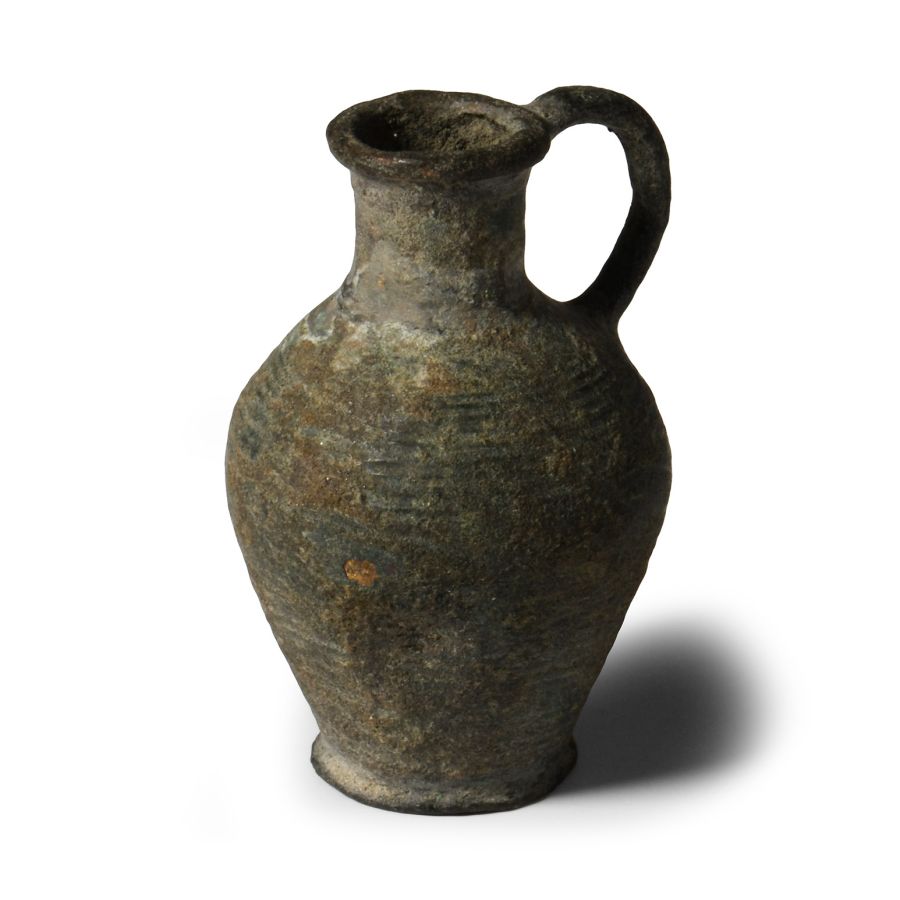
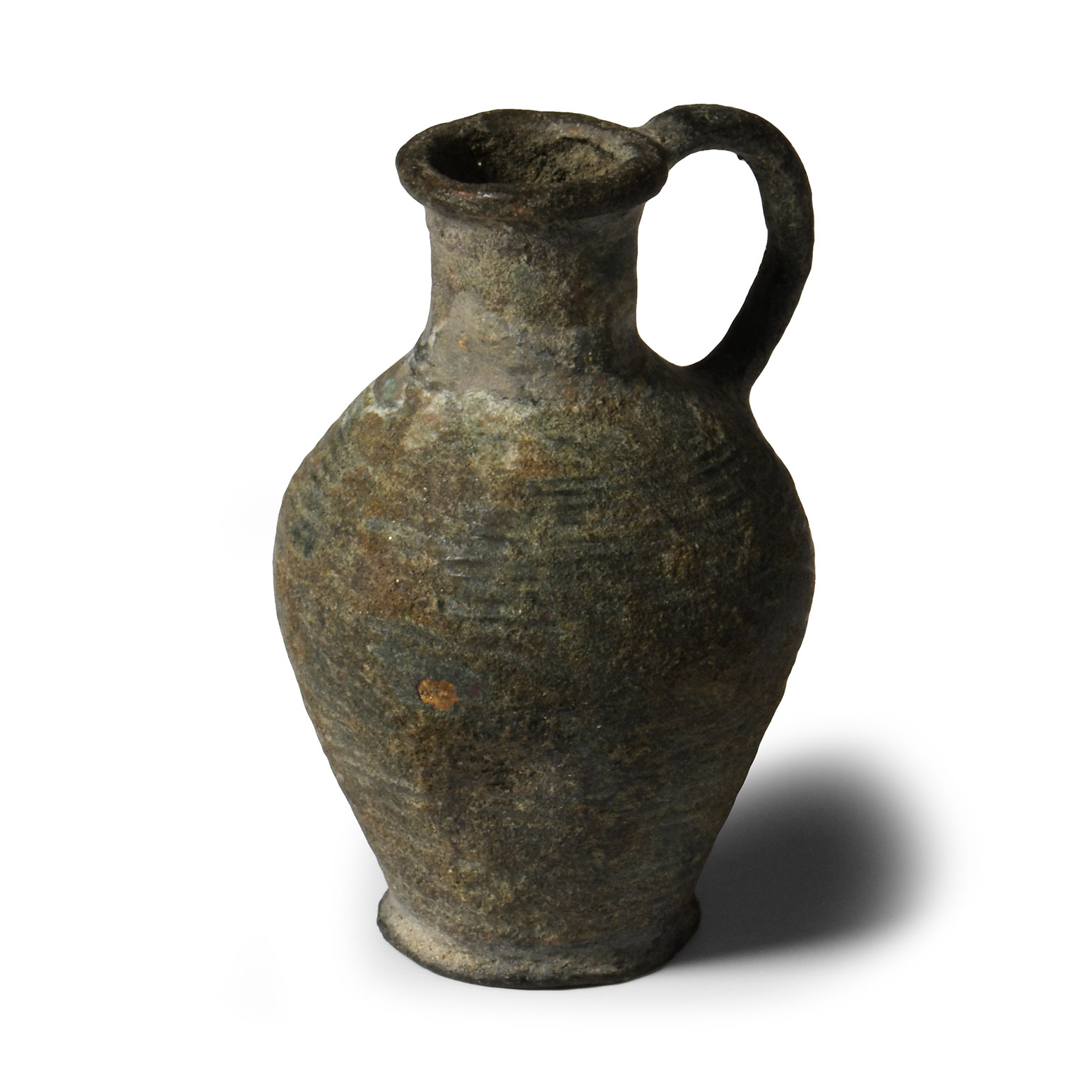
Roman Bronze Miniature Flagon
2ND-3RD CENTURY A.D.
1 5/8 in. (10.9 grams, 42 mm).
With piriform body, short neck, everted rim and strap handle, circumferential bands to the body. [No Reserve]
ProvenanceAcquired from Den of Antiquity, Cambridgeshire, UK, 2010.
Ian Wilkinson collection, Nottinghamshire, UK.
Cf. Beutler, F. et al., Der Adler Roms. Carnuntum und der Armee der Cäsaren, Bad-Deutsch Altenberg, 2017, item 661, for similar type in terracotta.
FootnotesThe small size of this bronze container suggests that it was intended as a toilette object, or as an oil vessel for athletes, generally associated with a strigil. Its could also have been used as a balsamarium.
CONDITIONTimeLine Auctions follows a vetting process to ensure the authenticity and legality of all items, reinforcing our commitment to integrity and responsible trading. Each antiquity, antique, and coin lot undergoes thorough examination by a vetting committee of at least ten external specialists, professional trade association members, scientists, and archaeologists: Our Vetting Process
AUCTIONS:
TimeLine is a leading auction house specialising in antiquities, ancient art, collectables, natural history, coins, medals, and books. Our auctions offer museums, collectors, historians, and enthusiasts the opportunity to acquire unique and historically significant pieces.
-
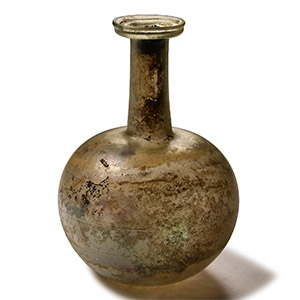
Roman Glass Vessel with Wheel-Cut Design
1st-3rd century A.D.Estimate: £600 - 800 (+bp*)
Opening Bid: £300
With globular body and long tubular neck, dimple base, everted rim with gusset to the outer edge; wheel-cut horizontal lines to the body. 115 grams, 13 cm
Acquired on the German art market, 1989-1995. with The Museum Gallery, 19 Bury Place, London, WC, UK, 1998-2003. Property of a London based academic, 2003-present. -
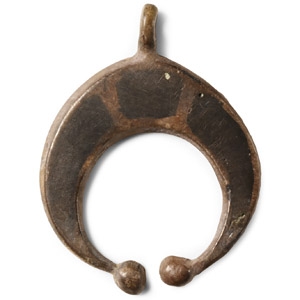
Roman Silver Lunar Pendant
2nd-3rd century A.D.Sold for (Inc. bp): £124
With a smooth upper face and a large pellet to each terminal, integral suspension loop above. 2.69 grams, 26 mm
Ex German art market, 2000s. Acquired from an EU collector living in London. From the collection of Surrey, UK, gentleman. -
.jpg)
Roman and Other Bronze Group
1st-17th century A.D.Sold for (Inc. bp): £104
Including a Roman military buckle, a Roman bell, candle spike; lead-alloy votive mirror and other items, sold with an early 1st millennium B.C. Luristan hairpin with silver wire finial. 178 grams total, 1.4-11.6 cm
Property of the vendor's grandfather, thence by family descent, circa 1985. From the private collection of a New York, USA gentleman.
