
Loading, please wait...

LOT 0756
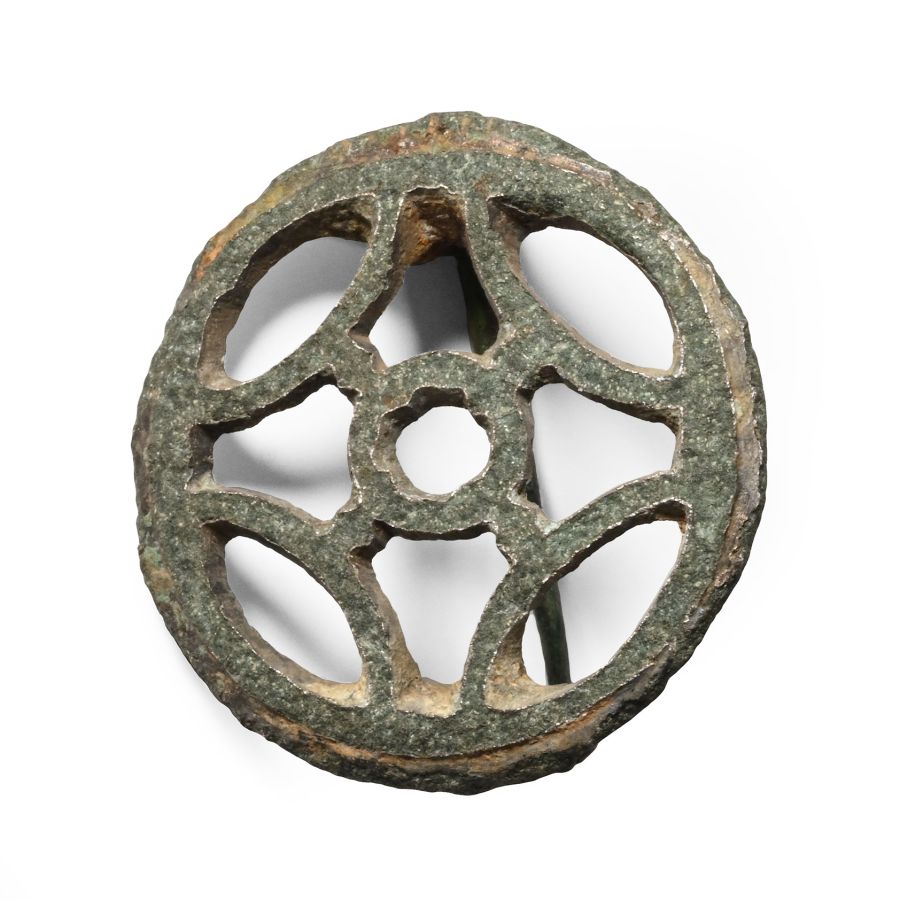
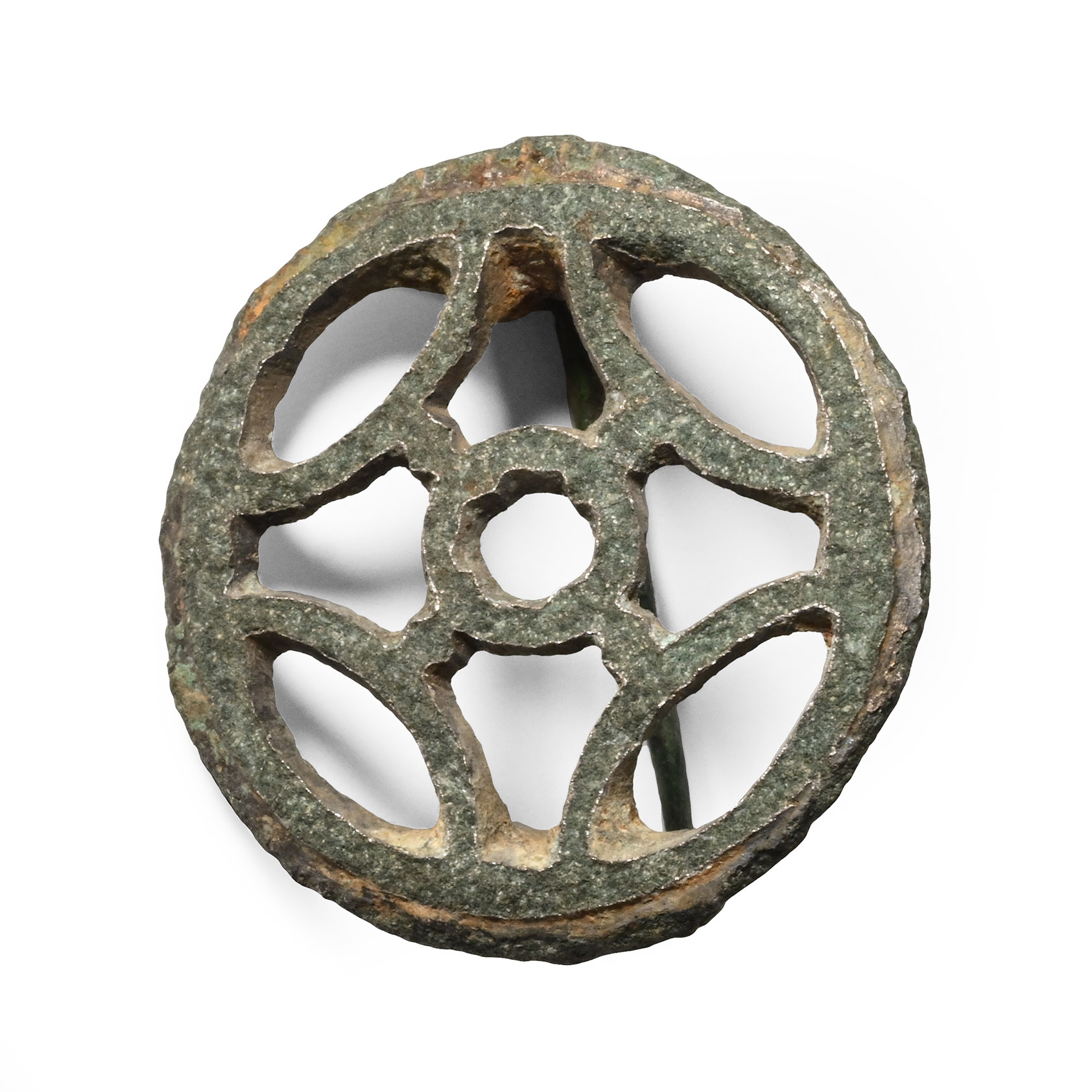
Roman Bronze Military Plate Brooch
2ND CENTURY A.D.
1 1/4 in. (10.3 grams, 33 mm).
Openwork body with a shield design; pin and catchplate to the reverse. [No Reserve]
ProvenanceEx German art market, 2000s.
Acquired from an EU collector living in London.
From the collection of Surrey, UK, gentleman.
TimeLine Auctions follows a vetting process to ensure the authenticity and legality of all items, reinforcing our commitment to integrity and responsible trading. Each antiquity, antique, and coin lot undergoes thorough examination by a vetting committee of at least ten external specialists, professional trade association members, scientists, and archaeologists: Our Vetting Process
AUCTIONS:
TimeLine is a leading auction house specialising in antiquities, ancient art, collectables, natural history, coins, medals, and books. Our auctions offer museums, collectors, historians, and enthusiasts the opportunity to acquire unique and historically significant pieces.
-
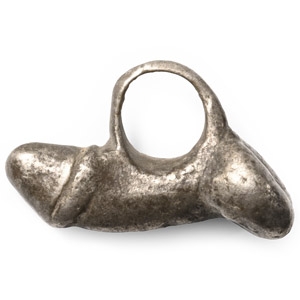
Roman Silver Phallic Pendant
1st-4th century A.D.Sold for (Inc. bp): £208
Modelled in the round with a large suspension loop. 9.3 grams, 26 mm
Ex German art market, 2000s. Acquired from an EU collector living in London. From the collection of Surrey, UK, gentleman. -
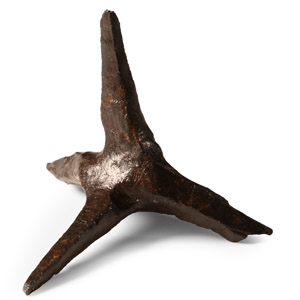
Roman Iron Caltrop
4th century A.D. or laterSold for (Inc. bp): £143
Hand-forged with square-section spikes. 8.74 grams, 42 mm
From the collection of the famous author, writer and speaker, Gordon Bailey, Essex, UK; formed since 1968.
Caltrops have been recovered from Roman sites where military action took place, and from medieval fortresses areas. Caltrops were used to slow down an enemy infantry attack, and were a deterrent to mounted soldiers. -
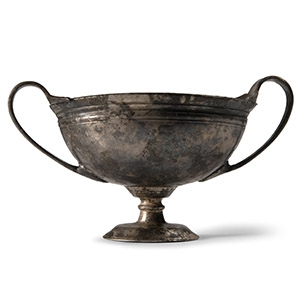
Roman Silver Kantharos Wine Cup
2nd century B.C.-1st century A.D.Estimate: £3,500 - 4,500 (+bp*)
Opening Bid: £1,944
With deep spherical body supported on a round stand; incised with a band around the inner surface and concentric circles on the outer body; two looped high handles, one with stipple engraved monogram on the upper side. 156 grams, 14 cm wide
Ex Mansees collection, formed 1950s-early 1990s. From a large American collection formed in Chicago, Illinois, USA, in 1995. From a European collection. This lot has been checked against the Interpol Database of stolen works of art and is accompanied by search certificate no.11627-197618.
