
Loading, please wait...

LOT 0810
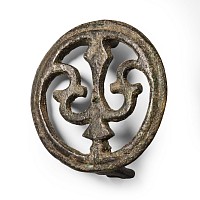
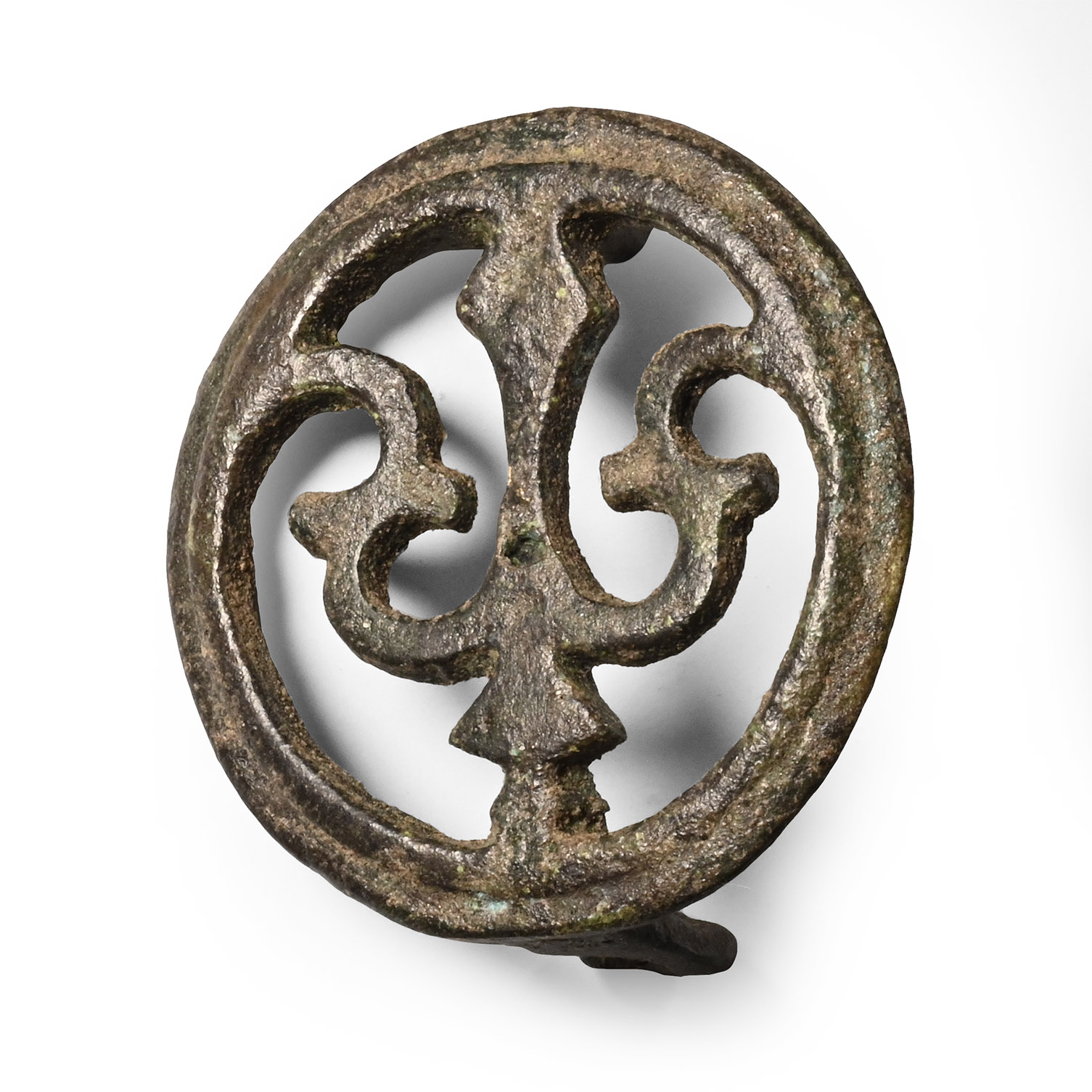
Roman Bronze Military Plate Brooch
2ND-3RD CENTURY A.D.
1 1/4 in. (8.2 grams, 31 mm).
With openwork body formed of volute scrolls; pin-lugs and catchplate to the reverse. [No Reserve]
ProvenanceEx German art market, 2000s.
Acquired from an EU collector living in London.
From the collection of Surrey, UK, gentleman.
TimeLine Auctions follows a vetting process to ensure the authenticity and legality of all items, reinforcing our commitment to integrity and responsible trading. Each antiquity, antique, and coin lot undergoes thorough examination by a vetting committee of at least ten external specialists, professional trade association members, scientists, and archaeologists: Our Vetting Process
AUCTIONS:
TimeLine is a leading auction house specialising in antiquities, ancient art, collectables, natural history, coins, medals, and books. Our auctions offer museums, collectors, historians, and enthusiasts the opportunity to acquire unique and historically significant pieces.
-
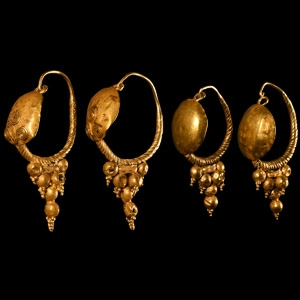
Roman Gold Earring Pairs
2nd-3rd century A.D. or earlierSold for (Inc. bp): £1,430
Two pairs of earrings with decoratively twisted hoops, domed plaques and pyramid bulbs embellished with granule clusters; one pair with gold wire spirals to the plaques. 16.97 grams total, 42-50 mm
Acquired between 1950-1970s. Ex Swiss private collection. -
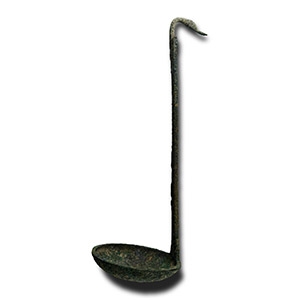
Roman Bronze Duck-Headed Ladle
1st-3rd century A.D.Sold for (Inc. bp): £520
With broad bowl and inturned rim, D-section handle, with one remaining hooked duck-head finial. 208 grams, 26.5 cm
Private collection of Mr S.A., Switzerland, 1990s, thence by descent. -
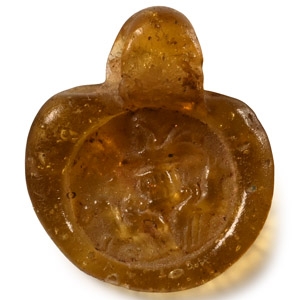
Late Roman Glass Pendant with Helios Apollo on Quadriga
4th century A.D.Sold for (Inc. bp): £117
Discoid in plan with integral loop, impressed design of Helios-Apollo in his quadriga chariot. 1.4 grams, 21 mm
Collected from 1970-1999. From the collection of the late Mr S.M., London, UK.
