
Loading, please wait...
LOT 0730
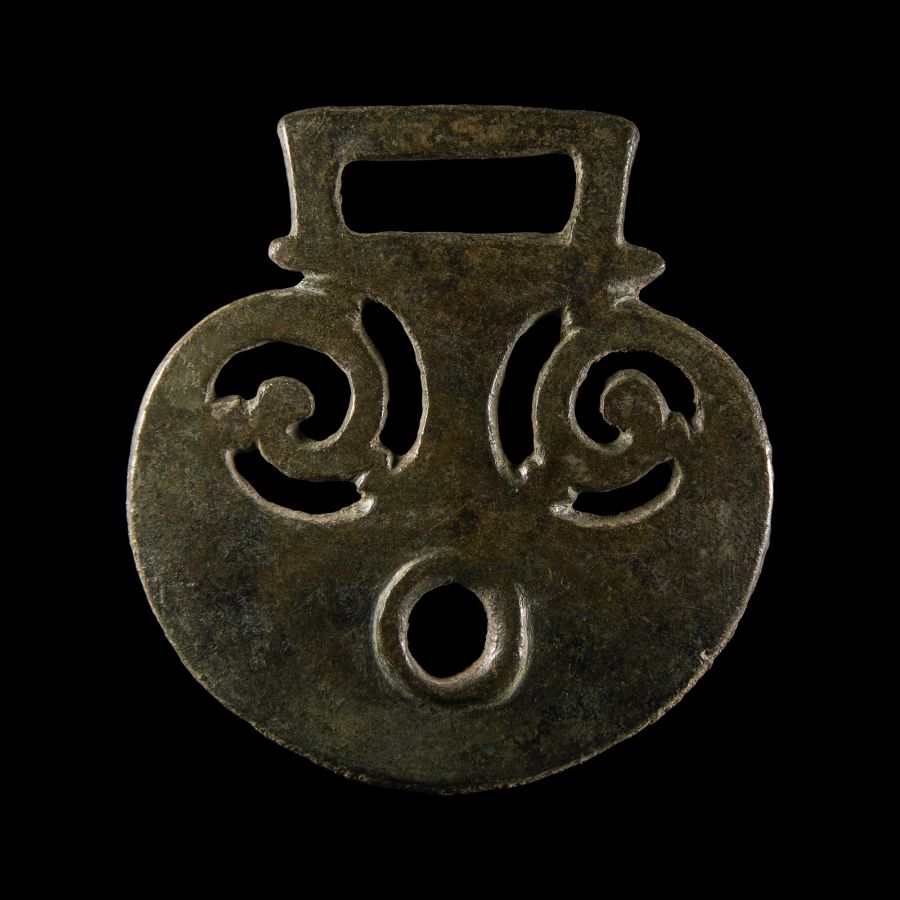
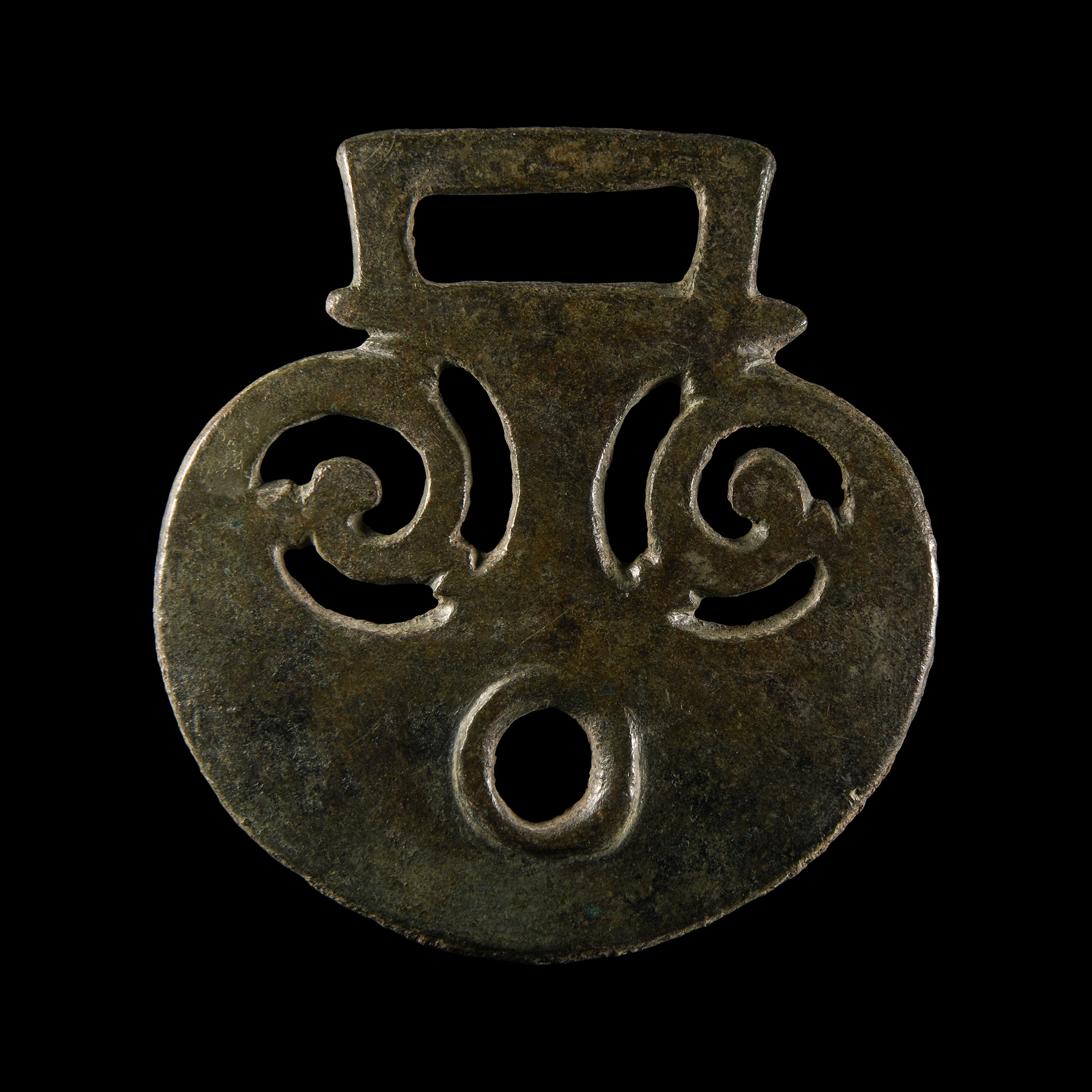
Roman Bronze Military Equestrian Pelta Fitting
1ST-3RD CENTURY A.D.
3 3/8 in. (94 grams, 86 mm).
Formed with an openwork pelta-shaped body with roughly circular void; sub-rectangular projecting fitting lug. [No Reserve]
ProvenanceAcquired on the EU art market around 2000.
From the collection of a North American gentleman.
TimeLine Auctions follows a vetting process to ensure the authenticity and legality of all items, reinforcing our commitment to integrity and responsible trading. Each antiquity, antique, and coin lot undergoes thorough examination by a vetting committee of at least ten external specialists, professional trade association members, scientists, and archaeologists: Our Vetting Process
AUCTIONS:
TimeLine is a leading auction house specialising in antiquities, ancient art, collectables, natural history, coins, medals, and books. Our auctions offer museums, collectors, historians, and enthusiasts the opportunity to acquire unique and historically significant pieces.
-
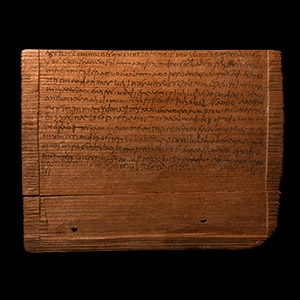
Roman Inked Wooden 'Will of Pomponius Maximinianus' Tablet
Circa 320 A.D.Sold for (Inc. bp): £5,200
Two adjoining parts of an inked wooden tablet, comprising 13 lines of text to the recessed upper face with two piercings to the lower edge; the reverse with an inked inscription reading 'TESTAMENTVUM / POMPONIMAXIMI' (the will of Pomponius Maximus); the 13 lines of inked cursive text following the grain of the wood, the text containing instructions from a will concerning the inheritance of fields on the Mustulo estate (fundus Mustulo), to a Iulius Dancharrus (son of the testator); a field with eight fig-trees, bought from a Iulius Castricius, and several sheep to 'my beloved daughter Zabullania'. 64 grams total, 19.5-20 cm wide
From an important London collection since 1975. This lot has been checked against the Interpol Database of stolen works of art and is accompanied by searcher certificate no. 200269.
The text is written in a very formulaic language typical of Roman legal-documents (among other things, familia testamenti faciundi erga emit Iul. Maianus: the entire possessions, in order to make a will, was bought by Iul. Maianus). -
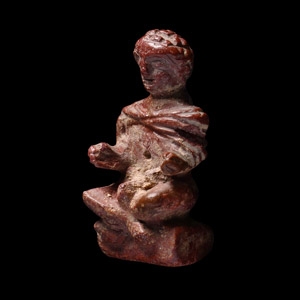
Late Roman Glass Pendant of a Seated Cloaked Male
3rd-4th century A.D.Sold for (Inc. bp): £117
Modelled in the round, seated cross-legged on a rectangular base, featuring semi-naturalistic facial and anatomical features and an exaggerated phallus; suspension loop to reverse. 9.13 grams, 36 mm high
Fine condition.
Acquired 1969-1999. London collection of the late Mr S.M., thence by descent. -
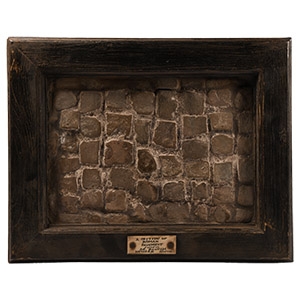
Section of Roman Newark Pavement
1st-4th century A.D.Sold for (Inc. bp): £845
The section comprising square and rectangular tesserae set into Roman cement; held in a wooden frame with identification plaque. 4.1 kg, 33.3 cm wide
From a 19th century collection based on the bone plaque and frame. From an old collection of antiquities built up by a family in Newark, Nottinghamshire, UK.
This floor section was originally found presumably near the the site of Ad Pontem, a large walled Roman town on the outskirts of Newark.
