
Loading, please wait...

LOT 0690
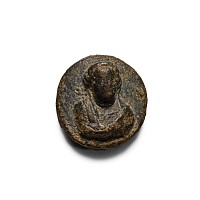
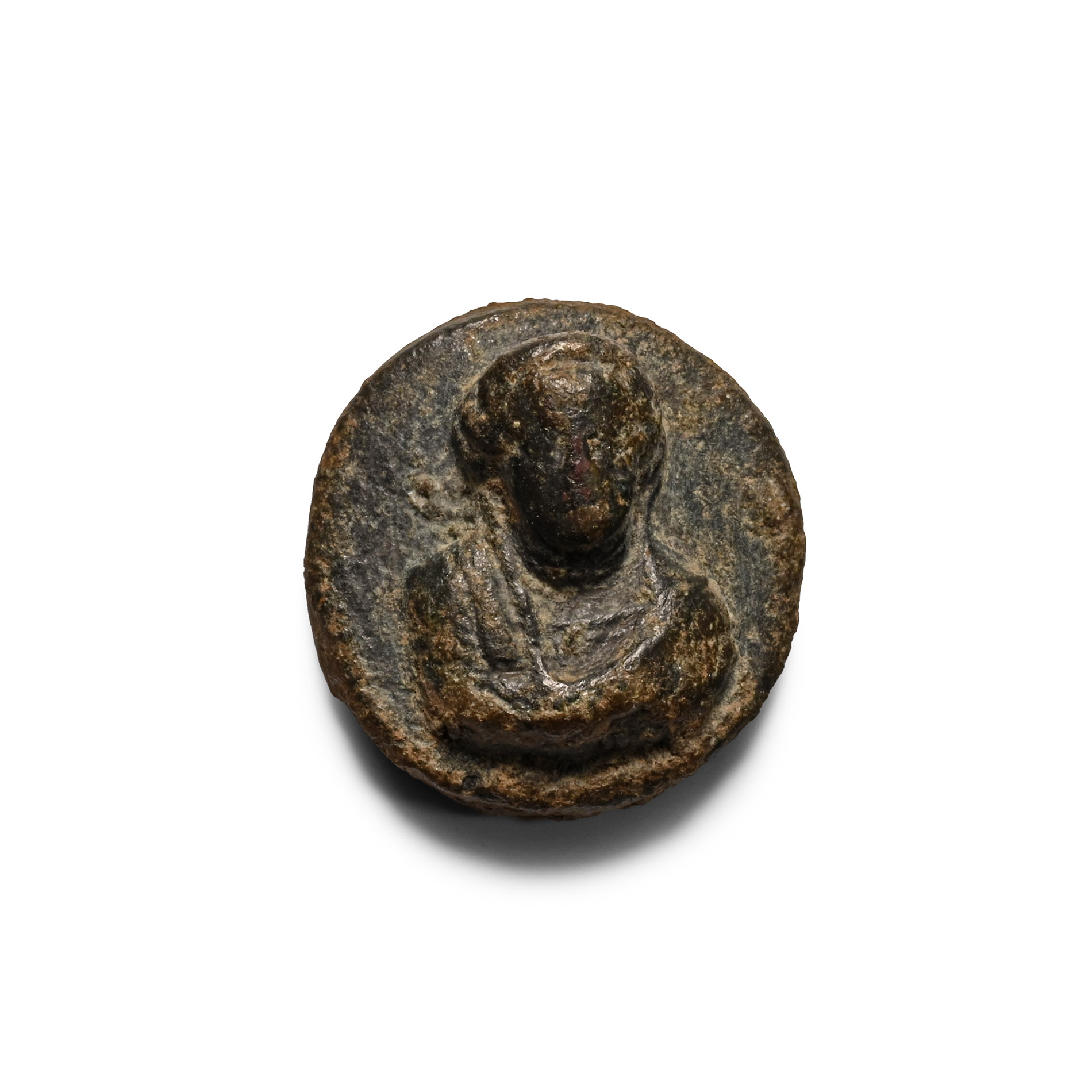
Roman Bronze Military Applique
1ST-2ND CENTURY A.D.
5/8 in. (4.75 grams, 16 mm).
Discoid in plan with low-relief facing bust.
ProvenanceAcquired 1980-2015.
Ex Abelita family collection.
TimeLine Auctions follows a vetting process to ensure the authenticity and legality of all items, reinforcing our commitment to integrity and responsible trading. Each antiquity, antique, and coin lot undergoes thorough examination by a vetting committee of at least ten external specialists, professional trade association members, scientists, and archaeologists: Our Vetting Process
AUCTIONS:
TimeLine is a leading auction house specialising in antiquities, ancient art, collectables, natural history, coins, medals, and books. Our auctions offer museums, collectors, historians, and enthusiasts the opportunity to acquire unique and historically significant pieces.
-
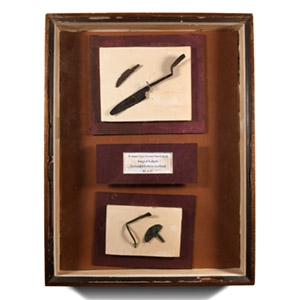
Roman Bronze Battlefield Surgical Scalpels
Circa 83-87 A.D.Sold for (Inc. bp): £546
Mounted in an old custom glazed presentation case with explanatory labels; found Inchtuthil, Scotland. 1.42 kg total, 38 x 29.2 cm
From the Roman legionary fortress Inchtuthil, Perthshire, 83-87 A.D. Private UK collection. Acquired in the 1980s. Property of a Cambridgeshire gentleman. -
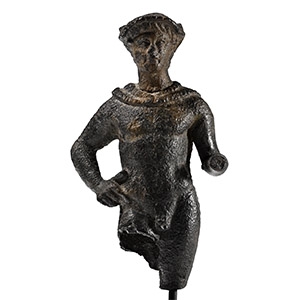
Roman Bronze Mercury Statuette
1st century A.D.Sold for (Inc. bp): £715
The figure standing nude with right hand pressed against the hip, left arm bent and forearm extended; narrow chlamys worn across the shoulders and down the back terminating at the rear of the knees; the facial features modelled in some detail with slight oversized eyes, perhaps to accept a silver inlay; petasos to the head with vestigial lateral wings; mounted on a custom-made stand. 778 grams total, 17.2 cm including stand
Acquired from Simon Shipp, circa 1997. Believed to be published in an old Den of Antiquity catalogue. From an important Cambridgeshire estate; thence by descent. -
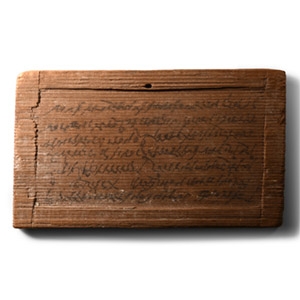
Roman Inked Wooden Legal Document
Late 4th century A.D.Sold for (Inc. bp): £3,120
With a recessed panel on one side and scored frame with securing hole to one long side; seven lines of inked text in Roman cursive containing the record of a legal document in a formulaic legal language; two part-lines of cursive text to reverse; supplied with two monochrome photographs of the tablet displaying the text to advantage. 19.91 grams, 12.5 x 7.5 cm
From an important London collection since 1975. Accompanied by a collection of two 1970s photographs of the the tablet.
