
Loading, please wait...
LOT 0675
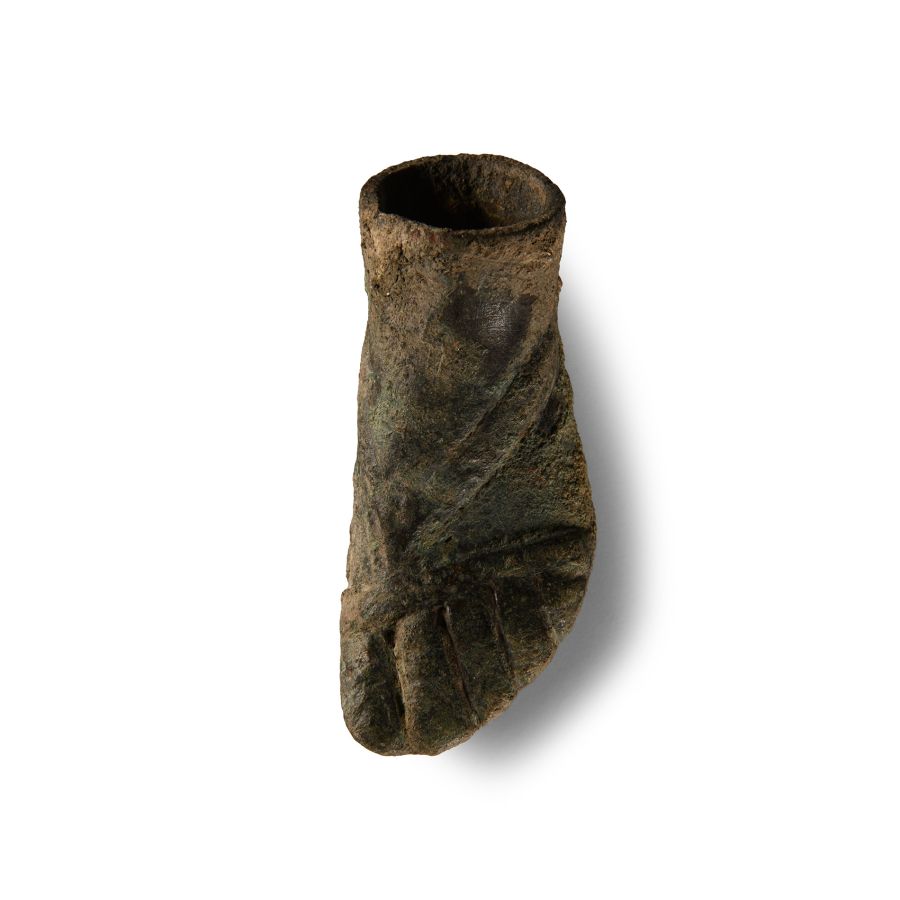
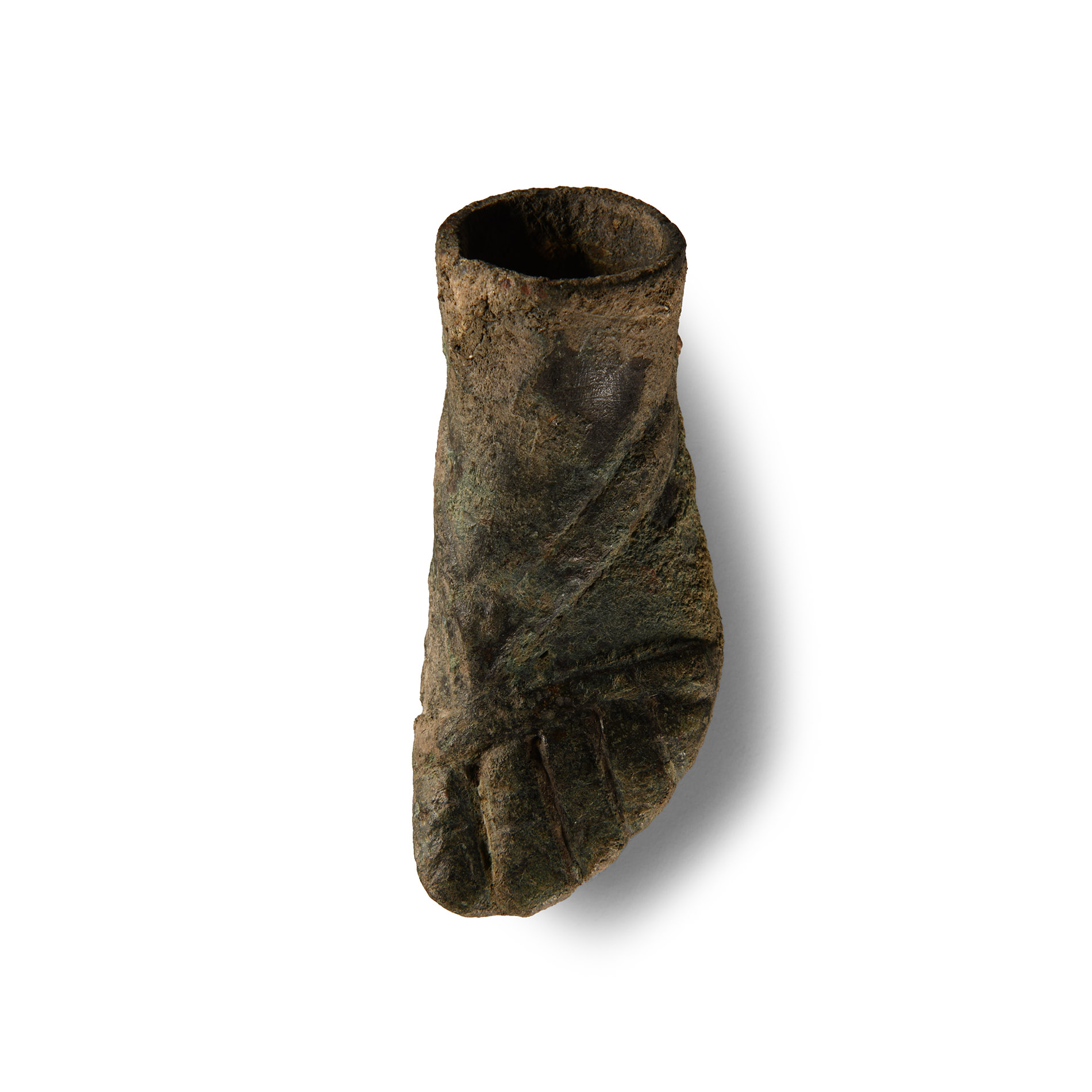
Roman Bronze Mercury Votive Foot
1ST-2ND CENTURY A.D.
2 3/4 in. (92 grams, 70 mm).
Hollow-formed with raised posture, low-relief detailed strapping. [No Reserve]
ProvenanceProperty of a Gloucestershire, UK, collector.
Property of an East Sussex, UK, gentleman.
TimeLine Auctions follows a vetting process to ensure the authenticity and legality of all items, reinforcing our commitment to integrity and responsible trading. Each antiquity, antique, and coin lot undergoes thorough examination by a vetting committee of at least ten external specialists, professional trade association members, scientists, and archaeologists: Our Vetting Process
AUCTIONS:
TimeLine is a leading auction house specialising in antiquities, ancient art, collectables, natural history, coins, medals, and books. Our auctions offer museums, collectors, historians, and enthusiasts the opportunity to acquire unique and historically significant pieces.
-
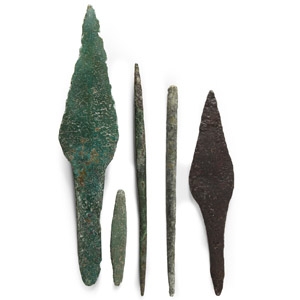
Bronze Age to Roman Bronze Artefact Collection
11th century B.C.-3rd century A.D.Sold for (Inc. bp): £46
Comprising two arrowheads with foliate head and square-sectioned tang and three awls. 45 grams total, 3.6-10.8 cm
Acquired prior to 2000. Ex private collection, Cambridgeshire, UK.
The two arrowheads are similar to specimens found in Luristan. They belong to the type V of the Khorasani classification. The bow was widely used by the Luristan people. The shape of the blade is often flat or ovate in the cross section with lanceolate profile and two cutting edges. -
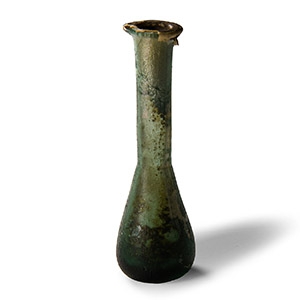
Roman Glass Unguentarium
1st-2nd century A.D.Estimate: £100 - 140 (+bp*)
Opening Bid: £50
With piriform body and flat base, tall neck and everted rim. 18.8 grams, 79 mm
Acquired 1980-2015. Ex Abelita family collection. -
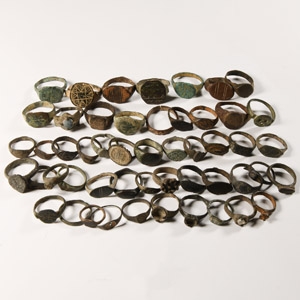
Roman and Later Bronze Ring Collection
1st century A.D. and laterSold for (Inc. bp): £338
Comprising fifty-one rings including discoid, scaphoid, square, ellipsoid and other bezels, with hatching, profile animals, tiered panels and other designs. 139 grams total, 15-25 mm
Part formerly in a European collection, acquired before 1980. From a Dutch private collection. Part from the collection of a Surrey gentleman; acquired 1970-1980.
