
Loading, please wait...
LOT 0694
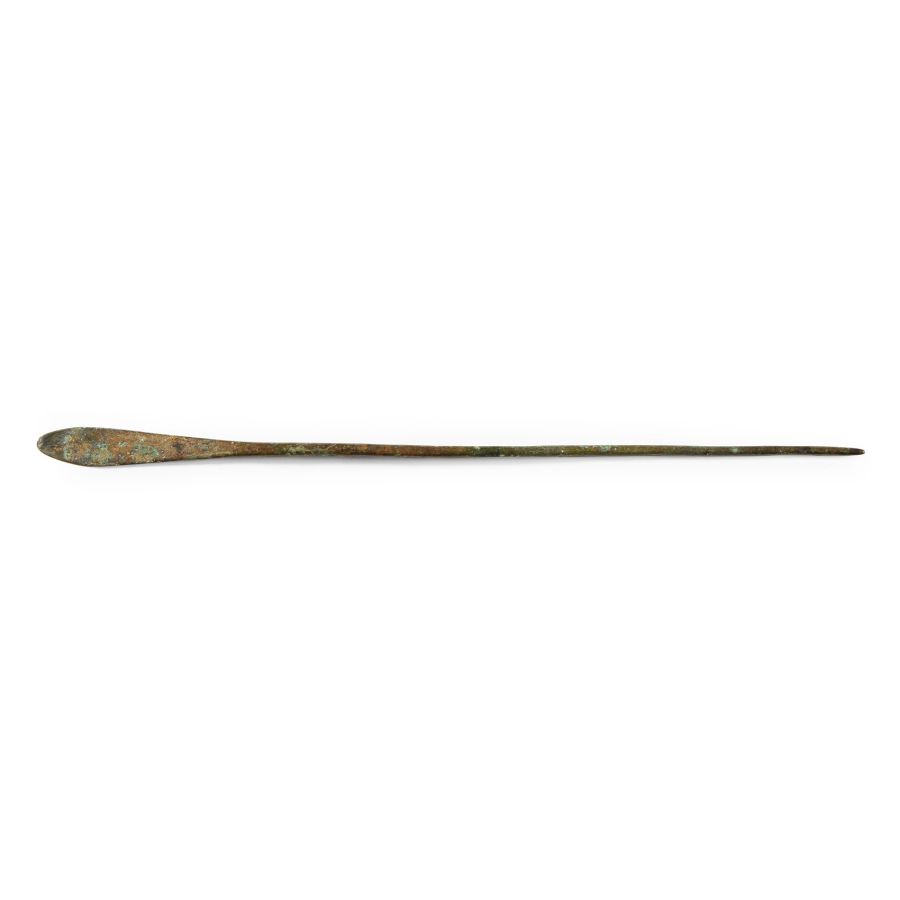
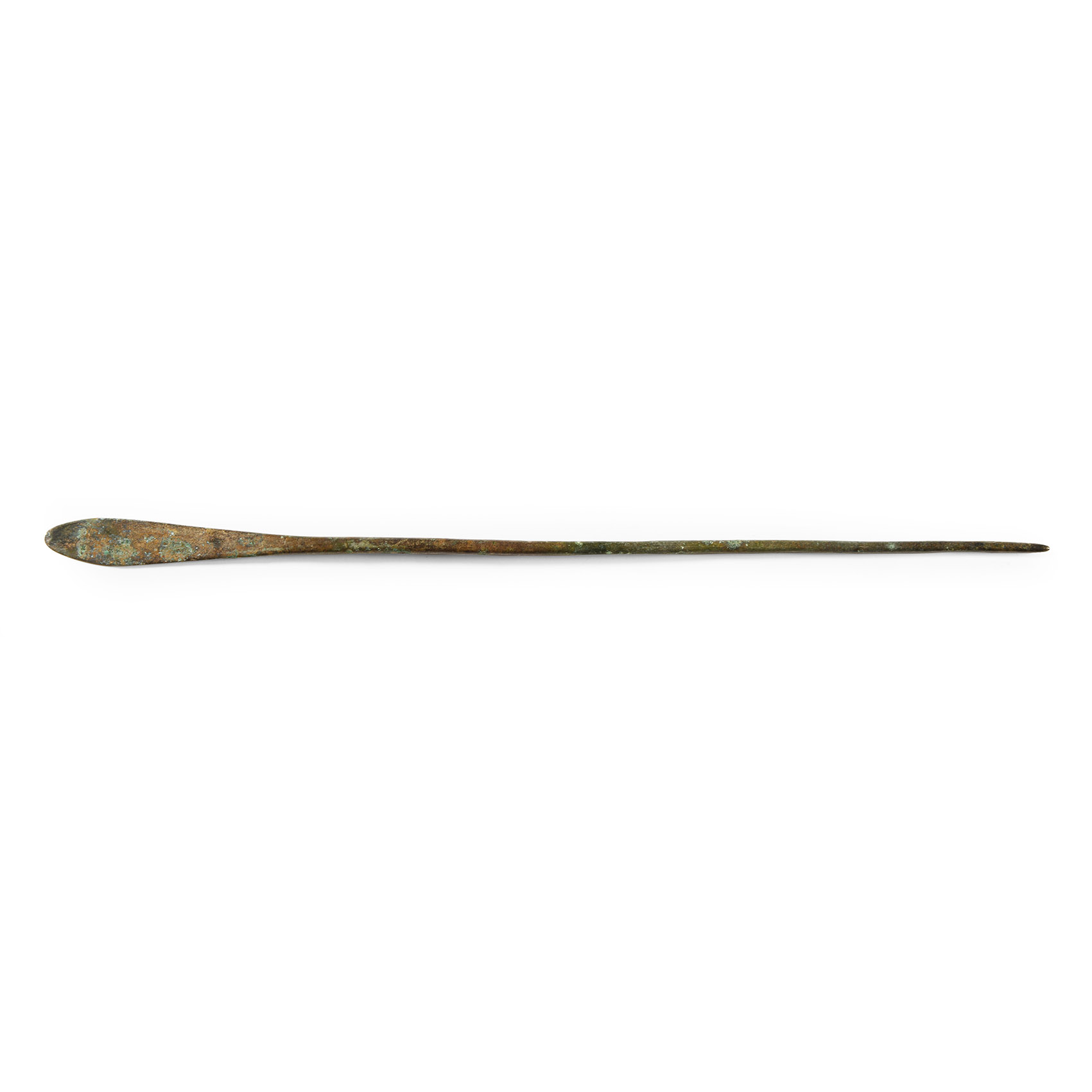
Roman Bronze Medical Spatula
1ST-4TH CENTURY A.D.
8 1/8 in. (12.1 grams, 20.5 cm).
Comprising a rounded leaf-shaped finial, round-section shank with rounded tip. [No Reserve]
ProvenanceFound Nottingham area, Nottinghamshire, UK.
Acquired from Ancient & Oriental, UK, circa 2002.
Ian Wilkinson collection, Nottinghamshire, UK.
See Milne, J.S., Surgical Instruments in Greek and Roman Times, Oxford, 1907.
FootnotesCatheters, spatulas, ear spoons, incisory instruments, spoons and spoon catheters, forceps, pincers, scissors, needles and elevator scalpels/dissectors, knives, phlebotomies, chisels, lenticulars and retractors were included among the medical instruments of antiquity which displayed considerable diversity.
CONDITIONTimeLine Auctions follows a vetting process to ensure the authenticity and legality of all items, reinforcing our commitment to integrity and responsible trading. Each antiquity, antique, and coin lot undergoes thorough examination by a vetting committee of at least ten external specialists, professional trade association members, scientists, and archaeologists: Our Vetting Process
AUCTIONS:
TimeLine is a leading auction house specialising in antiquities, ancient art, collectables, natural history, coins, medals, and books. Our auctions offer museums, collectors, historians, and enthusiasts the opportunity to acquire unique and historically significant pieces.
-
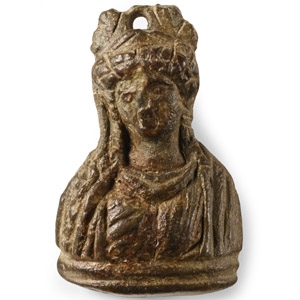
Roman Bronze Steelyard Weight
3rd-4th century A.D.Sold for (Inc. bp): £338
Formed as a female bust with stola and tunic, braided hair dressed in a chignon; transverse ribbing above the flat base, pierced lug forming part of the hairstyle. 22.5 grams, 33 mm
Found Wiltshire, UK, before 1974. -
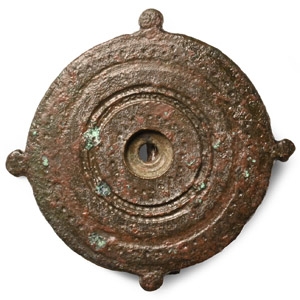
Roman Bronze Discoid Plate Brooch
2nd century A.D.Sold for (Inc. bp): £72
With concentric rings and punched detailing, radiating knops, pin, pin-lugs and catchplate to the reverse. 6.97 grams, 30 mm
Ex property of a London collector, acquired before 1980. Property of a Kent lady collector. -
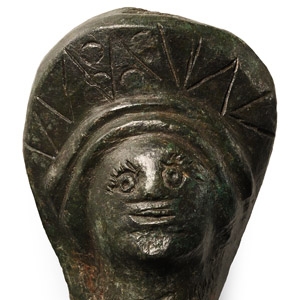
Roman Bronze Figural Attachment
3rd-4th century A.D.Sold for (Inc. bp): £33
Piriform mount with stylised facial features, broad band of hair with incised zigzag and roundels, hollow to the reverse. 71.6 grams, 66 mm
Ex German art market, 2000s. Acquired from an EU collector living in London. From the collection of Surrey, UK, gentleman.
