
Loading, please wait...
LOT 0720
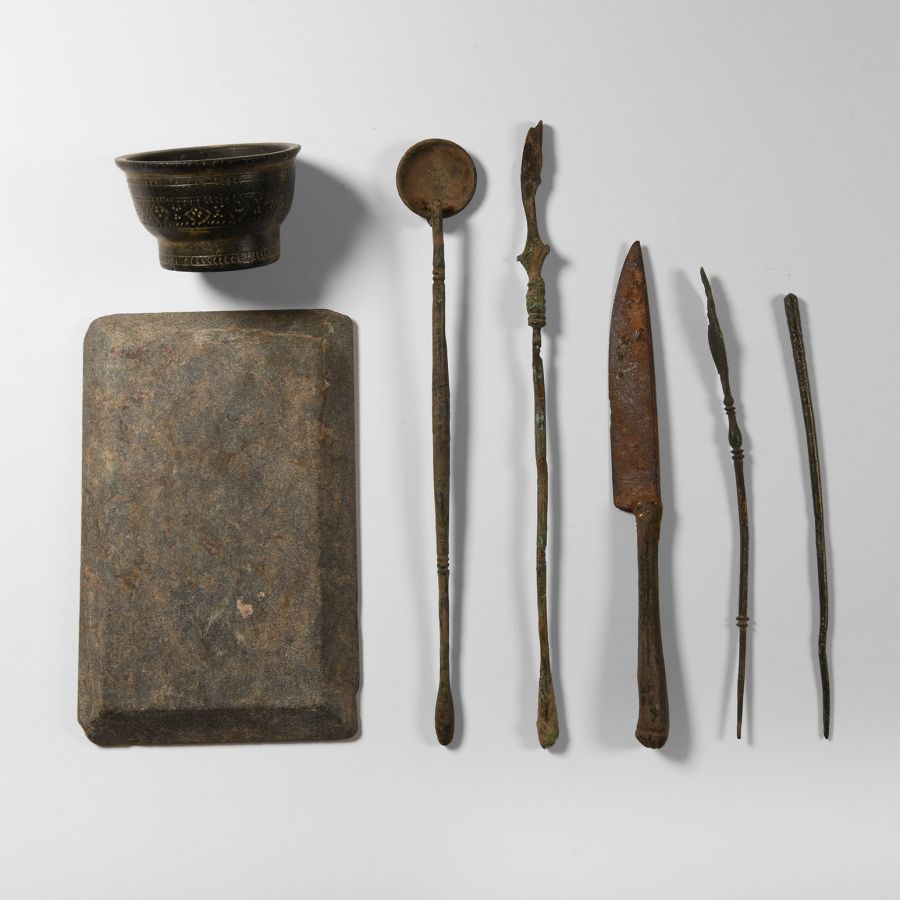
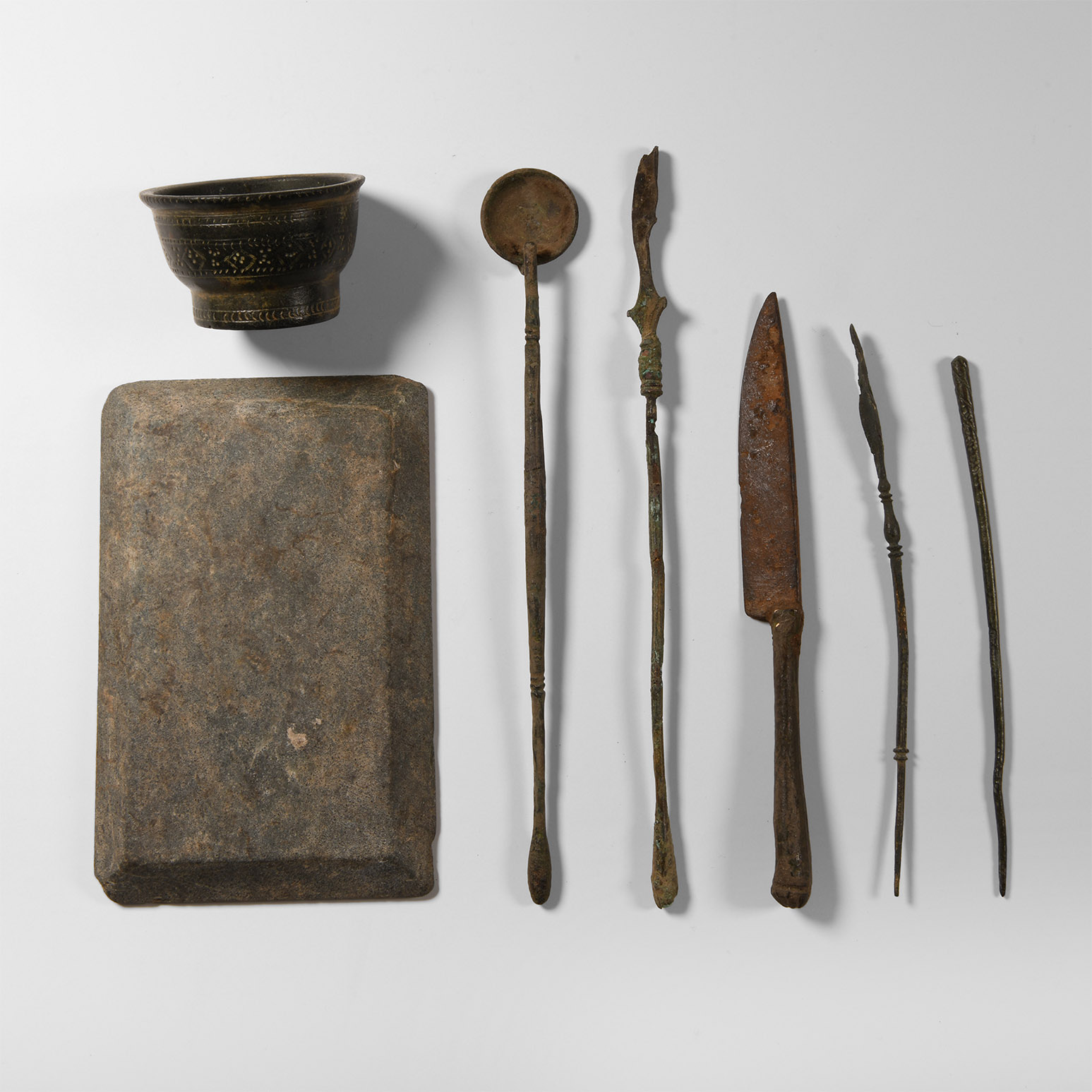
Roman Bronze Medical Implements and Palette
1ST-4TH CENTURY A.D.
1 7/8 - 6 3/4 in. (332 grams total, 4.8-17 cm).
Comprising: a bowl with incised geometric decoration; a rectangular palette with bevelled edges; knife with single-edged iron blade and decoratively incised pommel; spoon with circular bowl, collared stem with expanded waist and finial formed as a probe; pin with tapering round-section body, shallow conical finial and decoratively incised head; a scoop probe with remains of elongated shallow scoop, expanded neck with collars, slender ribbed stem and bulbous probe to terminal; scoop with leaf-shaped bowl and balustered stem. [7]
ProvenanceAcquired before 2000.
From the collection of a European gentleman living in the UK.
TimeLine Auctions follows a vetting process to ensure the authenticity and legality of all items, reinforcing our commitment to integrity and responsible trading. Each antiquity, antique, and coin lot undergoes thorough examination by a vetting committee of at least ten external specialists, professional trade association members, scientists, and archaeologists: Our Vetting Process
AUCTIONS:
TimeLine is a leading auction house specialising in antiquities, ancient art, collectables, natural history, coins, medals, and books. Our auctions offer museums, collectors, historians, and enthusiasts the opportunity to acquire unique and historically significant pieces.
LOT 0720
Roman Bronze Medical Implements and Palette
Estimate £500 - 600€580 - 700 (for guidance only)$680 - 810 (for guidance only)
-
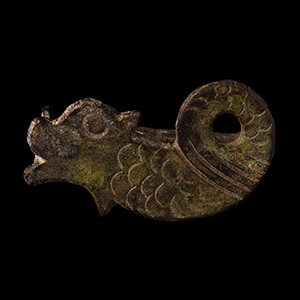
Roman Bronze Hippocamp Brooch
2nd century A.D.Sold for (Inc. bp): £143
Complete with pin-lugs, pin and catchplate to the reverse; stylised scale detailing. 10.7 grams, 40 mm
Acquired before 1980. Ex property of a London, UK, collector. -
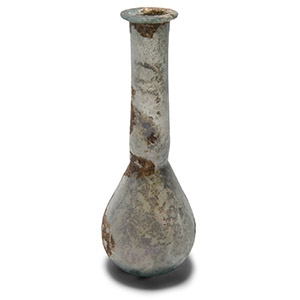
Roman Pale Blue Glass Unguentarium
1st-2nd century A.D.Sold for (Inc. bp): £117
Featuring a piriform lower body, extended cylindrical neck and flange rim; iridescent surfaces. 15.6 grams, 12 cm high
Acquired 1969-1999. From the private collection of the late Mr S.M., London, UK, thence by descent. -
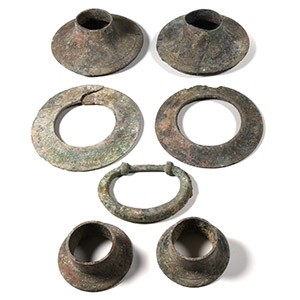
Roman Bronze Chariot Wheel Hub Group
1st-4th century A.D.Sold for (Inc. bp): £74
Comprising three pairs of fittings of different types, together with a terret ring; one split. 1.4 kg total, 6.9-12.4 cm
Acquired 1990s-early 2000s. East Anglian private collection.
