
Loading, please wait...
LOT 0748
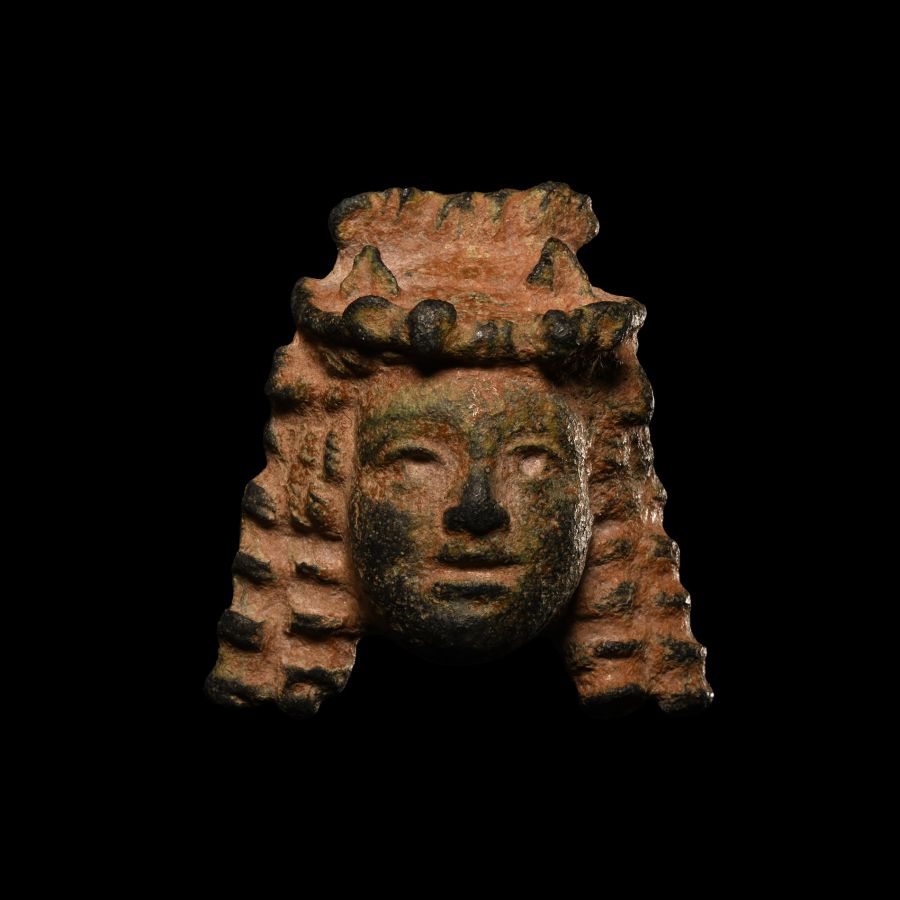
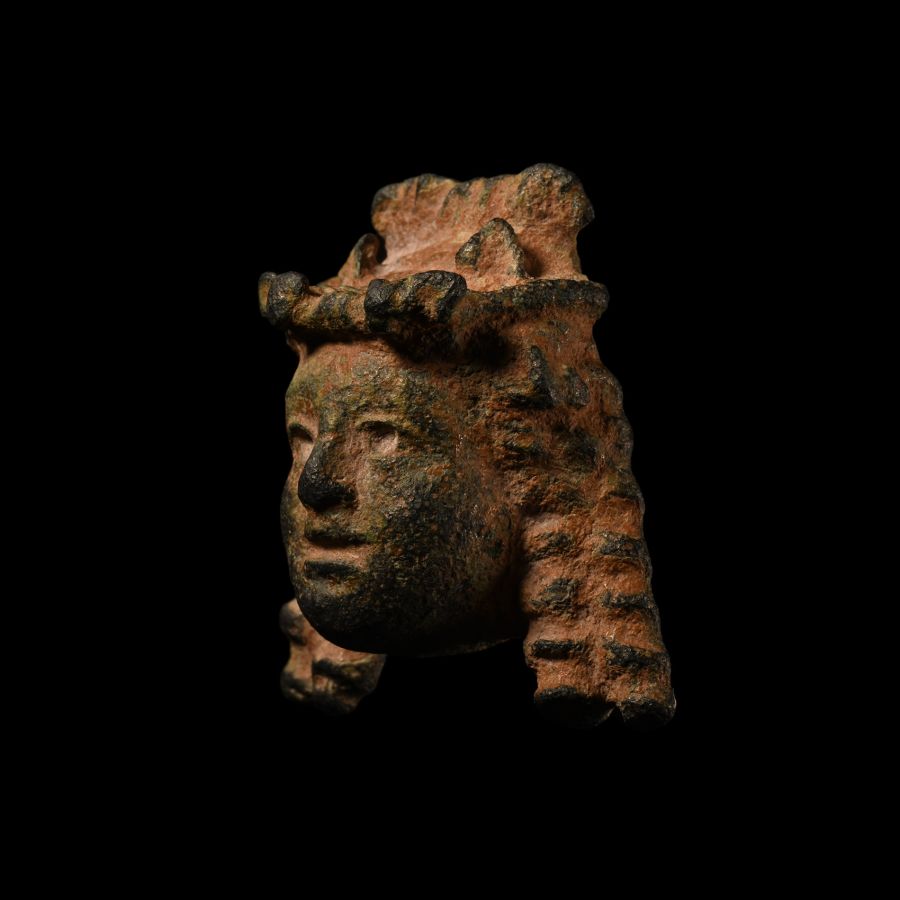
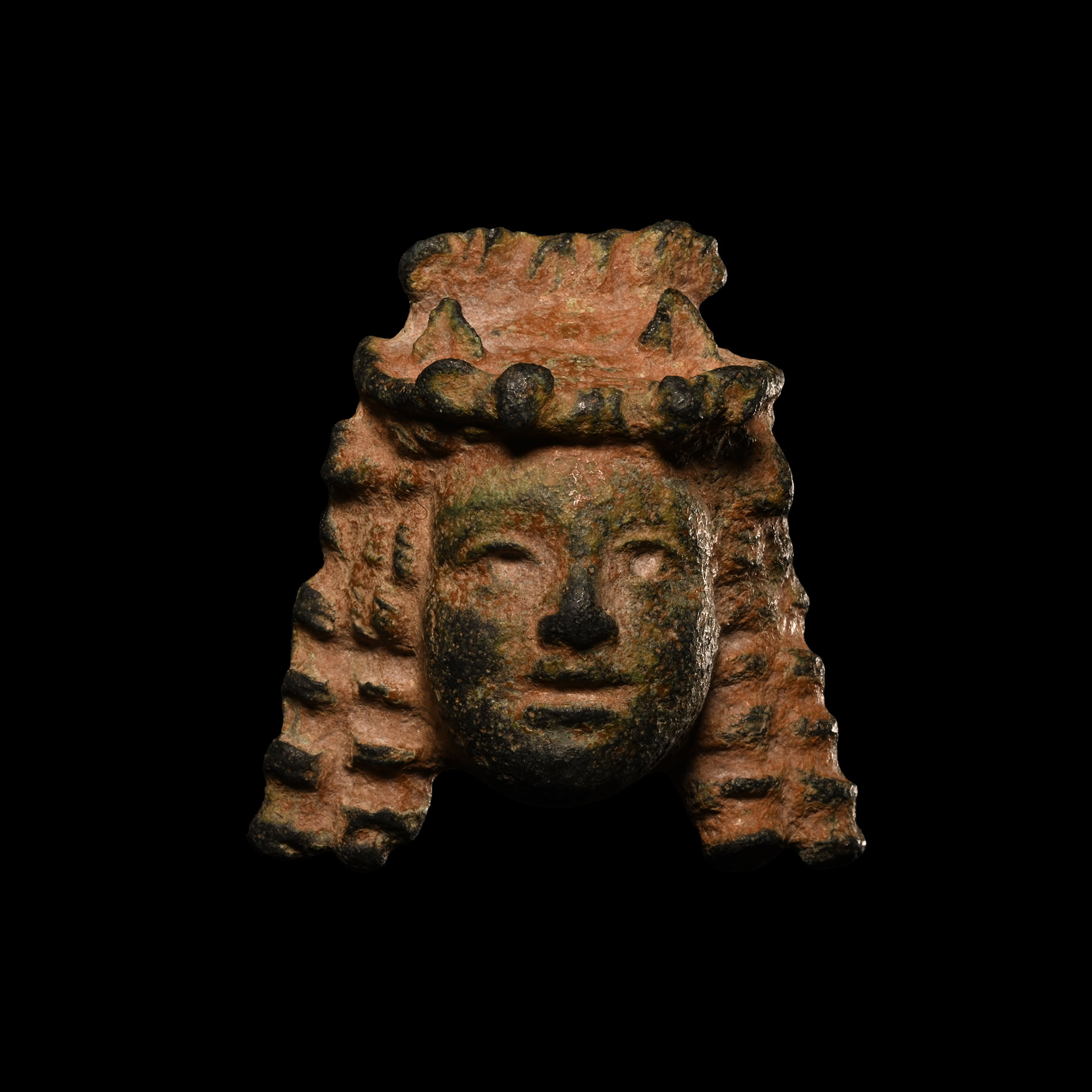
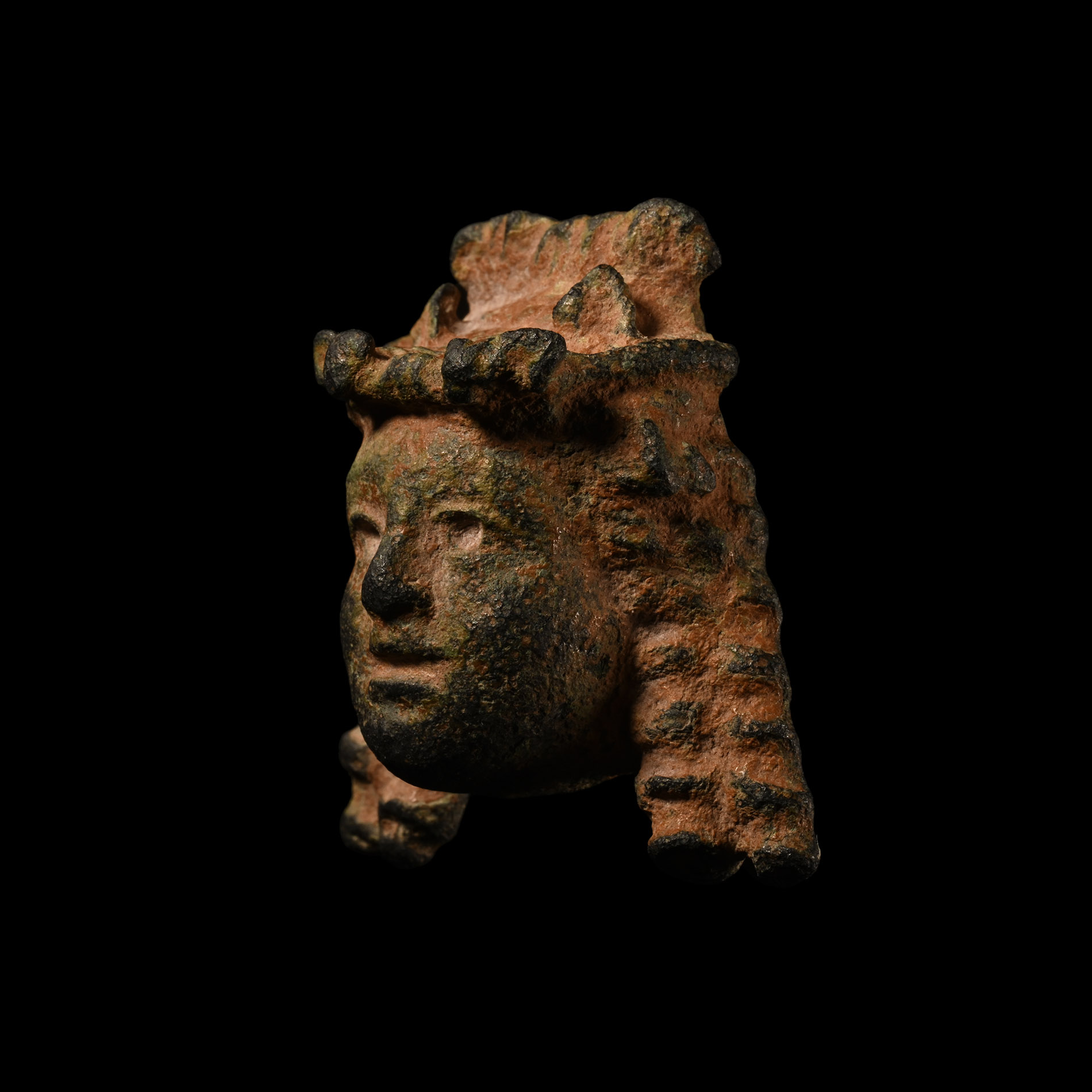
Roman Bronze Mask Appliqué
2ND CENTURY B.C.-1ST CENTURY A.D.
1 5/8 in. (56 grams, 42 mm).
With rounded fleshy face and hair in tiered bands, sockets to the eyes to accept silver inserts; diadem to the brow with foliage detailing; hollow to the reverse.
ProvenancePrivate collection of Mr S.A., Switzerland, 1990s, thence by descent.
LiteratureCf. Rolland, H., Bronzes Antiques de Haute Provence, Paris, 1965, item 290 (handle), for type.
CONDITIONTimeLine Auctions follows a vetting process to ensure the authenticity and legality of all items, reinforcing our commitment to integrity and responsible trading. Each antiquity, antique, and coin lot undergoes thorough examination by a vetting committee of at least ten external specialists, professional trade association members, scientists, and archaeologists: Our Vetting Process
AUCTIONS:
TimeLine is a leading auction house specialising in antiquities, ancient art, collectables, natural history, coins, medals, and books. Our auctions offer museums, collectors, historians, and enthusiasts the opportunity to acquire unique and historically significant pieces.
LOT 0748
Roman Bronze Mask Appliqué
Estimate £400 - 600€460 - 700 (for guidance only)$540 - 810 (for guidance only)
-
Roman Rock Crystal Vessel
1st-4th century A.D.Sold for (Inc. bp): £572
Globular in form with low basal disc, central socket. 36.7 grams, 32 mm
Acquired in the 1970s. Property of a London lady, part of her family's collection. -
Roman Bronze Dog Chariot Fitting
2nd-4th century A.D.Sold for (Inc. bp): £169
Hollow-formed fitting of a leaping hound with forelegs extended; segmented base with two fixing holes. 148 grams, 70 mm
From a collection acquired on the UK art market from various auction houses and collections mostly before 2000. From an important Cambridgeshire estate; thence by descent. -
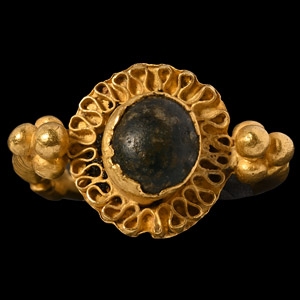
Late Roman or Merovingian Gold Ring with Rosette and Green Cabochon
5th-7th century A.D.Sold for (Inc. bp): £845
Comprising a round-section hoop with granule pyramids to the shoulder, decorative wire wrapped around the hoop on one side; rosette-shaped applied bezel with filigree decoration, raised setting with dark green glass cabochon; possibly a marriage. 5.14 grams, 22.93 mm overall, 17.05 mm internal diameter (approximate size British L 1/2, USA 6, Europe 11.87, Japan 11)
Private collection USA. From the Alexander Gallery, New York, USA, in the early 2000s.
