
Loading, please wait...
LOT 0805
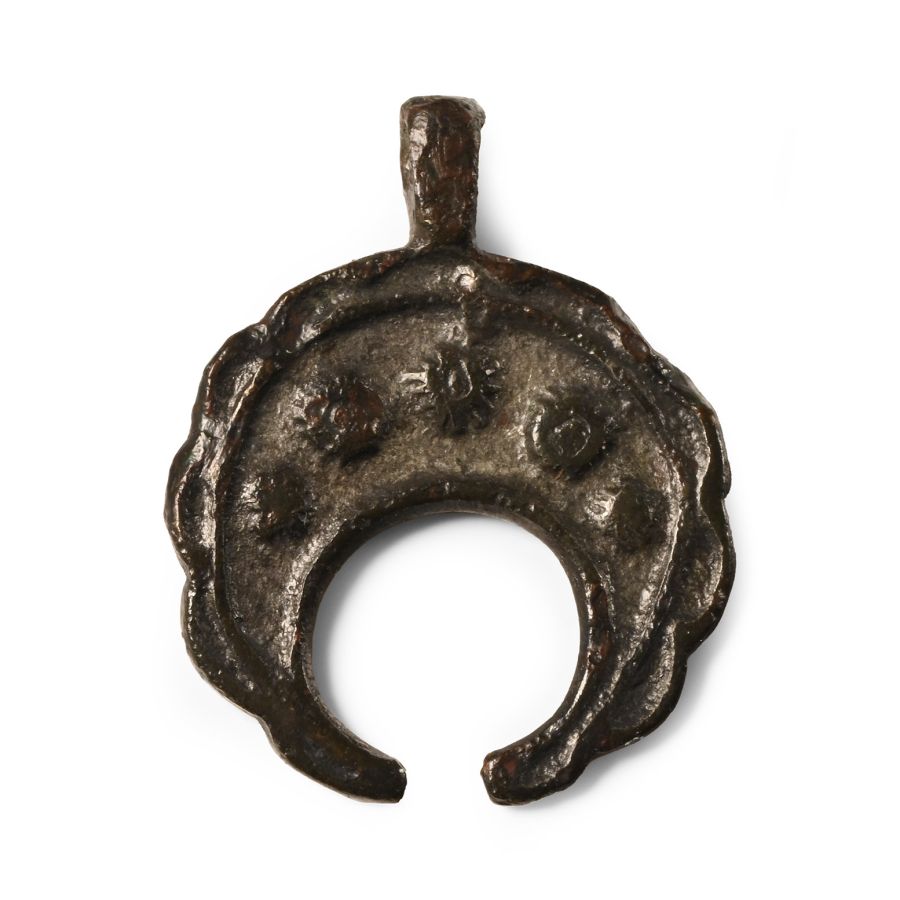
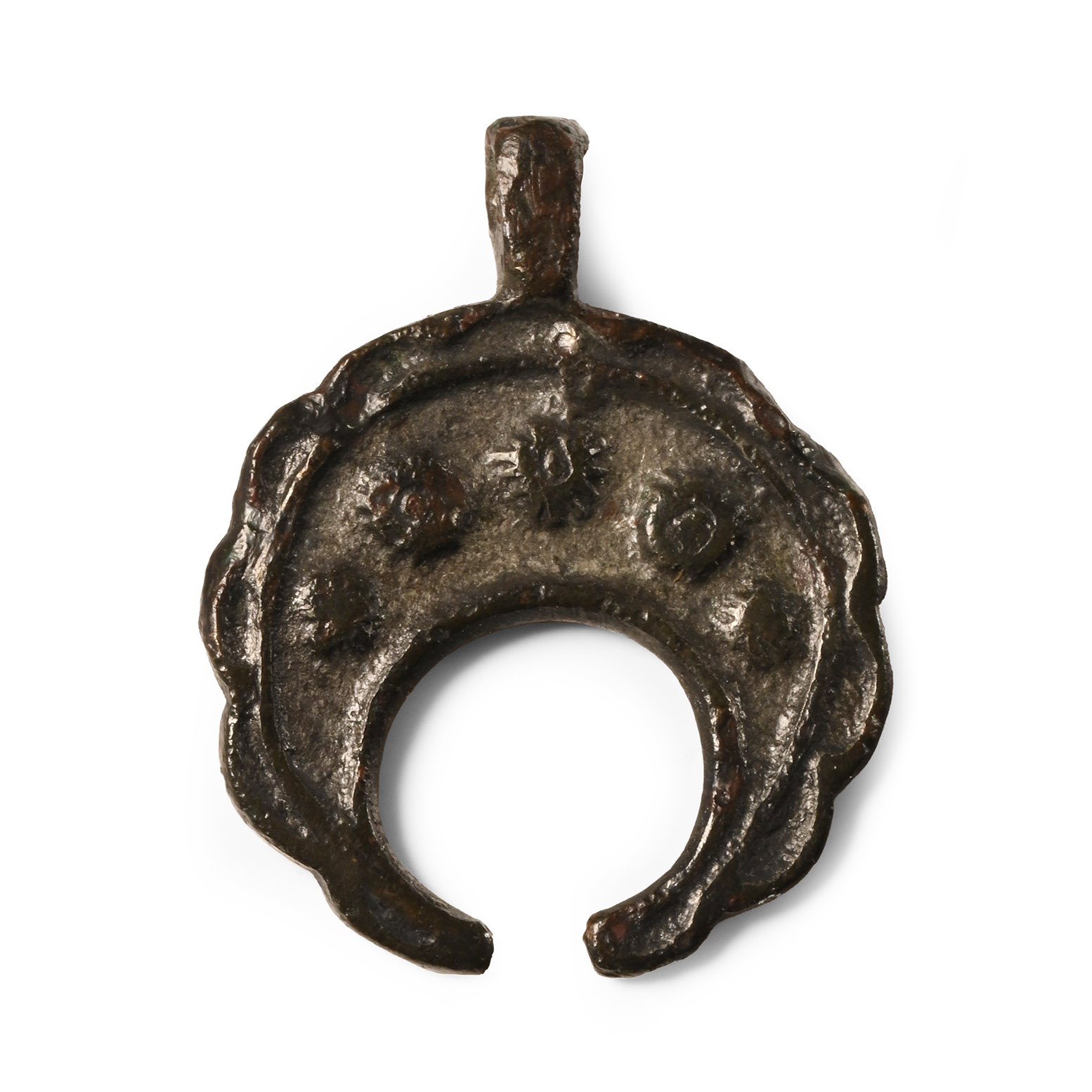
Roman Bronze Lunar Pendant
4TH-5TH CENTURY A.D.
1 in. (2.78 grams, 26 mm).
A bifacial pendant with raised pellets to both faces. [No Reserve]
ProvenanceEx German art market, 2000s.
Acquired from an EU collector living in London.
From the collection of Surrey, UK, gentleman.
TimeLine Auctions follows a vetting process to ensure the authenticity and legality of all items, reinforcing our commitment to integrity and responsible trading. Each antiquity, antique, and coin lot undergoes thorough examination by a vetting committee of at least ten external specialists, professional trade association members, scientists, and archaeologists: Our Vetting Process
AUCTIONS:
TimeLine is a leading auction house specialising in antiquities, ancient art, collectables, natural history, coins, medals, and books. Our auctions offer museums, collectors, historians, and enthusiasts the opportunity to acquire unique and historically significant pieces.
-
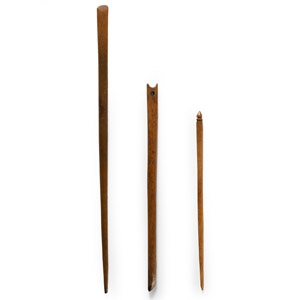
Roman Bone Medical Implement Group
Circa 1st century A.D.Sold for (Inc. bp): £72
Including a dress pin and two probes, one with a pierced end for suspension. 10.2 grams total, 9.6-15.5 cm
Found City of London, UK. Acquired from mudlark Steve Brooker in the early 2000s. Ian Wilkinson collection, Nottinghamshire, UK, formed since 1985. -
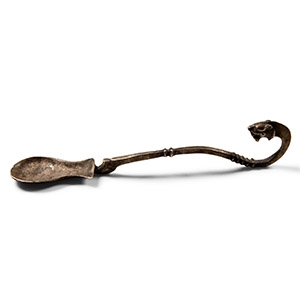
Roman Silver Spoon with Lion-Head Handle
2nd-4th century A.D.Sold for (Inc. bp): £1,560
Comprising a shallow violin-shaped bowl, swan neck bolster, square-section stem with baluster and collars, swept curve; the final formed as a lion's head with pricked ears, pellet eyes and mouth open revealing teeth. 21.1 grams, 13.3 cm
Ex German art market, 2000s. Acquired from an EU collector living in London. From the collection of Surrey, UK, gentleman. -
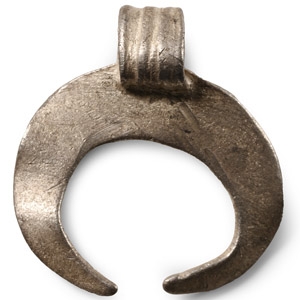
Roman Silver Lunar Pendant
2nd-3rd century A.D.Sold for (Inc. bp): £111
With a flat-section crescentic body and applied ribbed suspension loop. 2.31 grams, 21 mm
Ex German art market, 2000s. Acquired from an EU collector living in London. From the collection of Surrey, UK, gentleman.
