
Loading, please wait...
LOT 0142
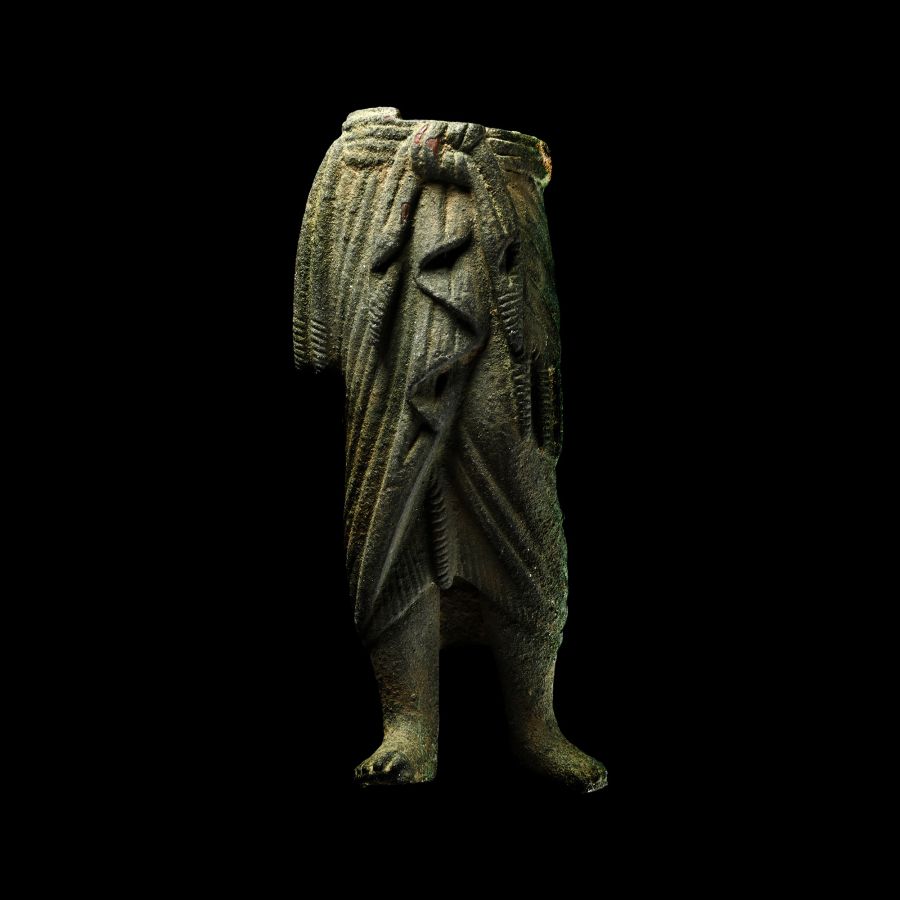
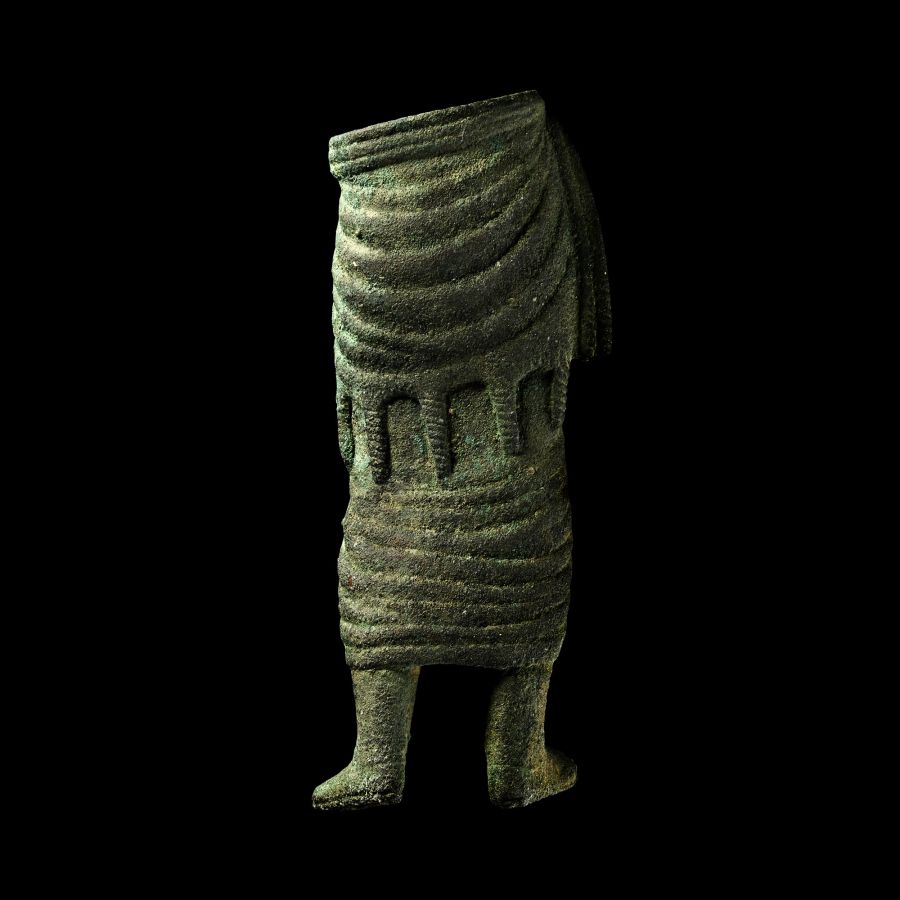
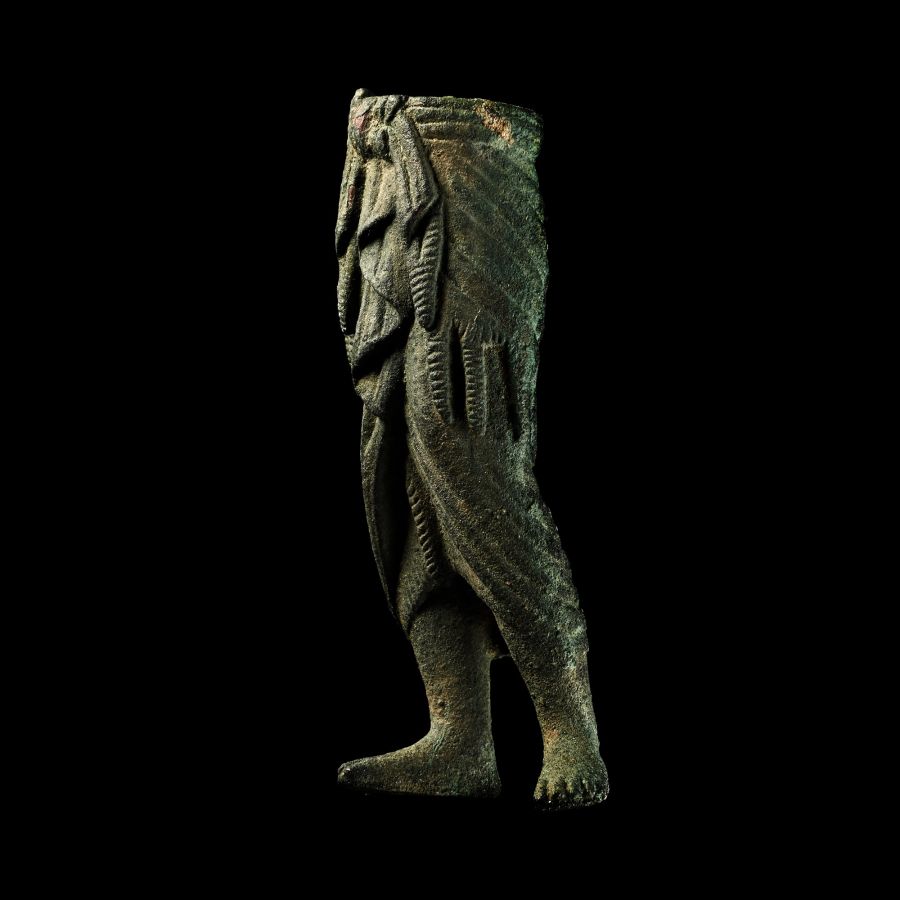
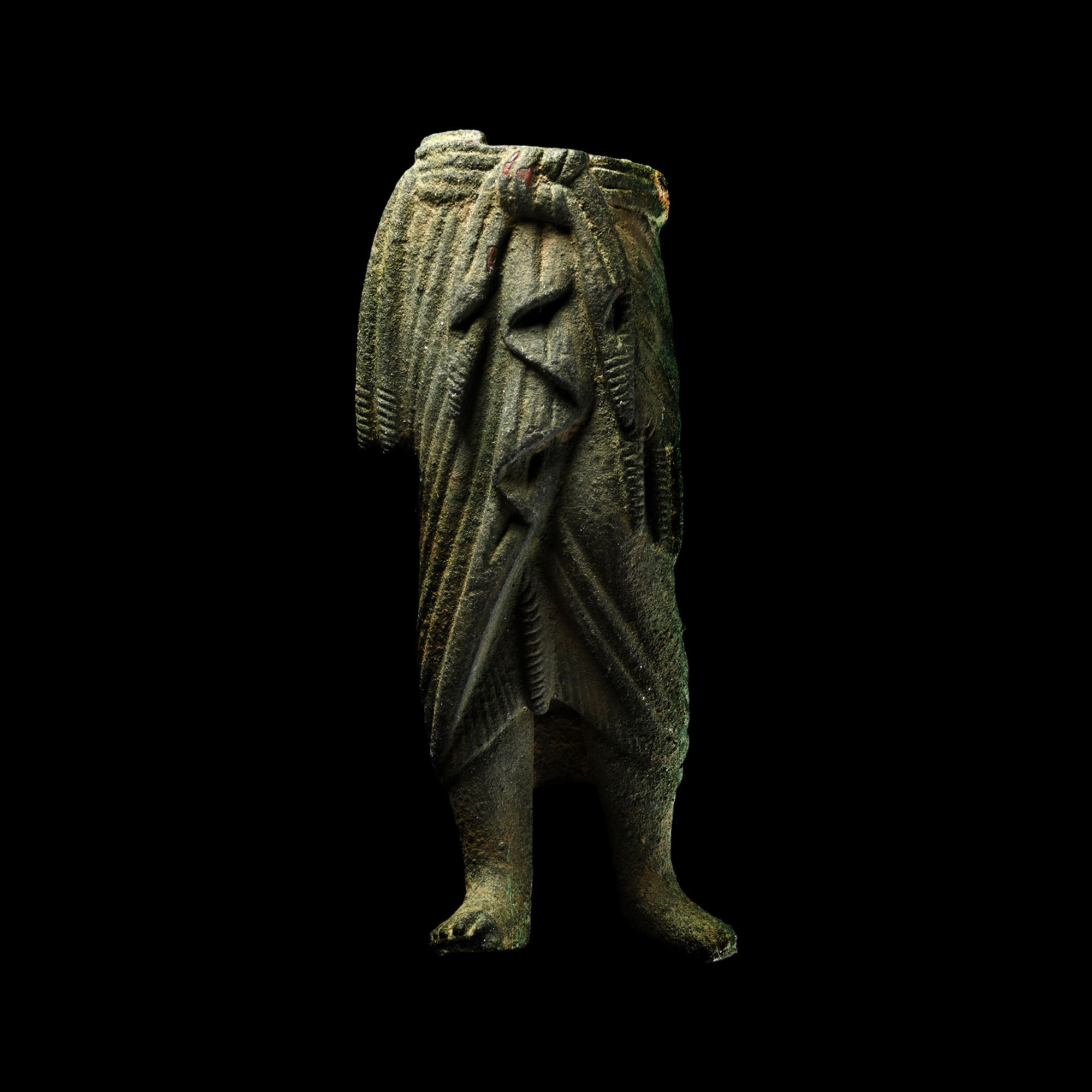
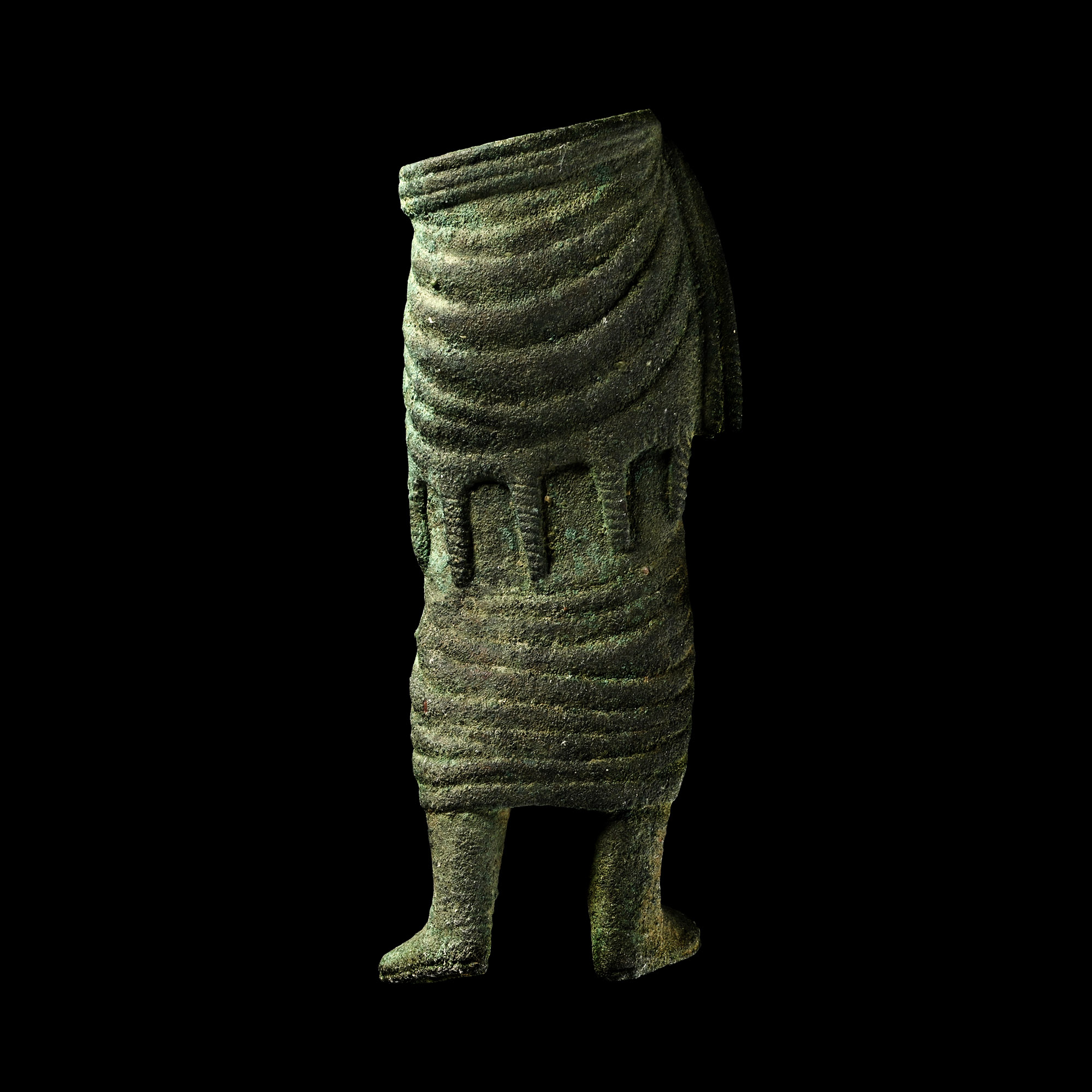
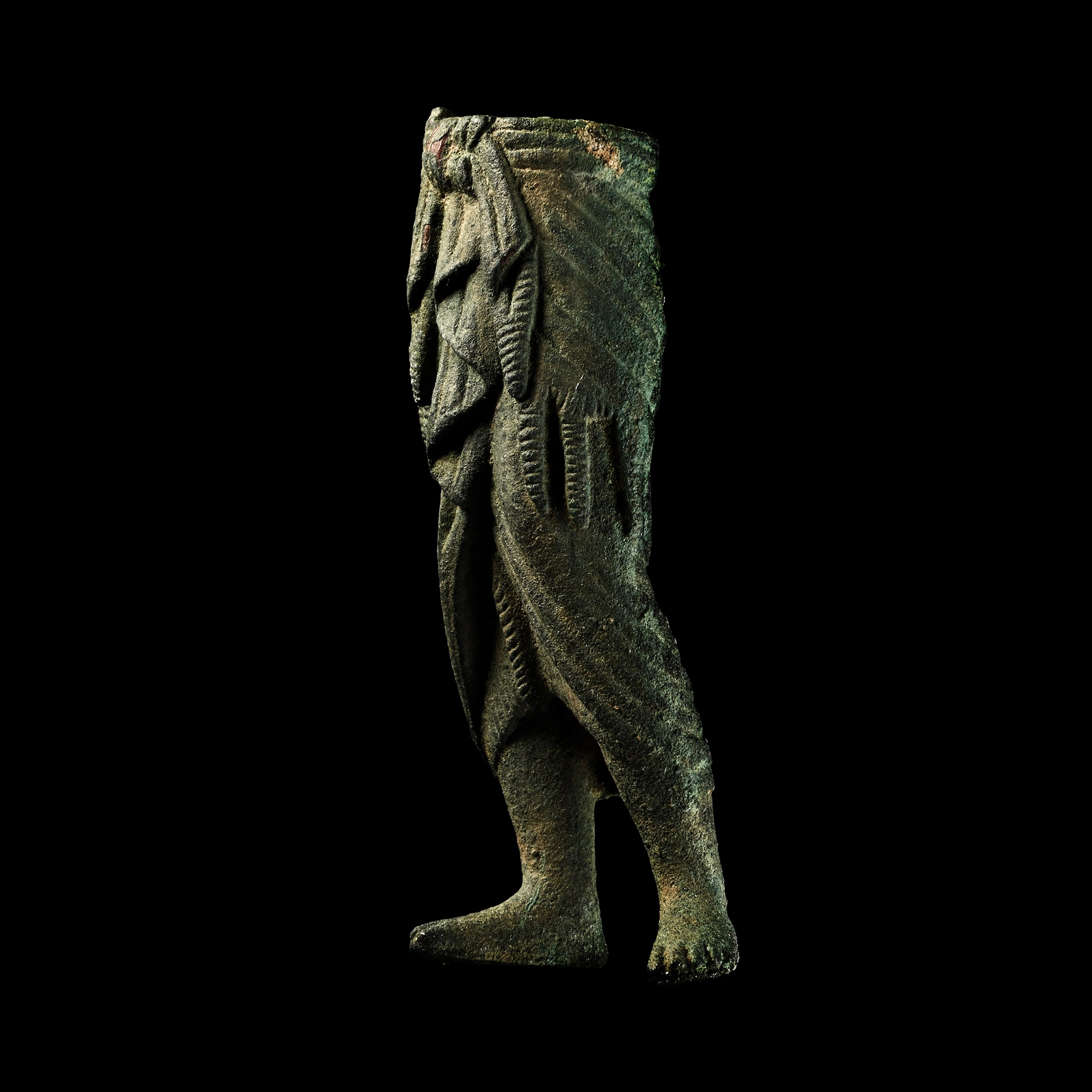
Roman Bronze Lower Section of Adonis-Tammuz Statue
2ND-3RD CENTURY A.D.
4 in. (128 grams, 10 cm).
Modelled in the round as a belted torso and legs with tiered tasselled robes and bare feet. [No Reserve]
ProvenanceUK art market, 1981.
Private collection, London, UK.
Cf. large statue in the Liebighaus Sammlung, Frankfurt am Main, item 192.
FootnotesAdonis was the offspring of an incestuous union between Smyrna and Cinyras. As an infant, he was given by Venus (Aphrodite) to Persephone for protection, but later became an object of desire for both, resulting in a decision by Zeus that he would spend four months with Persephone, four months with Venus and four months with whomever he wished. According to mythological traditions, Adonis was killed by a wild boar during a hunt - either sent by Artemis, or Ares in disguise. Aphrodite pleaded for Adonis' life with Zeus, who allowed the youth to spend half of each year with her and half in the underworld.
CONDITIONTimeLine Auctions follows a vetting process to ensure the authenticity and legality of all items, reinforcing our commitment to integrity and responsible trading. Each antiquity, antique, and coin lot undergoes thorough examination by a vetting committee of at least ten external specialists, professional trade association members, scientists, and archaeologists: Our Vetting Process
AUCTIONS:
TimeLine is a leading auction house specialising in antiquities, ancient art, collectables, natural history, coins, medals, and books. Our auctions offer museums, collectors, historians, and enthusiasts the opportunity to acquire unique and historically significant pieces.
-
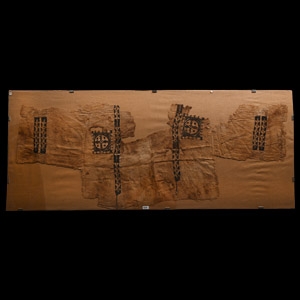
Large Mounted Roman Linen Tunic
Circa 4th-5th century A.D.Sold for (Inc. bp): £5,200
Comprising half of the upper part of a tunica manicata in light fabric, S-twist tapestry, ornamented with dark purple clavi with orbiculi and tablia, wool over linen; mounted in fabric backing and perspex display frame. 7.7 kg total, mount: 1.64 m
Acquired 1970s-1996. Property of a North American collector. London collection, 2016.
The tunic is decorated in purple with opus phrygium embroidery. The archaeological evidence from the dry desert cemeteries of Egypt offers striking confirmation of pictorial sources about late Roman clothing around the empire. -
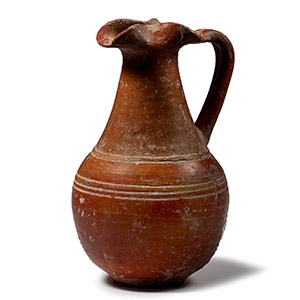
Phoenician Terracotta Jug with Handle
Circa 8th century B.C.Estimate: £600 - 700 (‡+bp*)
Opening Bid: £300
Globular body decorated with circumferential banding, low foot, conical neck with pinched spout, strap handle to the rear. 395 grams, 18.5 cm
Acquired in the mid 1980s-1990s. Private collection, Switzerland, thence by descent. Private collection, since the late 1990s. -
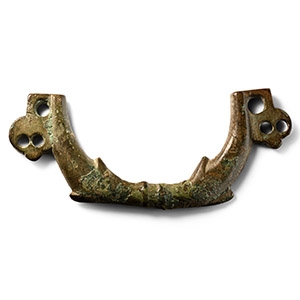
Large Roman Bronze Vessel Handle with Conjoined Dolphins
2nd century A.D.Sold for (Inc. bp): £27
Comprising a crescentic band with ribbed detailing of two opposed dolphins, each with a pierced P-shaped lug to the lower end; 55 grams, 11.3 cm
Found Gloucestershire, UK.
