
Loading, please wait...
LOT 0693
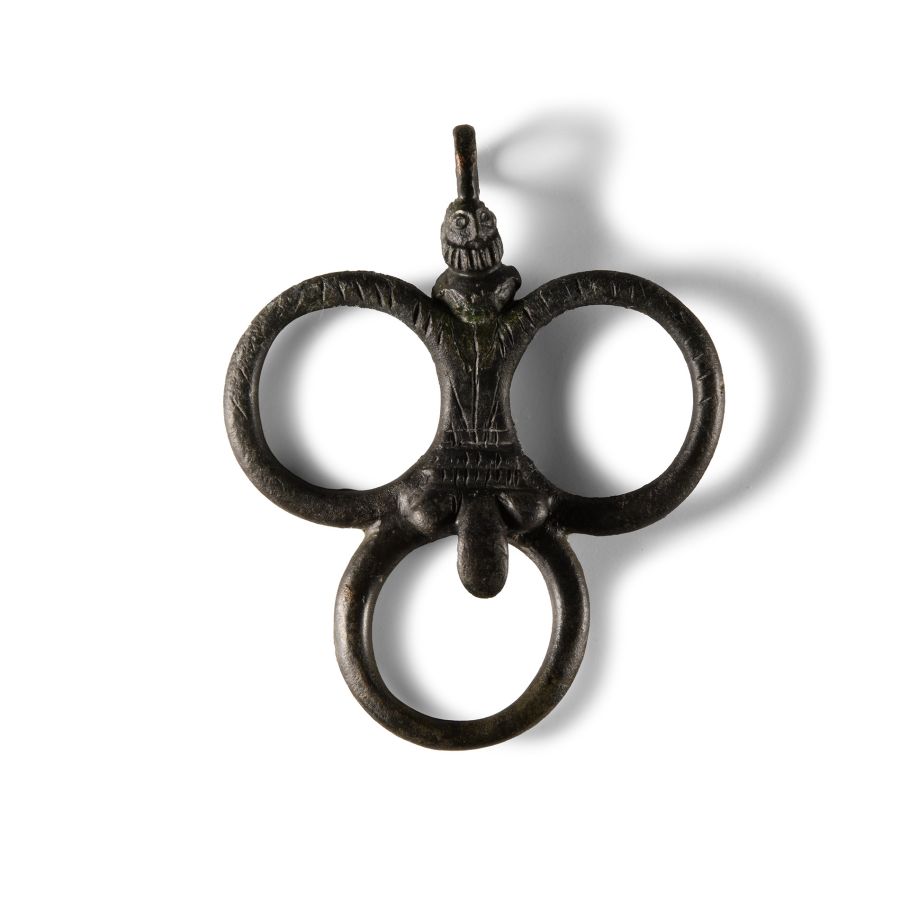
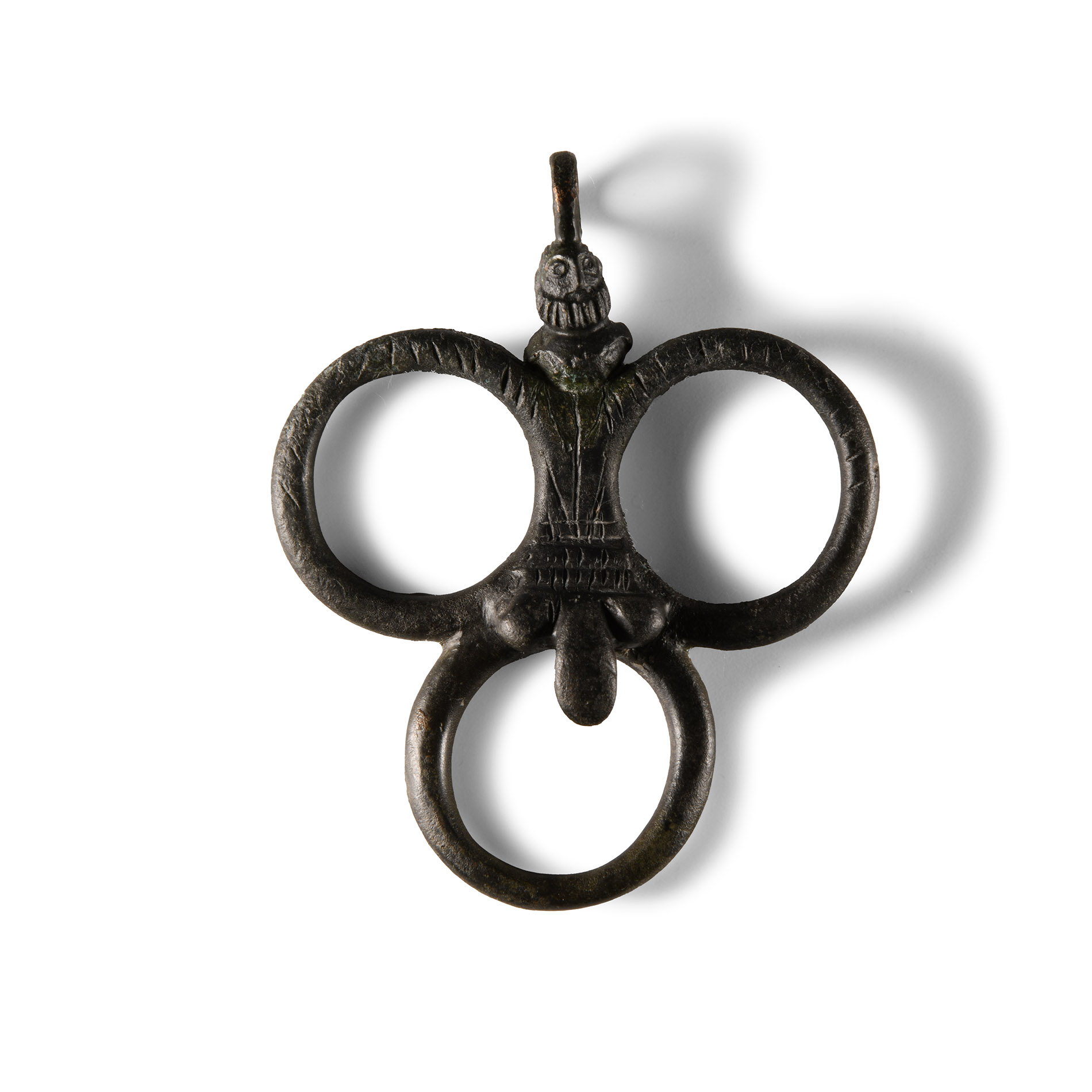
Roman Bronze Looped Figural Pendant with Phallus
CIRCA 1ST CENTURY A.D.
3 1/4 in. (53 grams, 83 mm).
Composed of three concentric circles surmounted by a bearded figure to which is attached a suspension ring, the body of the figure engraved and ending with phallic attributes. [No Reserve]
ProvenanceAcquired before 2000.
From the collection of a European gentleman living in the UK.
Cf. Fernández González, J.J., ‘Around Eras del Bosque (Palencia) and the pieces of harness from the Roman Necropolis’ in Oppidum, Cuadernos de investigaciόn, no.17, Segovia, 2021, pp.61-76, fig.7, for similar harness pendant.
FootnotesRoman military harness included pendants of various typology, ranging from lunules to other decorative elements, often phallic, with the possible intention of protecting the animal. This particular pendant could be connected to the bearded image of the god Priapus.
CONDITIONTimeLine Auctions follows a vetting process to ensure the authenticity and legality of all items, reinforcing our commitment to integrity and responsible trading. Each antiquity, antique, and coin lot undergoes thorough examination by a vetting committee of at least ten external specialists, professional trade association members, scientists, and archaeologists: Our Vetting Process
AUCTIONS:
TimeLine is a leading auction house specialising in antiquities, ancient art, collectables, natural history, coins, medals, and books. Our auctions offer museums, collectors, historians, and enthusiasts the opportunity to acquire unique and historically significant pieces.
-
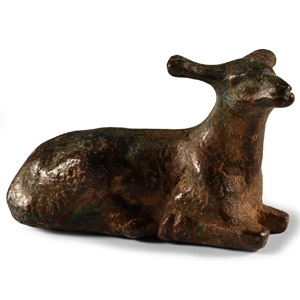
Roman Bronze Lying Doe Statuette
1st-2nd century A.D.Sold for (Inc. bp): £104
Modelled in the round with legs folded beneath the body, light texturing. 59.8 grams, 46 mm
From a collection acquired on the UK art market from various auction houses and collections mostly before 2000. From an important Cambridgeshire estate; thence by descent. -
.jpg)
Roman Horse Gemstone in Gold Ring
1st-2nd century A.D. and laterEstimate: £3,000 - 4,000 (+bp*)
Opening Bid: £1,500
An oval garnet cabochon engraved with a horse on a baseline in a dynamic pose with lowered head; set in a possibly Byzantine gold ring with a grooved hoop supporting a box bezel, a pellet to each lower corner. 5.65 grams, 24.27 mm overall, 20.92 mm internal diameter (approximate size British P, USA 7 1/2, Europe 16.23, Japan 15)
Acquired from London galleries during the 1990s. From the jewellery collection of a London, UK, gentleman. This lot has been checked against the Interpol Database of stolen works of art and is accompanied by search certificate no.12115-214296. -
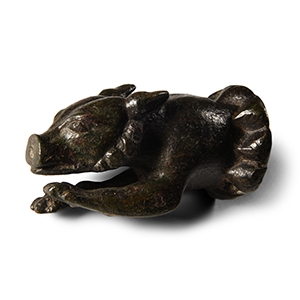
Roman Bronze Dog Chariot Fitting
2nd-4th century A.D.Sold for (Inc. bp): £169
Hollow-formed fitting of a leaping hound with forelegs extended; segmented base with two fixing holes. 148 grams, 70 mm
From a collection acquired on the UK art market from various auction houses and collections mostly before 2000. From an important Cambridgeshire estate; thence by descent.
