
Loading, please wait...
LOT 0811
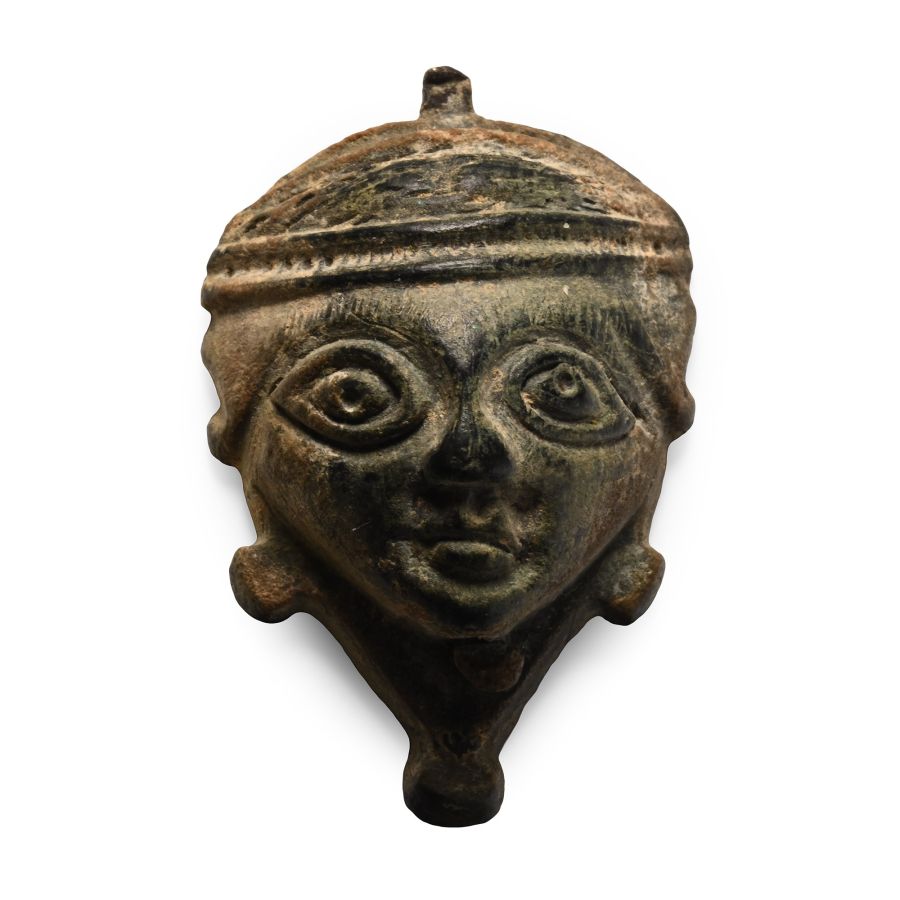
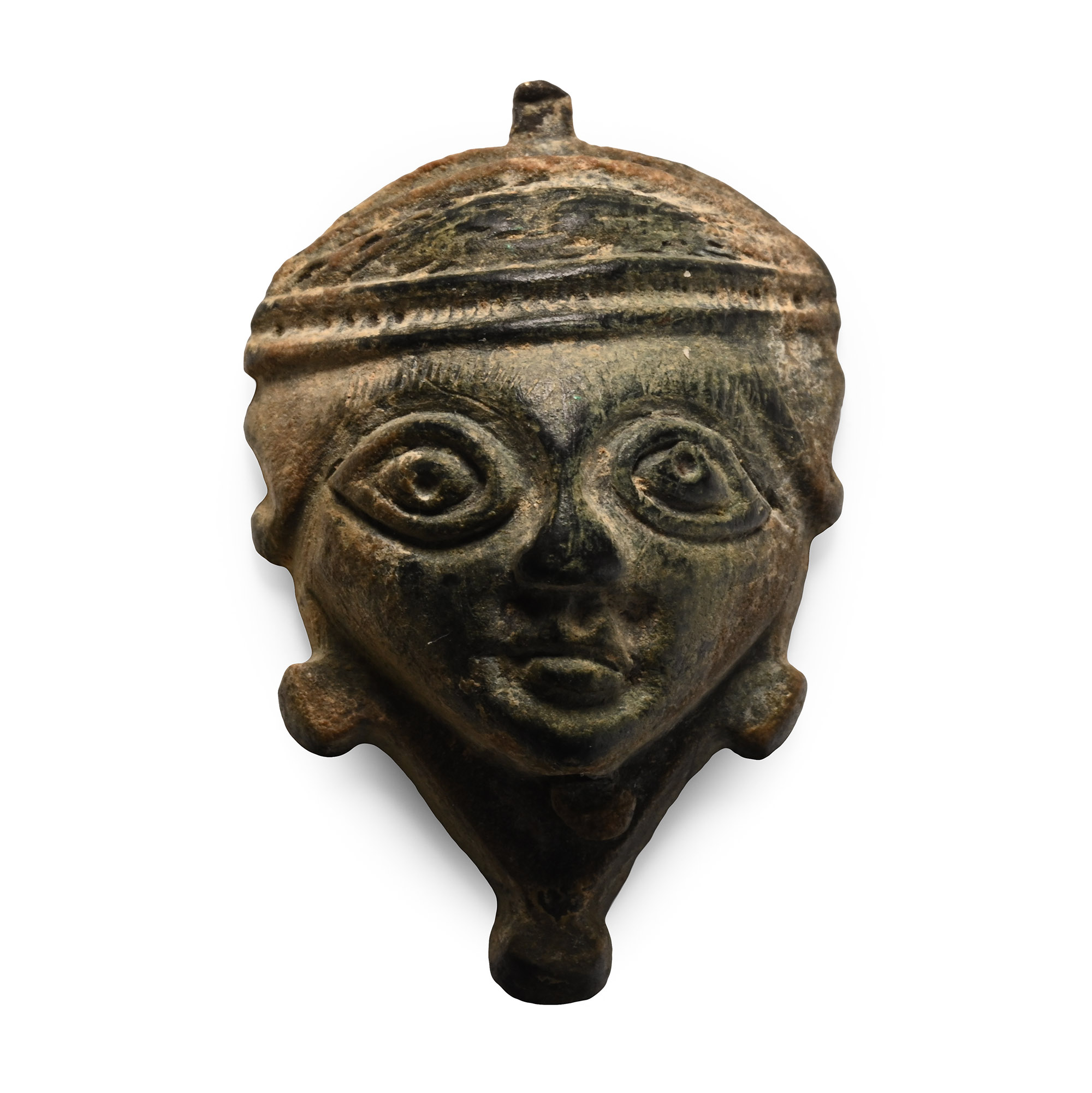
Roman Bronze Lock Fitting with Face
4TH CENTURY A.D.
1 3/8 in. (15.2 grams, 36 mm).
Domed fitting formed as a stylised face with large lentoid eyes, pelletted browband and three lugs on the triangular lower panel. [No Reserve]
ProvenanceFrom the collection of a gentleman, acquired on the London art market in the 1990s.
CONDITIONTimeLine Auctions follows a vetting process to ensure the authenticity and legality of all items, reinforcing our commitment to integrity and responsible trading. Each antiquity, antique, and coin lot undergoes thorough examination by a vetting committee of at least ten external specialists, professional trade association members, scientists, and archaeologists: Our Vetting Process
AUCTIONS:
TimeLine is a leading auction house specialising in antiquities, ancient art, collectables, natural history, coins, medals, and books. Our auctions offer museums, collectors, historians, and enthusiasts the opportunity to acquire unique and historically significant pieces.
-
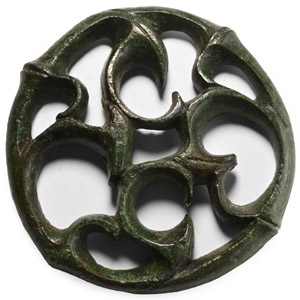
Large Romano-Celtic Bronze Trumpet-Whorl Chariot Mount
1st century A.D.Sold for (Inc. bp): £195
D-shaped in section with outer ring surrounding four radiating trumpet-shaped elements with spurs connecting to the frame; two holes for mounting rivets to reverse. 159 grams, 83 mm
Ex David Miller, Hemel Hempstead, London, UK. From the private collection of a Uxbridge, UK, gentleman, formed since the early 2000s. Accompanied by a handwritten catalogue slip. -
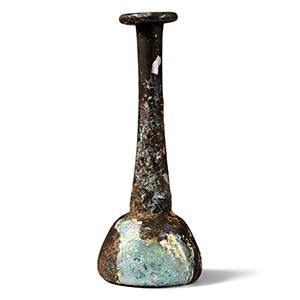
Roman Highly Iridescent Glass Bottle
Circa 1st century A.D.Estimate: £200 - 300 (+bp*)
Opening Bid: £100
With a domed body and a pontil base, a tall neck with trumpet-shaped mouth and rolled rim; some iridescence. 37 grams, 16.3 cm
From an important collection of glass, London, UK, 1990s. -
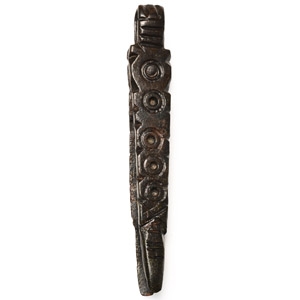
Late Roman Bronze Tweezers
4th-6th century A.D.Sold for (Inc. bp): £33
Formed as two broad tapering flat-section arms with transverse ribbing to the loop, notched edges and impressed ring-and-dot ornament. 6.84 grams, 56 mm
From a private Tyneside collection, formed since the early 2000s.
