
Loading, please wait...
LOT 0761
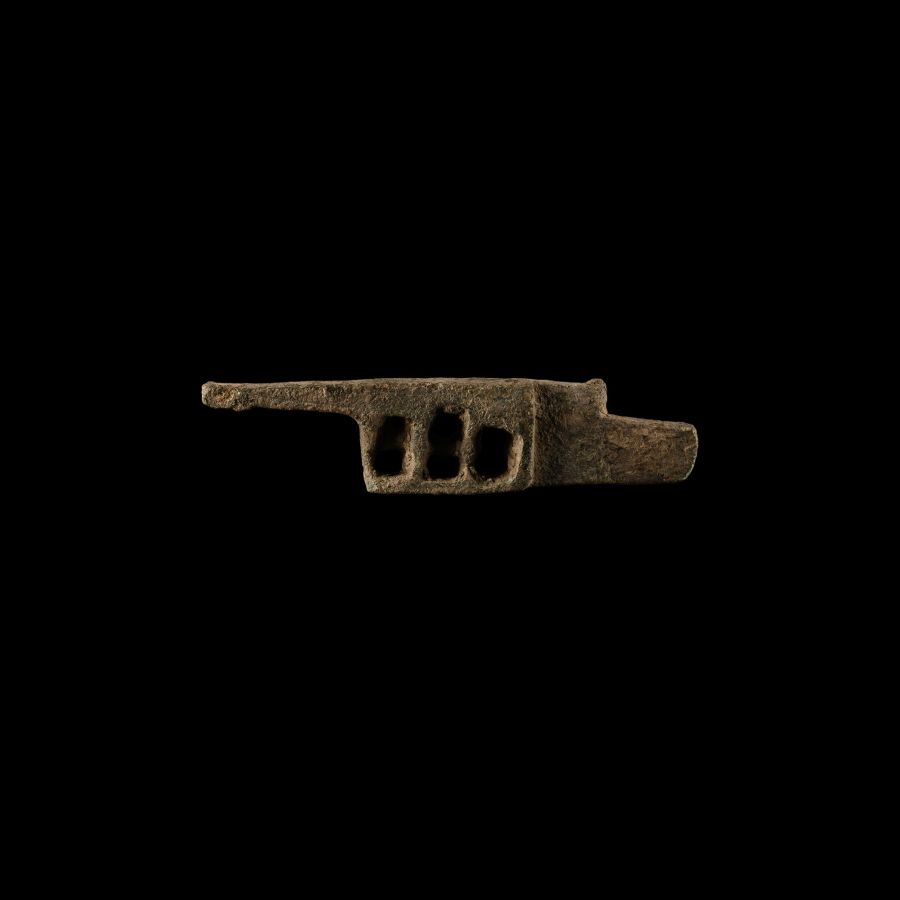
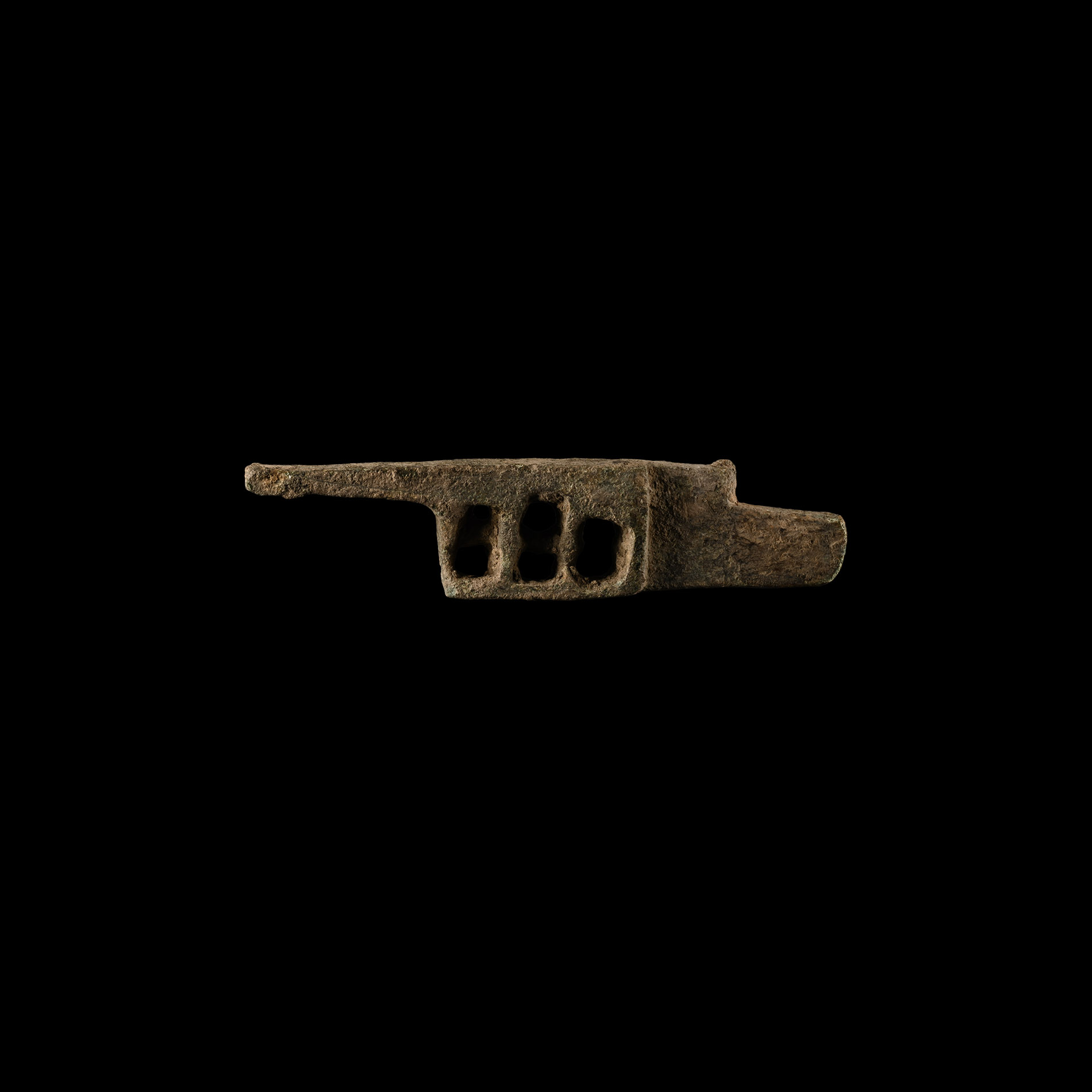
Roman Bronze Lock Bolt
1ST-3RD CENTURY A.D.
2 3/8 in. (19.3 grams, 60 mm).
The rectangular plate with differently sized horizontal and vertical extensions, five sub-square perforations. [No Reserve]
ProvenanceAcquired on the London art market, 1980s-1990s.
LiteratureSee Crummy, N., Colchester Archaeological Report 2: The Roman small finds from excavations in Colchester, 1971-9, 1993, Colchester: Colchester Archaeological Trust Ltd; cf. The Portable Antiquities Scheme Database, record id. YORYM-4B1B73, for similar.
FootnotesThis bolt would originally have been associated with a tumbler mechanism; the matching teeth of a slide key would slide into the cut-outs of the bolt replacing the tumblers and allowing the bolt to be drawn.
CONDITIONTimeLine Auctions follows a vetting process to ensure the authenticity and legality of all items, reinforcing our commitment to integrity and responsible trading. Each antiquity, antique, and coin lot undergoes thorough examination by a vetting committee of at least ten external specialists, professional trade association members, scientists, and archaeologists: Our Vetting Process
AUCTIONS:
TimeLine is a leading auction house specialising in antiquities, ancient art, collectables, natural history, coins, medals, and books. Our auctions offer museums, collectors, historians, and enthusiasts the opportunity to acquire unique and historically significant pieces.
-
.jpg)
Roman Bronze Bull Collection
1st-4th century A.D.Estimate: £200 - 300 (+bp*)
Opening Bid: £111
Formed free-standing with stylised anatomical detailing; including one example on a base. 47 grams total, 22-33 mm
‘The Ancient Menagerie Collection’ formerly the property of a Cambridgeshire lady, collected since the 1990s and acquired from auctions and dealers throughout Europe and the USA, now ex London collection. -
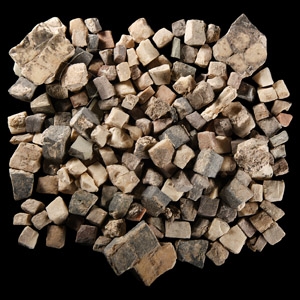
Roman Stone Mosaic Fragments and Tesserae
1st-4th century A.D.Sold for (Inc. bp): £286
Including examples of various sizes and colours and sections still set in Roman cement. 139 grams total, 7-27 mm
Acquired 1980-2015. Ex Abelita family collection. -
.jpg)
Roman Lead Plaque with Magical Inscription
Circa 6th century A.D.Sold for (Inc. bp): £572
Rectangular plaque with 17 lines of Greek text in small (2mm) lettering. 8.6 grams, 50 mm
From the private collection of the late Mr S.M., London, UK, thence by descent.
