
Loading, please wait...
LOT 0640
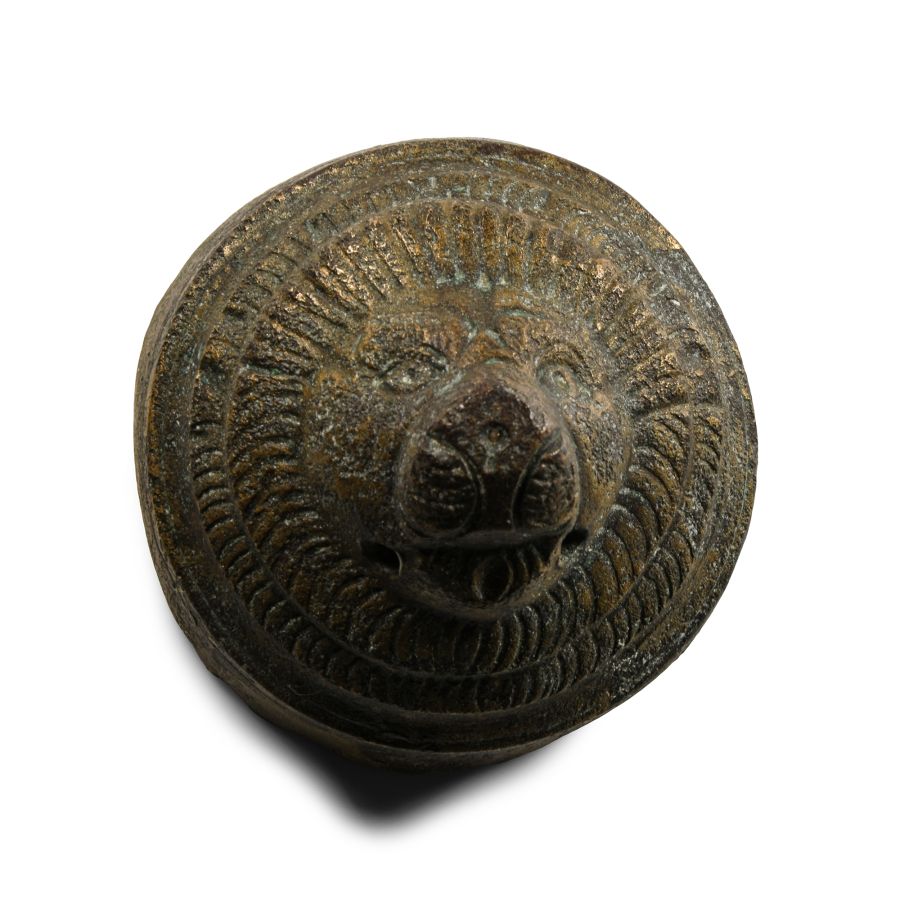
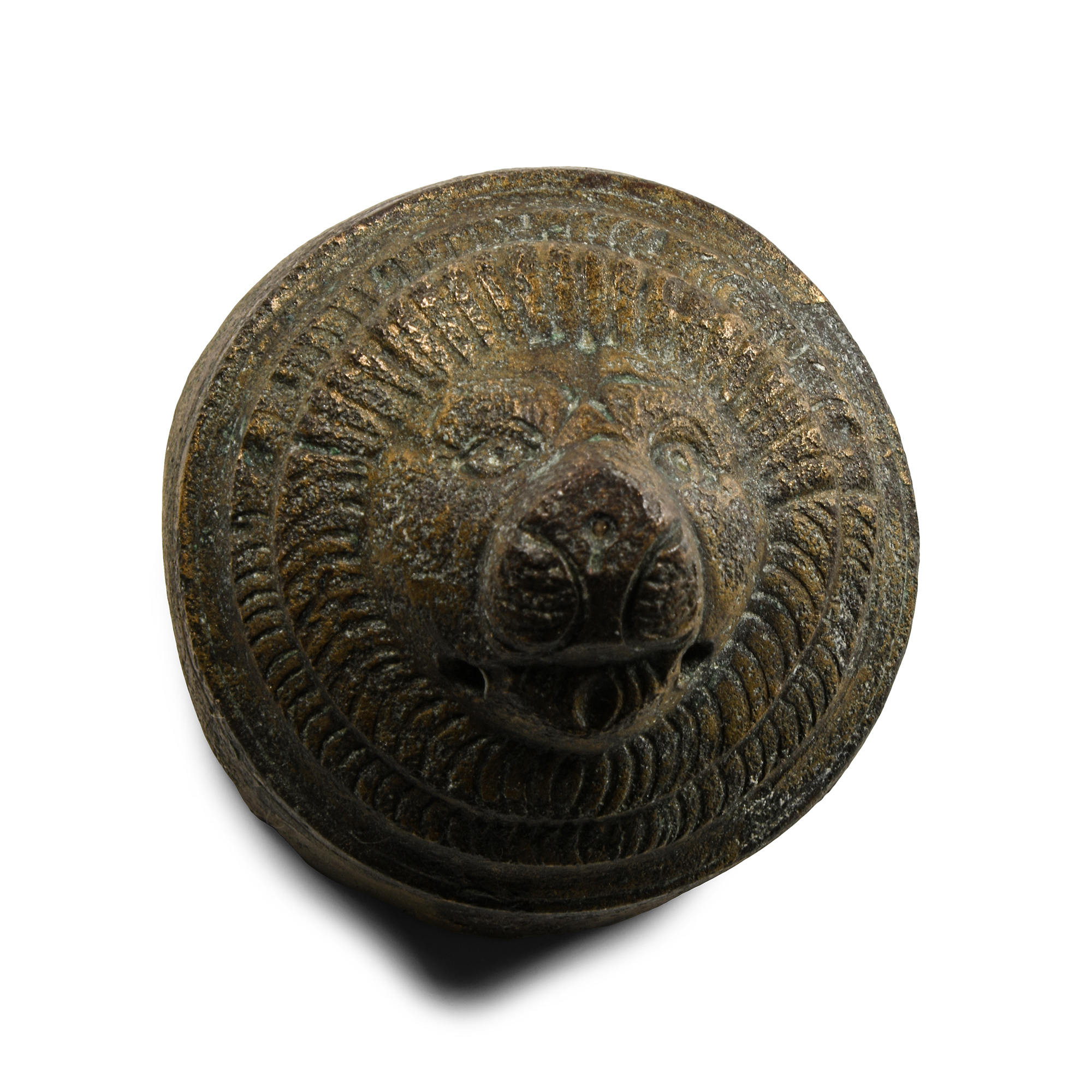
Roman Bronze Lion's Head Casket Mount
2ND-3RD CENTURY A.D.
2 1/8 in. (168 grams, 55 mm).
Domed in profile with concentric stepped tiers and hatched fur texture, central lion-mask with lateral piercings for the muzzle, slightly flared rim; lead plug to interior. [No Reserve]
ProvenanceFound Wiltshire, UK, before 1974.
LiteratureCf. Menzel, H., Römische Bronzen in Speyer, Mainz, 1960; Rolland, H., Bronzes Antiques de Haute Provence, Paris, 1965, item 413.
CONDITIONTimeLine Auctions follows a vetting process to ensure the authenticity and legality of all items, reinforcing our commitment to integrity and responsible trading. Each antiquity, antique, and coin lot undergoes thorough examination by a vetting committee of at least ten external specialists, professional trade association members, scientists, and archaeologists: Our Vetting Process
AUCTIONS:
TimeLine is a leading auction house specialising in antiquities, ancient art, collectables, natural history, coins, medals, and books. Our auctions offer museums, collectors, historians, and enthusiasts the opportunity to acquire unique and historically significant pieces.
-
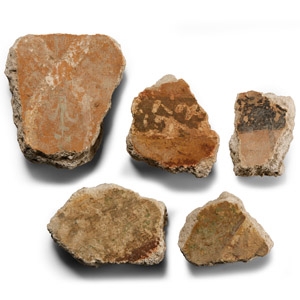
Roman Fresco Wall Plaster Collection
1st century A.D.Sold for (Inc. bp): £111
Fragments of wall plaster with rendered surface painted red with white detailing to the edge; impression of timber laths to the reverse. 598 grams total, 66-98 mm
Acquired in the 19th century. Ex Jeger collection, Switzerland.
These small fragments seem to belong to the second style of Roman painting, red panels representing highlight and shadow, decorated with vegetal interlaces. Some panels were probably framed by a red grenade fillet. A fragment shows alternate blue and red colour over a cream background, maybe pertinent to a socle. -
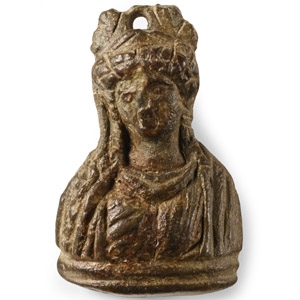
Roman Bronze Steelyard Weight
3rd-4th century A.D.Sold for (Inc. bp): £338
Formed as a female bust with stola and tunic, braided hair dressed in a chignon; transverse ribbing above the flat base, pierced lug forming part of the hairstyle. 22.5 grams, 33 mm
Found Wiltshire, UK, before 1974. -
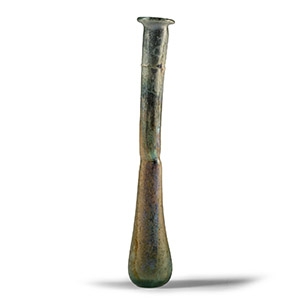
Roman Iridescent Glass Unguentarium
1st-4th century A.D.Sold for (Inc. bp): £65
Tall and slender iridescent vessel with bulb to the base and flared rim. 7.47 grams, 10.5 cm
Acquired 1980-2015. Ex Abelita family collection.
