
Loading, please wait...
LOT 0695
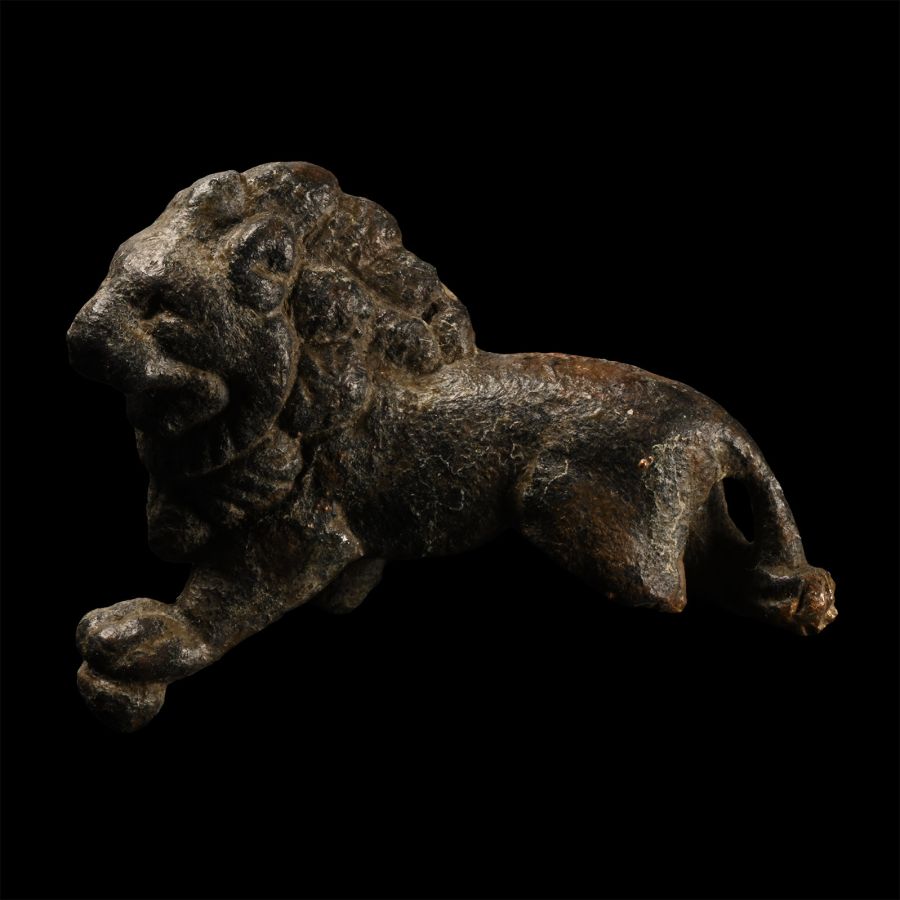
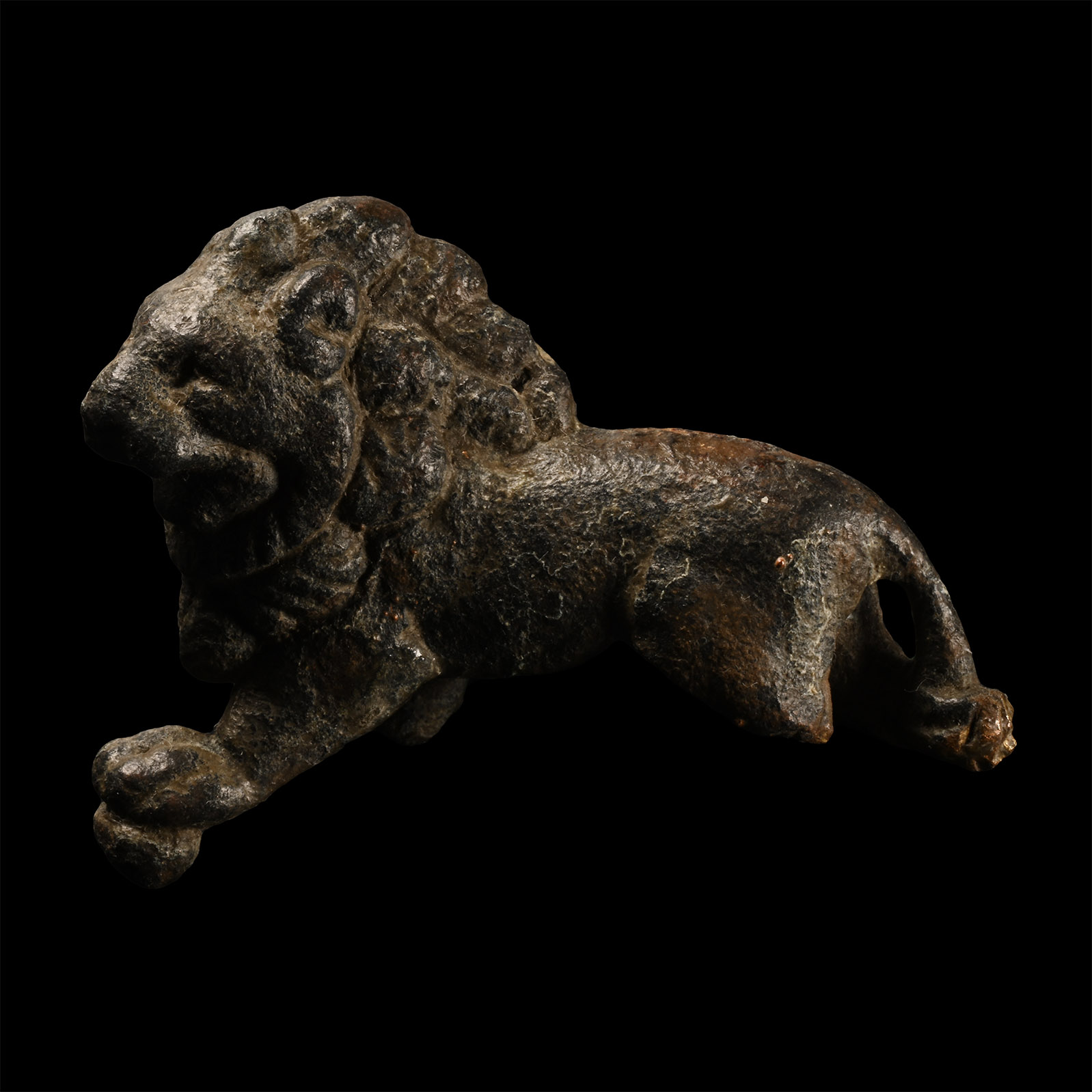
Roman Bronze Lion Statuette
2ND-3RD CENTURY A.D.
2 1/8 in. (78 grams, 54 mm).
With detailed textured curls to the mane, standing with one foreleg resting on a sphere. [No Reserve]
ProvenanceFrom a collection acquired on the UK art market from various auction houses and collections mostly before 2000.
From an important Cambridgeshire estate; thence by descent.
Cf. Durham, E., Metal Figurines in Roman Britain, vol. 2, Reading, 2010, pl.290, for type.
CONDITIONTimeLine Auctions follows a vetting process to ensure the authenticity and legality of all items, reinforcing our commitment to integrity and responsible trading. Each antiquity, antique, and coin lot undergoes thorough examination by a vetting committee of at least ten external specialists, professional trade association members, scientists, and archaeologists: Our Vetting Process
AUCTIONS:
TimeLine is a leading auction house specialising in antiquities, ancient art, collectables, natural history, coins, medals, and books. Our auctions offer museums, collectors, historians, and enthusiasts the opportunity to acquire unique and historically significant pieces.
-
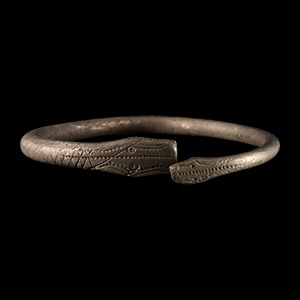
Romano-Celtic Silver Snake Bracelet
1st century B.C.-1st century A.D.Sold for (Inc. bp): £1,430
Tapering round-section bar with incised serpent-head detailing to both ends. 65 grams, 83 mm
Acquired on the London art market in the late 1980s-1990s. From the family collection of an East London, UK, gentleman. -
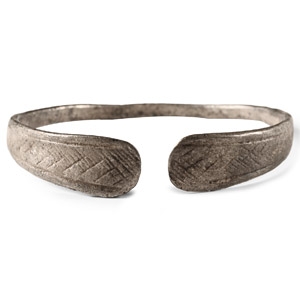
Roman Silver Armilla Bracelet with Hatched Paddle Terminals
2nd-3rd century A.D.Sold for (Inc. bp): £85
With slender round-section shank flaring to lobe terminals, panel of hatching to each lobe. 11.9 grams, 51 mm
Private collection, Arundel, West Sussex, UK, 1975-late 1990s. -
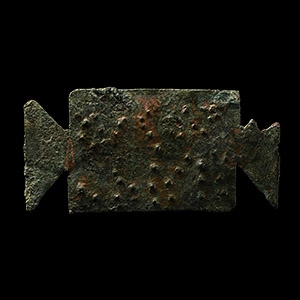
Roman Bronze Punched Tabula Ansata Appliqué
2nd century A.D.Sold for (Inc. bp): £1,170
Rectangular plate with trapezoidal ends, pointillé decoration. 2.5 grams, 45 mm
Ex German art market, 2000s. Acquired from an EU collector living in London. From the collection of Surrey, UK, gentleman.
These tabulae ansatae with pointillé decoration were used for votive inscriptions to the gods, offered on the occasion of a vow made during a situation of danger or an invocation of help to the gods. They were often used in the military field. A particularly important example is the one found in Carnuntum dedicated to Jupiter Dolichenus, offered by the centurion Titius Moderatus of the Legio XI Gemina.
