
Loading, please wait...
_900x900.jpg "Roman Bronze Lion Statuette")
_200x200.jpg "Roman Bronze Lion Statuette")
.jpg "Roman Bronze Lion Statuette")
LOT 0157
Roman Bronze Lion Statuette
1ST-4TH CENTURY A.D.
2 1/8 in. (108 grams, 53 mm).
Formed as a square base with gusseted profile, a lion cub crouching on the upper face with one forepaw raised; open to the rear and underside; statuette or fitting.
ProvenanceAcquired in the 1990s.
Collection of a Suffolk, UK, gentleman.
TimeLine Auctions follows a vetting process to ensure the authenticity and legality of all items, reinforcing our commitment to integrity and responsible trading. Each antiquity, antique, and coin lot undergoes thorough examination by a vetting committee of at least ten external specialists, professional trade association members, scientists, and archaeologists: Our Vetting Process
AUCTIONS:
TimeLine is a leading auction house specialising in antiquities, ancient art, collectables, natural history, coins, medals, and books. Our auctions offer museums, collectors, historians, and enthusiasts the opportunity to acquire unique and historically significant pieces.
LOT 0157
Roman Bronze Lion Statuette
Estimate £400 - 600€460 - 700 (for guidance only)$540 - 810 (for guidance only)
-
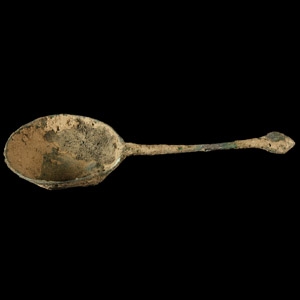
Roman Bronze Spoon
1st-4th century A.D.Sold for (Inc. bp): £46
Deep circular bowl and narrow handle with lobe finial. 31.6 grams, 15 cm
English collection, early 2000s. Ex central London gallery. -
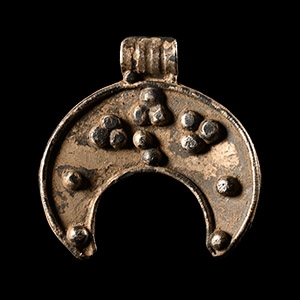
Roman Silver Lunar Pendant
Circa 1st century A.D.Sold for (Inc. bp): £195
Decorated with silver granules and with a gusseted suspension loop to the top edge. 7.46 grams, 31 mm
Acquired on the London art market, 1980s-1990s. -
.jpg)
Roman Gemstone Group
Circa 1st-2nd century A.D. and laterSold for (Inc. bp): £247
Composed of carnelian and possibly garnet polished stones, each bearing a different intaglio design: a figure holding a staff; figure standing holding a cornucopia and wearing a floor-length robe, possibly Fortuna; short, helmetted figure, possibly Mars; figural scene composed of a central seated female wearing a helmet, possibly the goddess Minerva, two attendants to either side; each accompanied by a museum-quality impression. 2.88 grams total, 9-14 mm
Ex property of a European lady living in London; from her father's family collection formed before 1978.
