
Loading, please wait...
LOT 0793
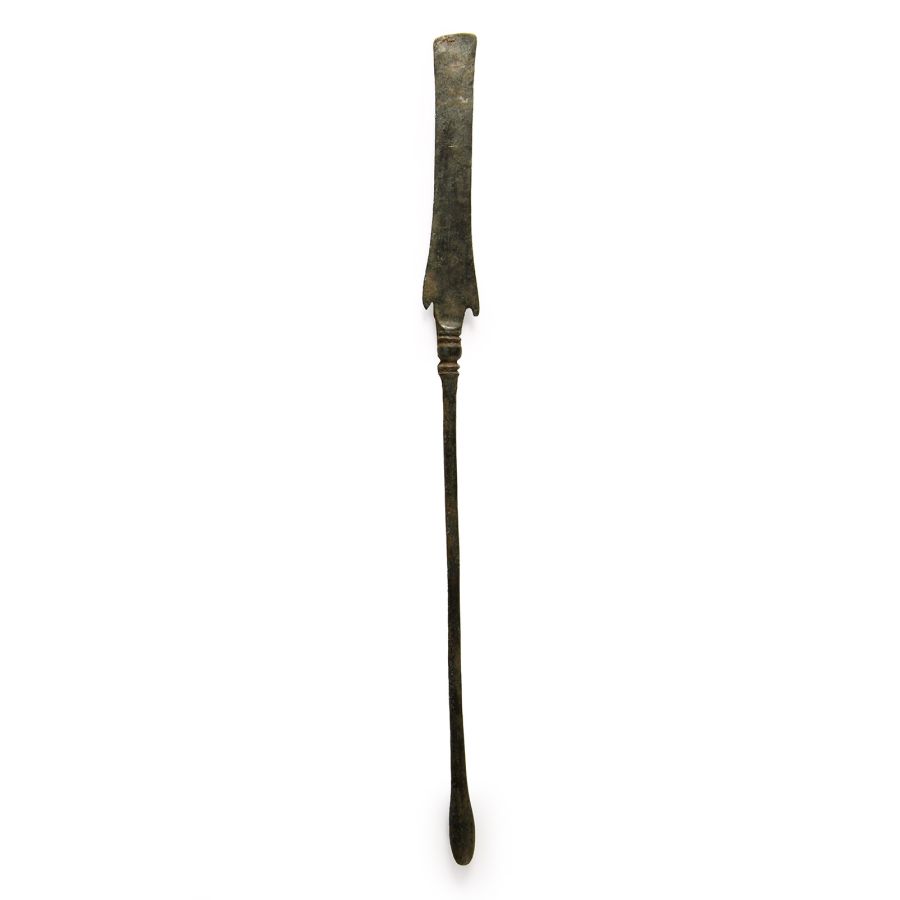
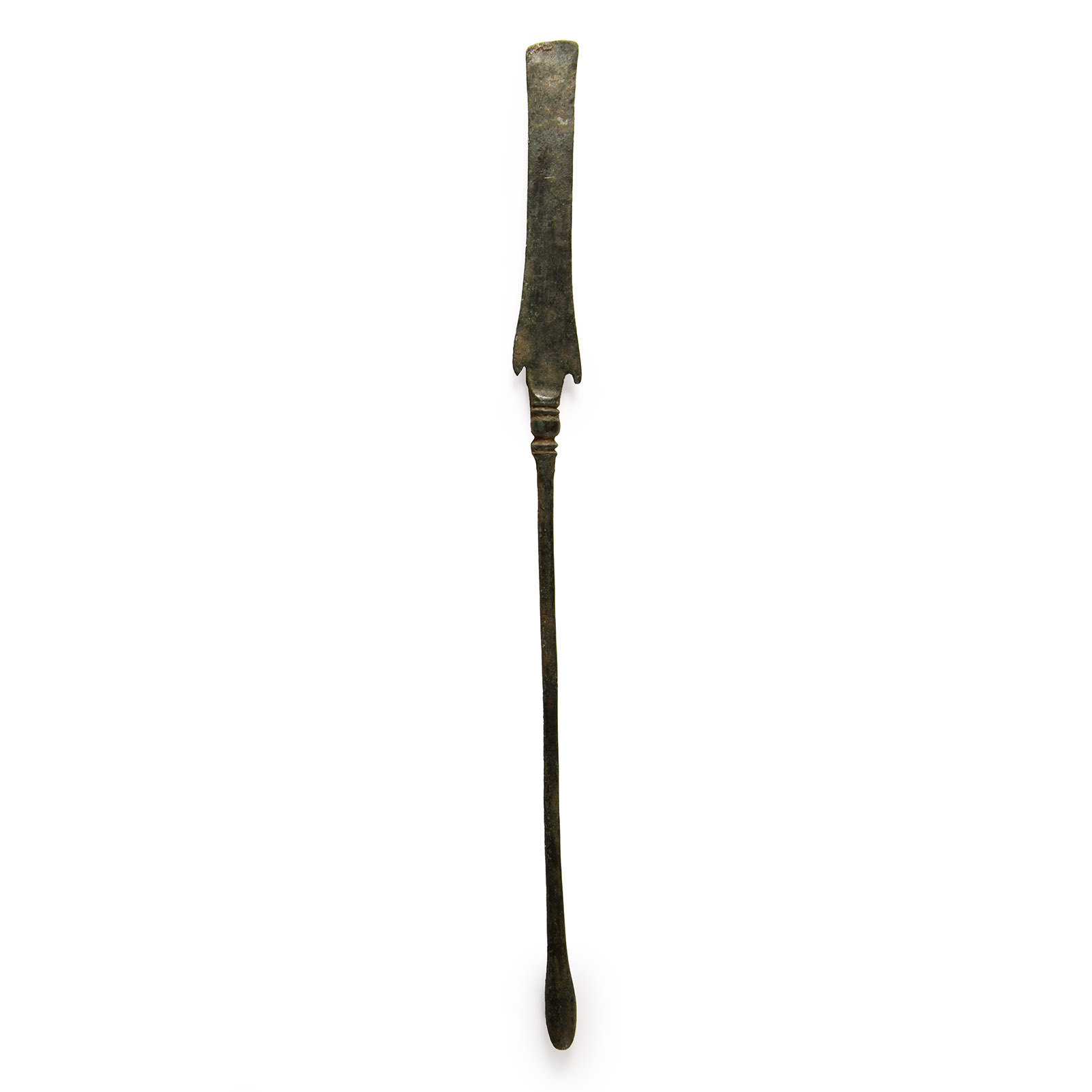
Roman Bronze Ligula Medical Instrument
1ST-4TH CENTURY A.D.
7 in. (11 grams, 17.6 cm).
Comprising a round-section shank with bulb finial, balustered neck, flat chisel-blade with barbs to the rear. [No Reserve]
ProvenanceFrom the Garcia collection, France, 1990s.
CONDITIONTimeLine Auctions follows a vetting process to ensure the authenticity and legality of all items, reinforcing our commitment to integrity and responsible trading. Each antiquity, antique, and coin lot undergoes thorough examination by a vetting committee of at least ten external specialists, professional trade association members, scientists, and archaeologists: Our Vetting Process
AUCTIONS:
TimeLine is a leading auction house specialising in antiquities, ancient art, collectables, natural history, coins, medals, and books. Our auctions offer museums, collectors, historians, and enthusiasts the opportunity to acquire unique and historically significant pieces.
-
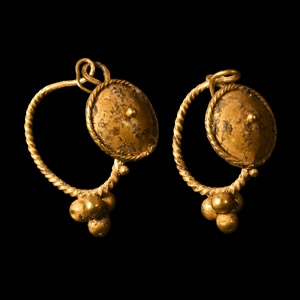
Roman Gold Earring Pair with Bosses
Circa 1st-2nd century A.D.Sold for (Inc. bp): £442
Comprising a matched pair of delicate earrings, each with a large circular boss with a central granule and fine filigree surrounding the perimeter, pyramidal cluster of granules to the base; twisted hook with a hook-and-loop closure. 1.01 grams total, 20 mm
From the collection of a London lady, UK. Accompanied by an old collection ticket. -
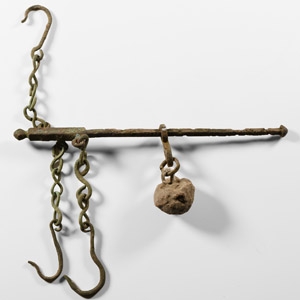
Roman Bronze Steelyard Balance
1st-4th century A.D.Sold for (Inc. bp): £390
Square-section arm with sliding loop, weight and chain. 148 grams, 18.3 cm
Ex German art market, 2000s. Acquired from an EU collector living in London. From the collection of Surrey, UK, gentleman. -
.jpg)
Roman Bronze Triskele Brooch
1st century B.C.Sold for (Inc. bp): £234
Comprising an openwork body with a three radiating running legs, central Medusa head with wings to the crown, the design from the reverse of a Republican denarius; catchplate and pin-lugs to the reverse. 14 grams, 40 mm
Ex German art market, 2000s. Acquired from an EU collector living in London. From the collection of Surrey, UK, gentleman.
