
Loading, please wait...
LOT 0882
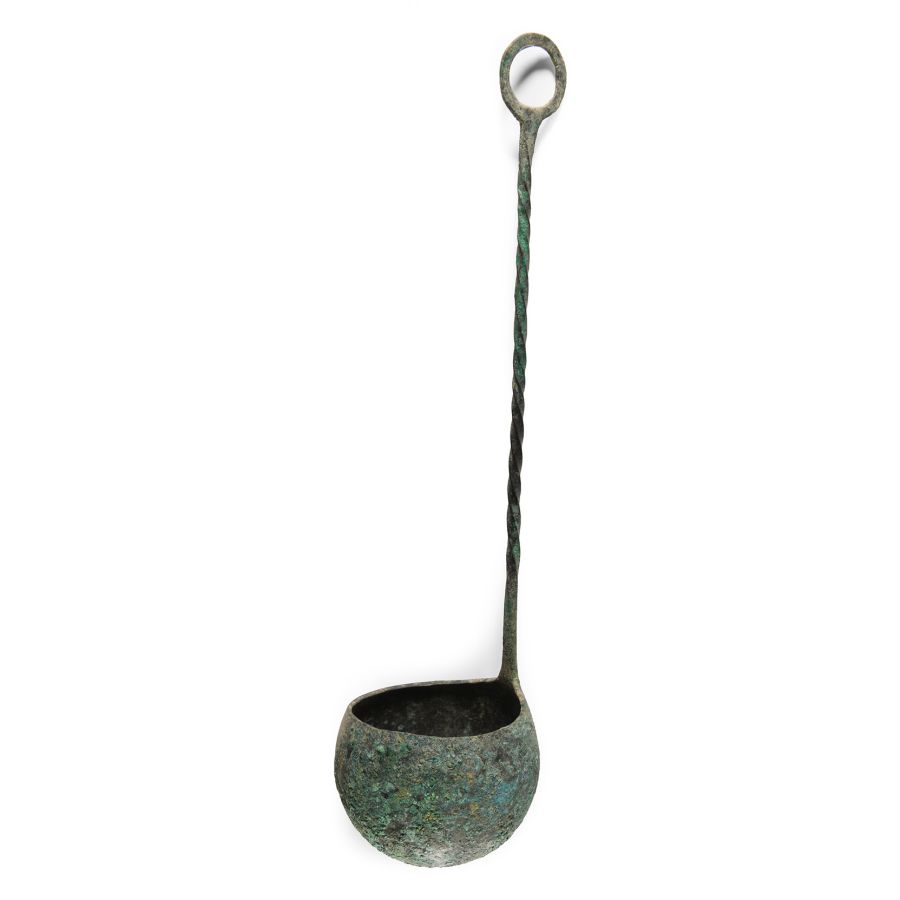
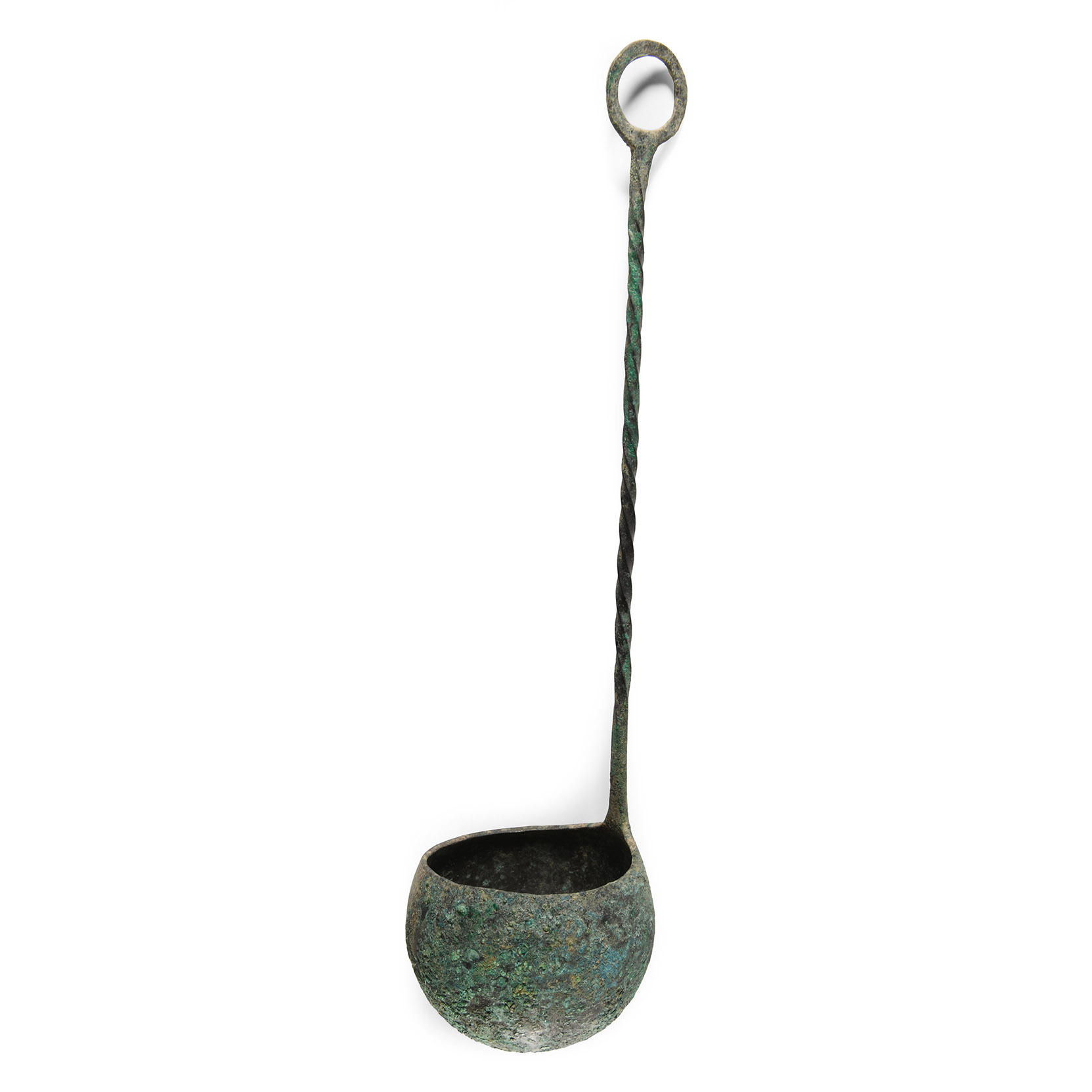
Roman Bronze Ladle with Twisted Handle
2ND CENTURY B.C.- 1ST CENTURY A.D.
10 1/4 in (77 grams, 26.2 cm).
With deep bowl, integral bronze handle twisted about it own axis, loop finial. [No Reserve]
ProvenanceUK private collection before 2000.
UK art market.
Property of a London gentleman.
Cf. Richter, G.M.A., The Metropolitan Museum of Art, Greek, Etruscan and Roman Bronzes, New York, 1915, no.652, for similar.
CONDITIONTimeLine Auctions follows a vetting process to ensure the authenticity and legality of all items, reinforcing our commitment to integrity and responsible trading. Each antiquity, antique, and coin lot undergoes thorough examination by a vetting committee of at least ten external specialists, professional trade association members, scientists, and archaeologists: Our Vetting Process
AUCTIONS:
TimeLine is a leading auction house specialising in antiquities, ancient art, collectables, natural history, coins, medals, and books. Our auctions offer museums, collectors, historians, and enthusiasts the opportunity to acquire unique and historically significant pieces.
-
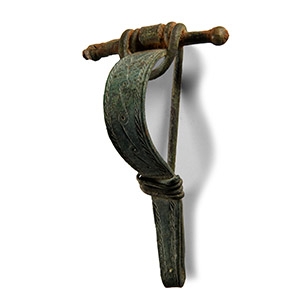
Large Roman Decorated Bronze Bow Brooch
2nd-3rd century A.D.Sold for (Inc. bp): £85
P-shaped with wide bow and foot, hatched to the edges with ring-and-dot ornament to the centre of the bow, bar above to hold the sprung pin, foot returning to form the catchplate, the upper edge of which is hammered into a flat wire coiled around the bottom of the bow. 56 grams, 95 mm
Ex property of an Austrian private collector since the 1970s. -
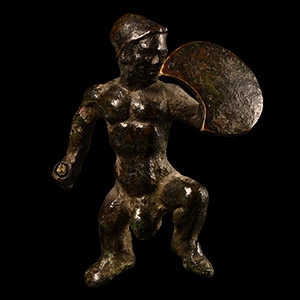
Roman Bronze Figure of a Grotesque Warrior
2nd-3rd century A.D.Estimate: £2,000 - 3,000 (‡+bp*)
Opening Bid: £1,000
Modelled in the round figure of a hoplite with later pelta shield and corinthian helmet; the figure modelled nude with exaggerated muscles and genitals; mounted on a custom-made stand. 227 grams total, 10 cm high including stand
Old private collection. Anonymous sale, Delorme du Bocage, Paris, 31 March 2010. This lot has been checked against the Interpol Database of stolen works of art and is accompanied by search certificate no.12050-211847. -
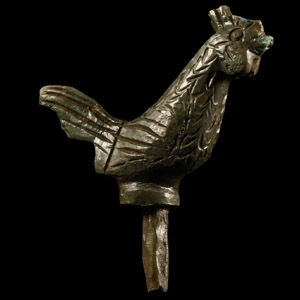
Roman Bronze Cockerel Finial
2rd-3rd century A.D.Estimate: £200 - 300 (‡+bp*)
Opening Bid: £100
Modelled in the round on a circular base with attachment peg; applied feather detailing to the neck, wings and tail. 15.4 grams, 40 mm
Private collection of Mr S.A., Switzerland, 1990s, thence by descent.
