
Loading, please wait...
LOT 0738
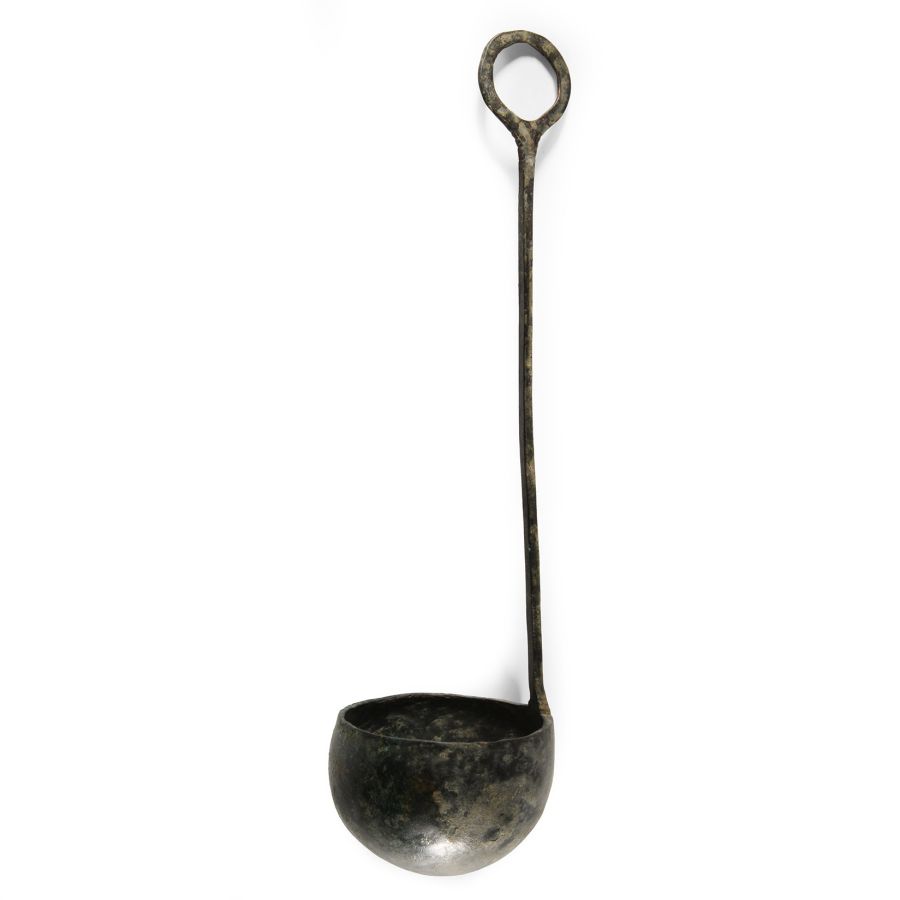
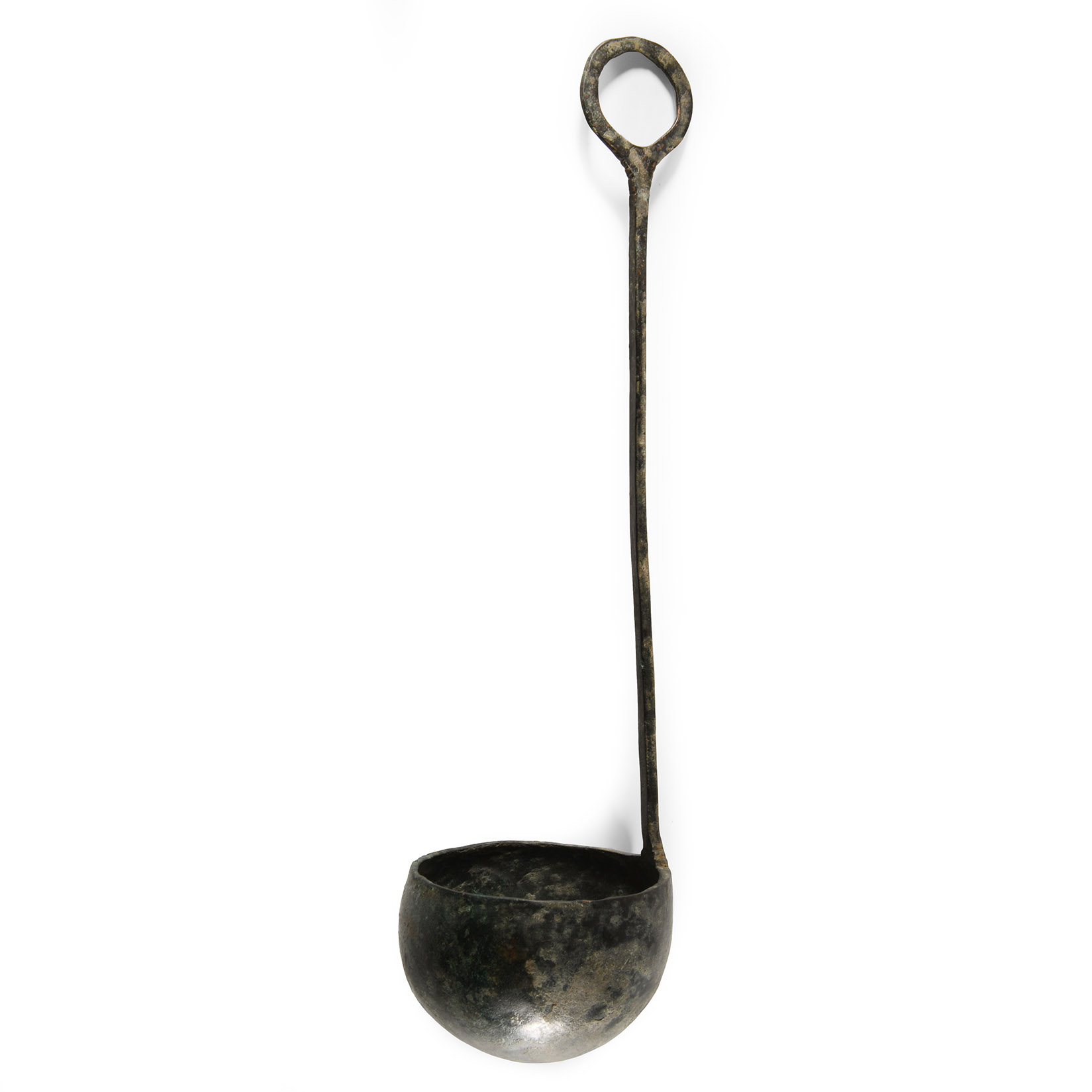
Roman Bronze Ladle with Loop Handle
2ND-3RD CENTURY A.D.
9 in. (66 grams, 23 cm).
With deep bowl, integral square-section handle and loop finial. [No Reserve]
ProvenanceUK private collection before 2000.
UK art market.
Property of a London gentleman.
Cf. Tassinari, S., La Vaisselle de Bronze, Romaine et Provinciale, au Musée des Antiquités Nationales, XXIXe supplément de Gallia, Paris, 1975, items 40-3, for similar ladles with animal-head finials; cf. also Boucher, S., Inventaire des Collections Publiques Françaises - 17 Vienne: Bronzes Antiques, Paris, 1971, pp.168-169, for similar specimens.
FootnotesThis type of ladle was used for libations of wine to the gods during sacrifices. The shape of the simpulum was that of a small cup, with a single elongated handle. The material of which it was made varied according to the wealth of the altar; there were specimens in silver; some were of brass and others made of wood or terracotta. This simpulum or simpuvium is often found depicted on Roman medals or coins, like a denarius of Augustus (2 B.C.-2 A.D.).
CONDITIONTimeLine Auctions follows a vetting process to ensure the authenticity and legality of all items, reinforcing our commitment to integrity and responsible trading. Each antiquity, antique, and coin lot undergoes thorough examination by a vetting committee of at least ten external specialists, professional trade association members, scientists, and archaeologists: Our Vetting Process
AUCTIONS:
TimeLine is a leading auction house specialising in antiquities, ancient art, collectables, natural history, coins, medals, and books. Our auctions offer museums, collectors, historians, and enthusiasts the opportunity to acquire unique and historically significant pieces.
-
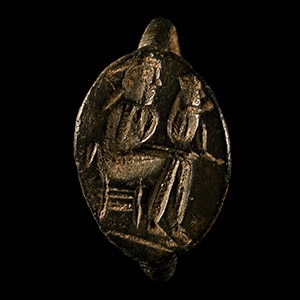
Romano-Parthian Ring with Trader and Seated Child
1st century B.C.-1st century A.D.Sold for (Inc. bp): £52
With round-section hoop, ellipsoid bezel, intaglio representing a Parthian trader with a child seated. 4.26 grams, 22.90 mm overall, 19.01 x 18.83 mm internal diameter (approximate size British R, USA 8 1/2, Europe 18 3/4, Japan 18)
UK private collection before 2000. UK art market. Property of a London gentleman. -
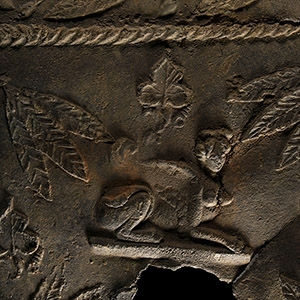
Roman Lead Coffin Panel Fragment with Sphinx
2nd-3rd century A.D.Sold for (Inc. bp): £845
Decorated with a high-relief pattern comprising a sphinx reclining on a dais surrounded by laurel leaves; ropework and floral border strips with laurel leaves; raised lip below the upper edge. 3.3 kg, 38 cm
Acquired 1970s-early 1990s. Property of a North American collector. London collection, 2016.
This item belongs to types widespread in the Eastern Mediterranean. The panel is decorated with a columned structure, and within each section were symbols of the outer-world, like gorgons, sphinx and dolphins. The sphinx, having a human head and breasts, legs and paws of a lion, and wings of a bird, was generally associated with protecting imperial tombs and temples. -
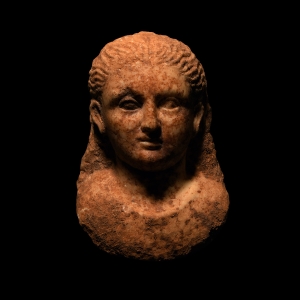
Roman Marble Head of a Young Man
2nd-3rd century A.D.Estimate: £4,000 - 6,000 (‡+bp*)
Opening Bid: £2,000
Worked in high-relief with hairstyle typical of the transitional period from the Consulate to the Empire; oval face with a prominent forehead, oval eyelids and clearly defined lines around the eyes; hair arranged in vertical lines combed back from the forehead; pronounced lips, typical rendering of the wide auricles; the lower part of the tunic visible with a well defined round edge around the neck; mounted on a custom-made display stand. 5.94 kg total, 22.5 cm high including stand
Acquired from Gallery Gryphos, Munich, 1992. European private collection. Accompanied by an academic report by Dr Raffaele D’Amato. This lot has been checked against the Interpol Database of stolen works of art and is accompanied by search certificate number no.11996-211878.
The head was probably pertinent to a series of funerary family portraits. It has realistic modelling of male features, which speaks of a portrait in reduced dimensions or a reference to a well-known person in the environment where it was exhibited. The portrait is worked only on the front, leaving the back, as well as the lower part of the sculpture, roughly treated.
