Loading, please wait...

Use mousewheel to zoom in and out, click to enlarge

Details

LOT 0847

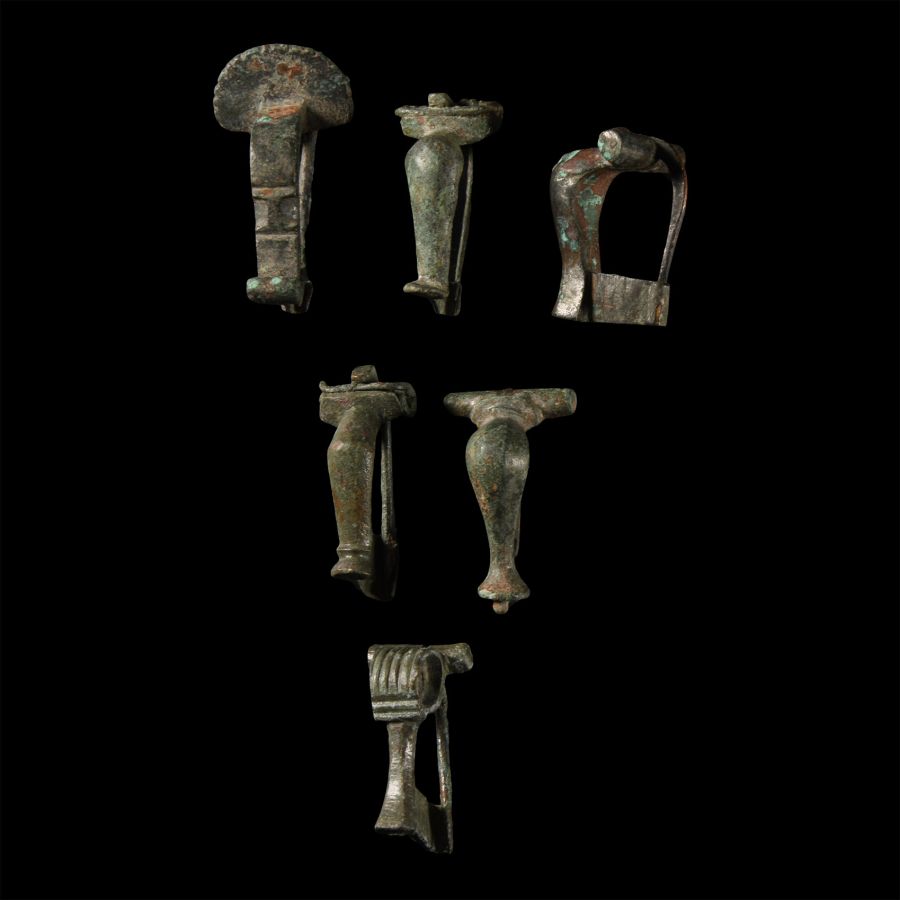
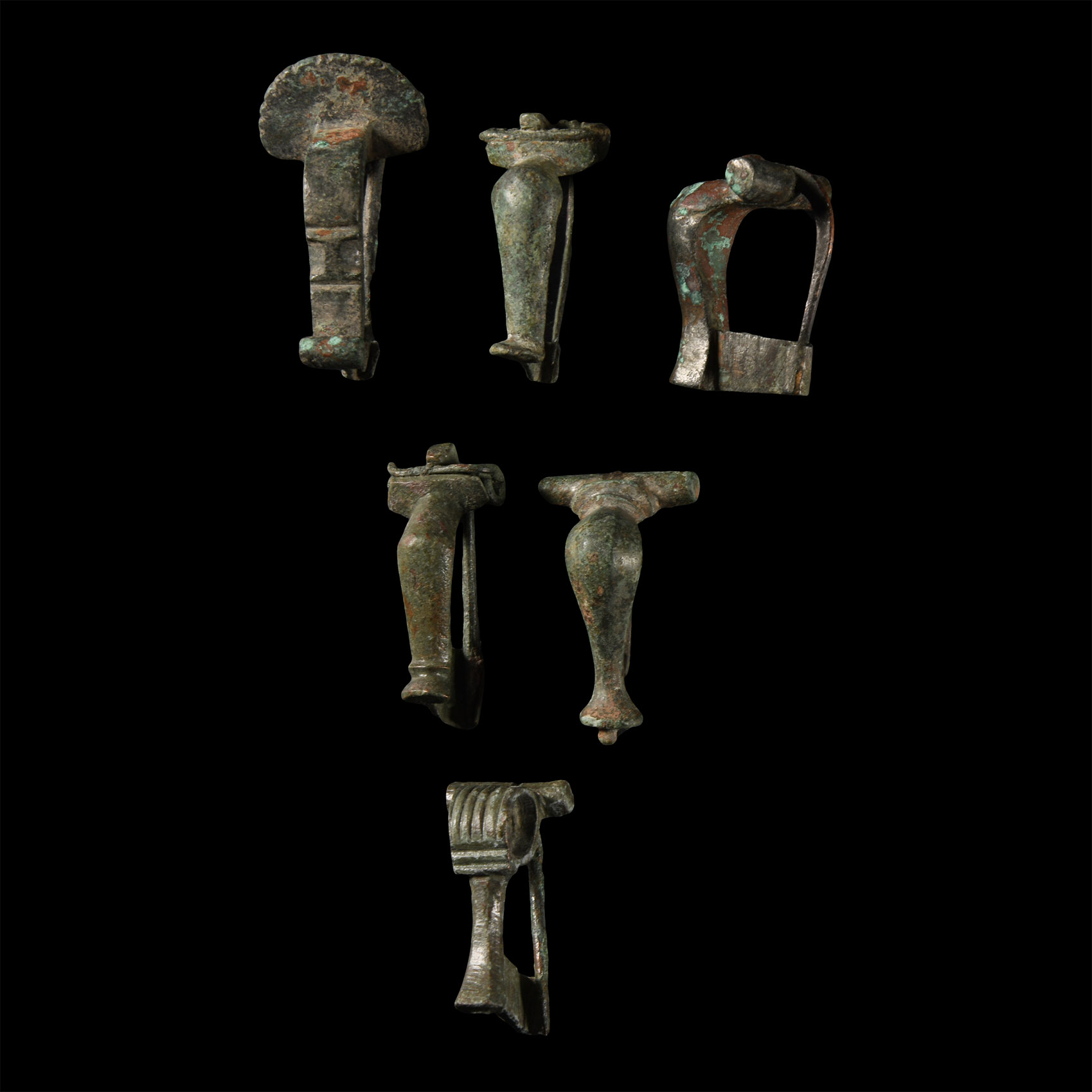
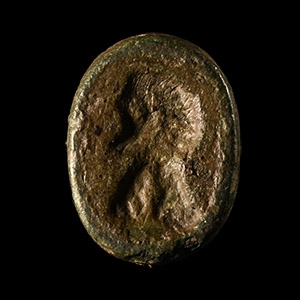
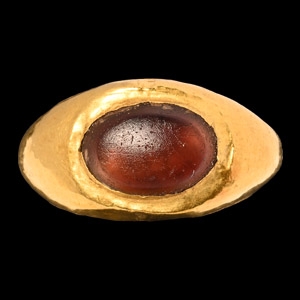
Roman Bronze Knee Brooch Collection

2ND CENTURY A.D.

1 1/8 - 1 1/2 in. (66 grams total, 29-39 mm).

Comprising examples with sprung pins or hinged pins and catchplates to reverses. [6, No Reserve]

Provenance

Ex property of an Austrian private collector since the 1970s.

Literature

See Mackreth, D.F., Brooches in Late Iron Age and Roman Britain, Oxford, 2011, for general discussion.

CONDITION

VETTING:

TimeLine Auctions follows a vetting process to ensure the authenticity and legality of all items, reinforcing our commitment to integrity and responsible trading. Each antiquity, antique, and coin lot undergoes thorough examination by a vetting committee of at least ten external specialists, professional trade association members, scientists, and archaeologists: Our Vetting Process


AUCTIONS:

TimeLine is a leading auction house specialising in antiquities, ancient art, collectables, natural history, coins, medals, and books. Our auctions offer museums, collectors, historians, and enthusiasts the opportunity to acquire unique and historically significant pieces.

LOT 0847

Roman Bronze Knee Brooch Collection

Sold for (Inc. bp): £143

Print page

RELATED LOTS

  • Roman Bronze Statuette of Mercury
    Roman Bronze Statuette of Mercury
    1st-2nd century A.D.

    Estimate: £5,000 - 7,000 (+bp*)

    Opening Bid: £2,750

    Standing erect on a tiered socle base in contrapposto pose; pointillé-textured mantle draped to the left shoulder, left arm bent, hand holding a wand; right arm loose at the side, hand holding a patera; finely modelled face with short wavy hair; shallow dimple or socket to the crown; standing on a possibly later tiered disc base with square foot. 957 grams, 16 cm high


    Acquired on the German art market, 1990s. Ex Cambridgeshire collection, UK. Accompanied by an academic report by Dr Raffaele D’Amato. This lot has been checked against the Interpol Database of stolen works of art and is accompanied by search certificate number no.12013-213587.

    Mercury was the god of trade and industry, whose principle shrine in the city of Rome was at the Circus Maximus. The draped mantle is typical of statuary of Mercury from the 1st-2nd century A.D. (Boucher, pl.40, 43) and the 'baton' may in fact be the stem of a caduceus (Boucher, pl.46 (211)).

    Lot Details

  • Roman Yellow Glass Flask
    Roman Yellow Glass Flask
    Circa 3rd-4th century A.D.

    Estimate: £1,800 - 2,400 (+bp*)

    Opening Bid: £1,000

    Mould-blown from translucent glass, the globular body on a circular flat base tapering at the shoulders to a cylindrical neck with an everted rim; a single applied handle; the body decorated with a horizontal band of a continuous Vitruvian wave framed by a double circumferential line, decorative ridges above and below; accompanied by a custom-made display stand. 16.7 grams, 66 mm (33.9 grams total, 79.4 mm high including stand)


    From the property of the late Mr SM, London, UK, 1948-2000. Ex J.L. collection Surrey, UK.

    The pitcher belongs to a late Roman group decorated with granulated circles forming like volutes. The shape of these globular pitchers is well known since the 1st-2nd century A.D., with the rim folded up and the handle applied to the shoulders, but the decoration is more typical of a later age.

    Lot Details

  • Life-Size Roman Marble Lower Torso
    Life-Size Roman Marble Lower Torso
    Circa 2nd century A.D.

    Estimate: £20,000 - 30,000 (+bp*)

    Opening Bid: £9,850

    Modelled in the round in cream-coloured marble; the hips and right leg of a slender male standing beside a column with the lower part of an animal at the base; the figure modelled with narrow hips and waist in contrapposto stance, genitals removed, muscular leg with slender ankle; adjacent column with remains of a branch or spur at the top, developing to a flared base with a crouching hare or rabbit; mounted on a custom-made stand. 101.4 kg total, 99 cm including stand


    Ex Paris collection. French gallery, Paris, 1990-2000s. Accompanied by an academic report by Dr Raffaele D’Amato. This lot has been checked against the Interpol Database of stolen works of art and is accompanied by search certificate number no.12088-213904.

    Despite the loss, the semi-circular rise that separated the ribcage from the abdomen highlights the muscles of a young athlete or a hero. The statue could represent many male heroes or deities (Reinach, 1897, p.210 no.2, 817 no.4), but, by comparison with a similar sculpture in the Brussels Museum, it could refer to a rare image of the handsome and ferocious hunter Hippolytus, son of Theseus and the Amazon Antiope, killed by the curse of his father due to Phaedra’s deception. The presence of the small hare or rabbit at the base of the column could confirm the hypothesis of a hunter hero, and finds its parallel with the small animals (gecko and panther) visible on the Brussels sculpture.

    Lot Details

Stay up-to-date with the latest from TimeLine Auctions by joining our mailing list