
Loading, please wait...

LOT 0760
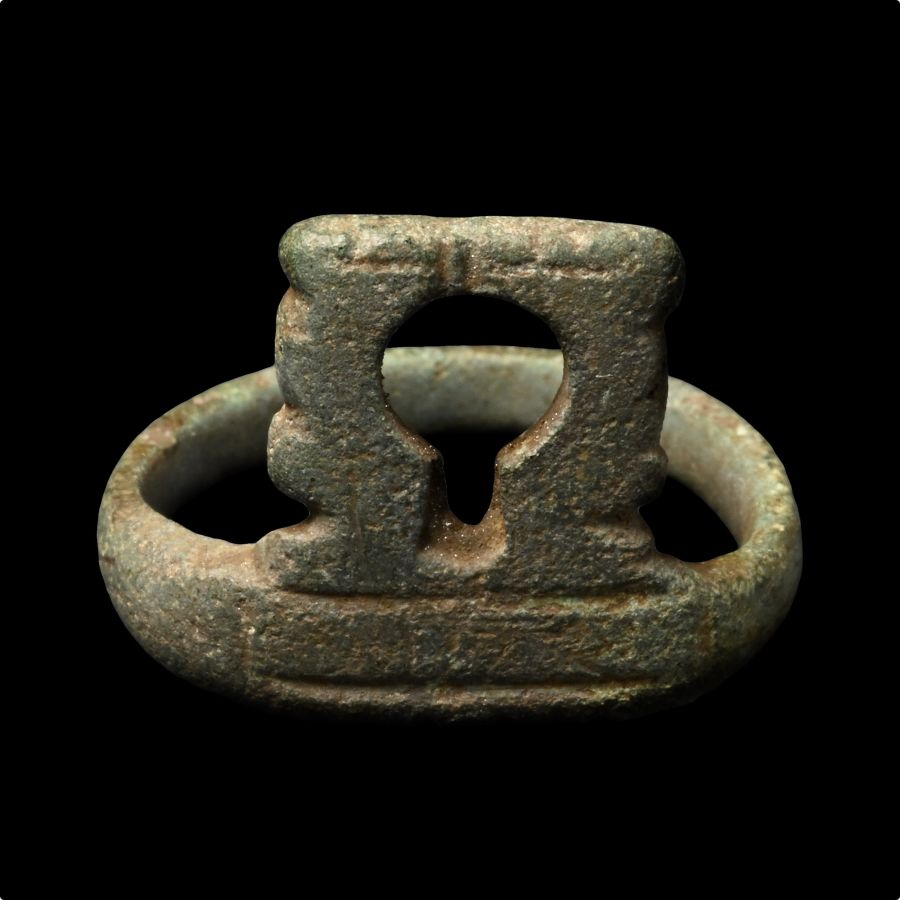
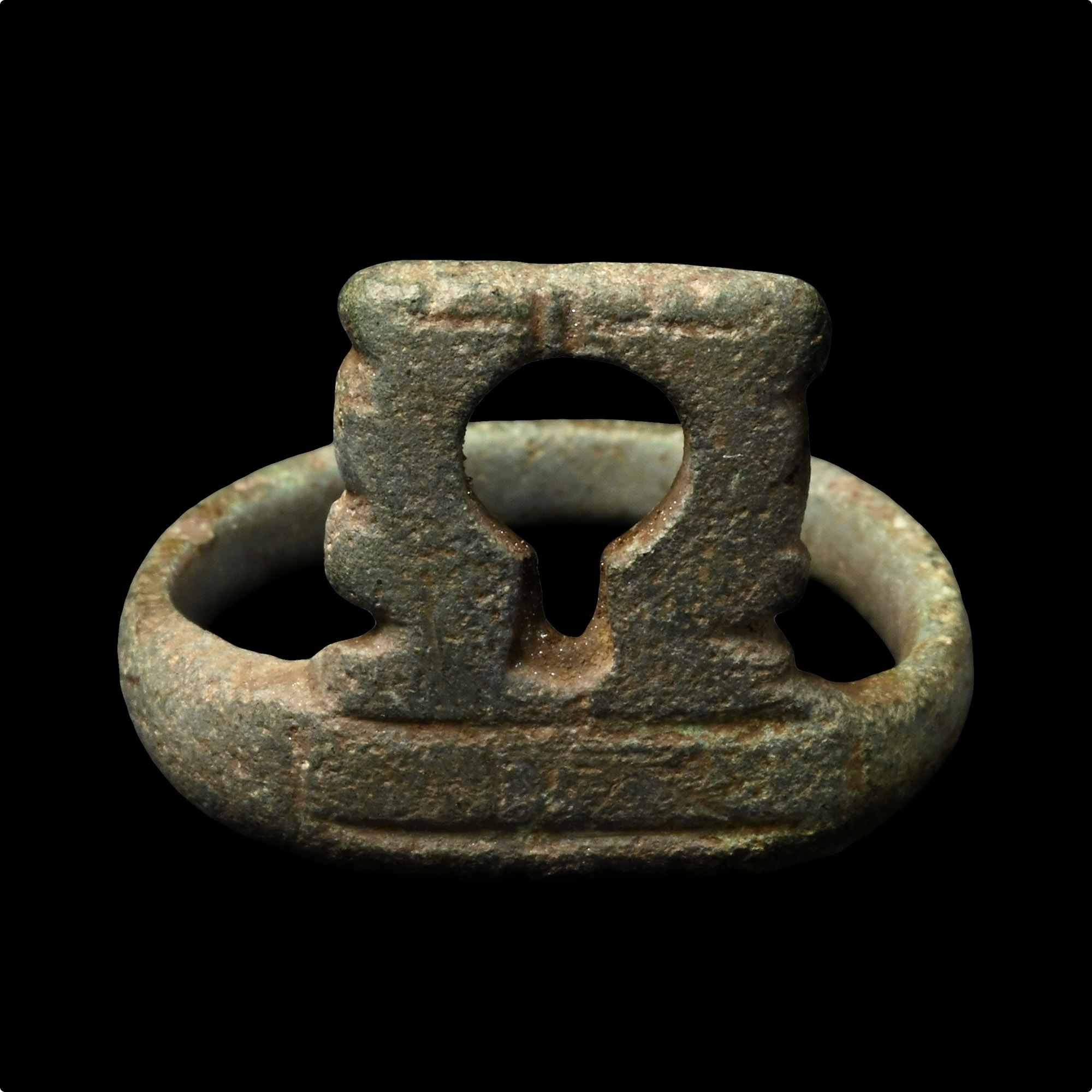
Roman Bronze Key Ring
1ST-2ND CENTURY A.D.
7/8 in. (6.36 grams, 21.44 mm overall, 19.9x17.4 mm internal diameter (approximate size British P 1/2, USA 7 3/4, Europe 16.86, Japan 16)).
Comprising a narrow hoop, rectangular bezel with dentilled outer edge, keyhole-shaped void. [No Reserve]
ProvenanceFound Gloucestershire, UK.
Acquired from the early 1980s.
From the private collection of a late Gloucestershire, UK, gentleman; thence by descent.
Cf. Chadour, A.B., Rings. The Alice and Louis Koch Collection, volume I, Leeds, 1994, item 371, for type.
CONDITIONTimeLine Auctions follows a vetting process to ensure the authenticity and legality of all items, reinforcing our commitment to integrity and responsible trading. Each antiquity, antique, and coin lot undergoes thorough examination by a vetting committee of at least ten external specialists, professional trade association members, scientists, and archaeologists: Our Vetting Process
AUCTIONS:
TimeLine is a leading auction house specialising in antiquities, ancient art, collectables, natural history, coins, medals, and books. Our auctions offer museums, collectors, historians, and enthusiasts the opportunity to acquire unique and historically significant pieces.
-
Roman and Byzantine Ceramic Oil Lamp Collection
4th-8th century A.D.Sold for (Inc. bp): £293
Comprising: a piriform lamp with birds and geometric motifs, low basal ring; a piriform lamp with raised pellets and other motifs; a rounded lamp with short nozzle, low-relief leaves and ring-and-dot motifs within geometric border, a hatched rectangle behind the nozzle, a palm branch underneath the nozzle flanked by crescentic lines and ring-and-dot motifs, raised nipple to base. 190 grams total, 78-90 mm
with Galerie Rhéa, Zurich, Switzerland. -
Roman Silver Ring with Palm Branch
1st-4th century A.D.Sold for (Inc. bp): £52
An interphalangeal ring with an incuse palm branch motif on the bezel. 2.67 grams, 19.40 mm overall, 15.48 mm internal diameter (approximate size British F 1/2, USA 3, Europe 4.3, Japan 4)
Ex German art market, 2000s. Acquired from an EU collector living in London. From the collection of a Surrey, UK, gentleman. -
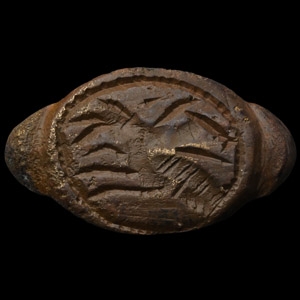
Roman Bronze Ring with Lion
2nd-4th century A.D.Sold for (Inc. bp): £26
D-section hoop expanding at the shoulders, oval plaque bezel with a leaping lion facing left. 5.08 grams, 25.61 mm overall, 22.15 mm internal diameter (approximate size British P 1/2, USA 7 3/4, Europe 16.86, Japan 16)
Ex Norri collection, Milton Keynes, UK, 1980s-1990s.
