
Loading, please wait...
LOT 1015
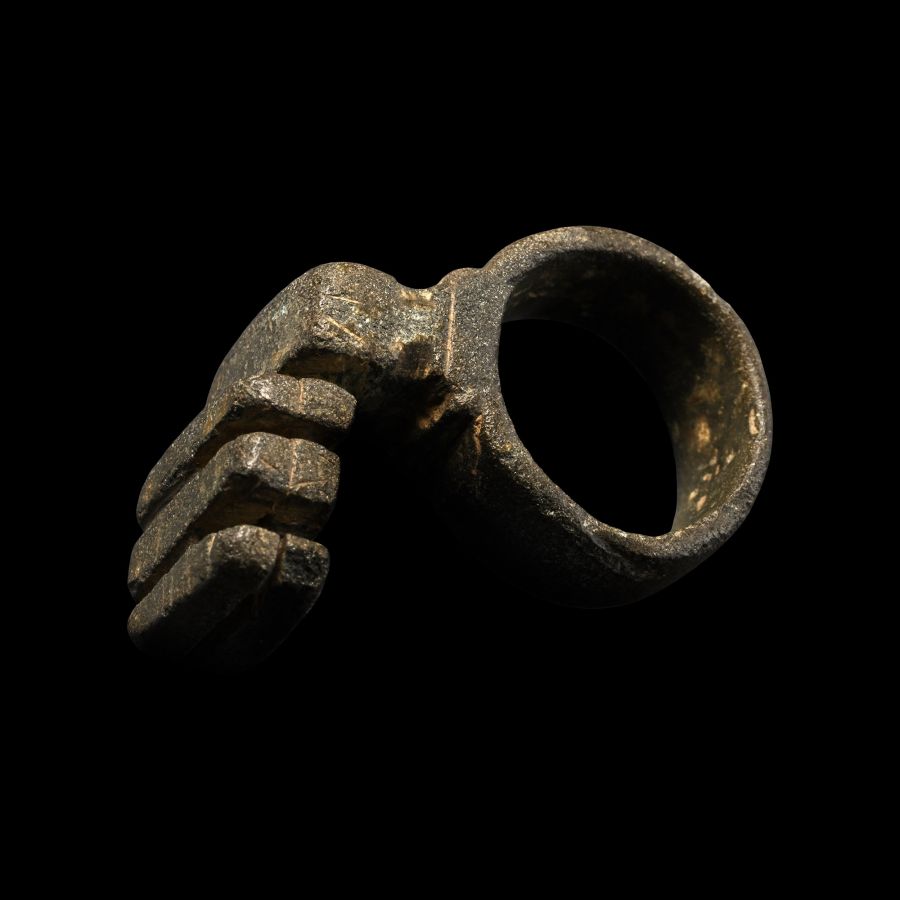
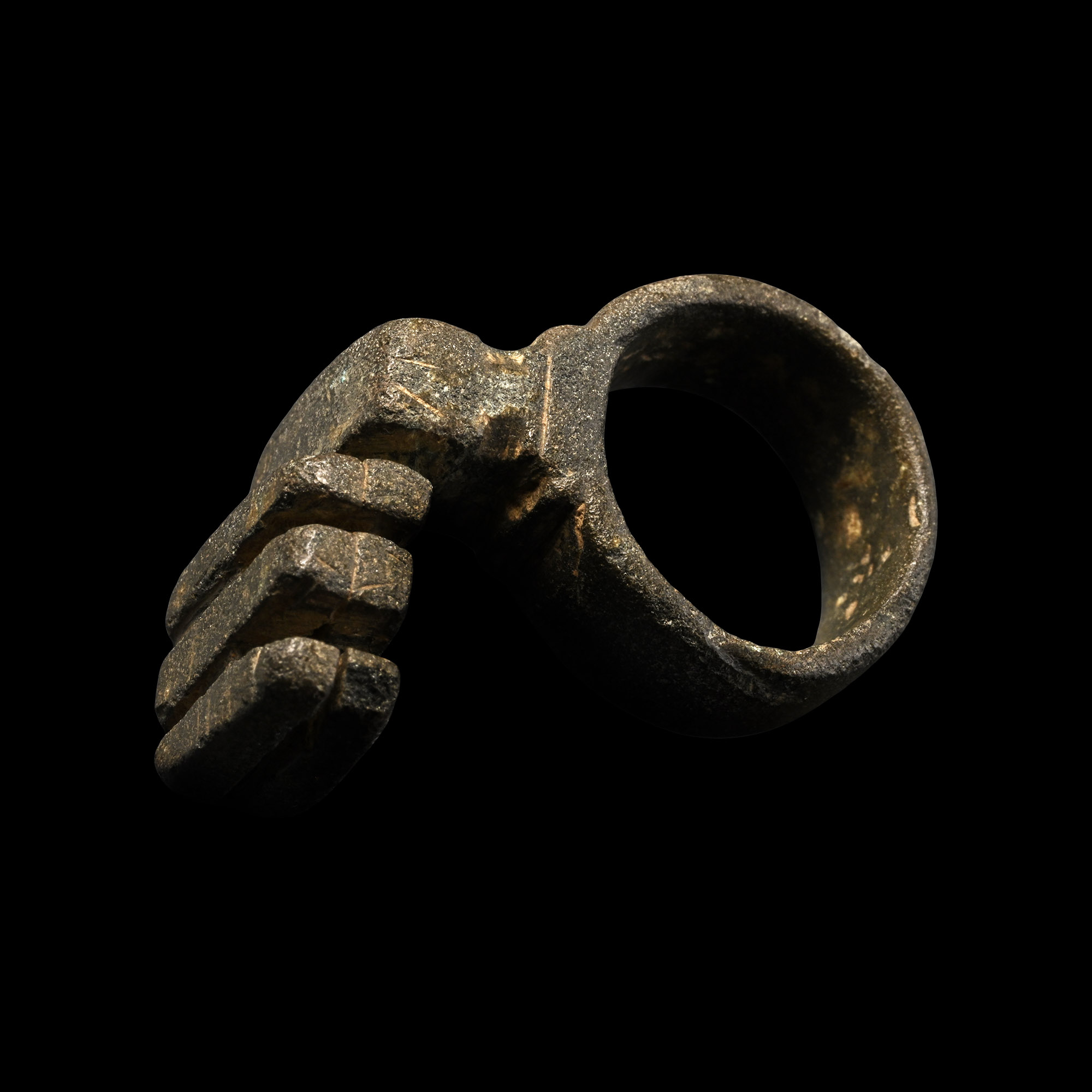
Roman Bronze Key Ring
1ST-2ND CENTURY A.D.
1 1/4 in. (19 grams, 33 mm).
With right-angled ward and bits to the forward edge. [No Reserve]
ProvenanceFrom the collection of a Buckinghamshire, UK, collector established from the earlier 1960s.
LiteratureCf. Chadour, A.B., Rings. The Alice and Louis Koch Collection, volume I, Leeds, 1994, item 371, for type.
CONDITIONTimeLine Auctions follows a vetting process to ensure the authenticity and legality of all items, reinforcing our commitment to integrity and responsible trading. Each antiquity, antique, and coin lot undergoes thorough examination by a vetting committee of at least ten external specialists, professional trade association members, scientists, and archaeologists: Our Vetting Process
AUCTIONS:
TimeLine is a leading auction house specialising in antiquities, ancient art, collectables, natural history, coins, medals, and books. Our auctions offer museums, collectors, historians, and enthusiasts the opportunity to acquire unique and historically significant pieces.
-
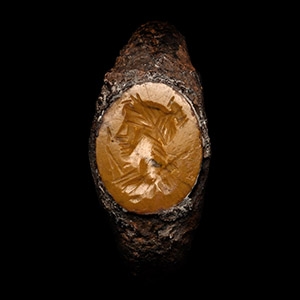
Iron Ring with Jasper Gemstone
Roman, 1st-3rd century A.D.Sold for (Inc. bp): £117
Ferrous hoop with inset cloison to the bezel, profile female bust with laurel wreath to the brow. 6.13 grams, 27.23 mm overall, 16.19x18.91 mm internal diameter (approximate size British N, USA 6 1/2, Europe 13.72, Japan 13)
with Archaeologia, Switzerland, before 1983. Ex private North American collection. London private collection, 2016. -
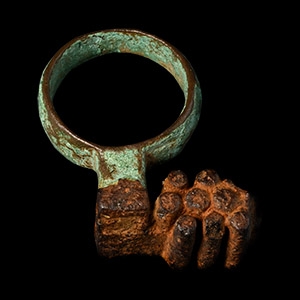
Roman Bronze Key Ring
1st-2nd century A.D.Sold for (Inc. bp): £33
Comprising a barrel-shaped ring with cranked shank and cluster of wards. 13.7 grams, 29 mm
From the collection of a Buckinghamshire, UK, collector established from the earlier 1960s. -
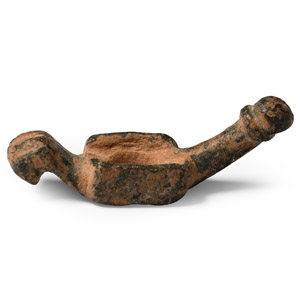
Roman Bronze Phallic Dagger Quillon or Pendant
1st-2nd century A.D.Estimate: £100 - 140 (+bp*)
Opening Bid: £40
With a rectangular plaque with central void, phallus to one short edge and a stylised fist to the other. 25.5 grams, 55 mm
Acquired 1980-2015. Ex Abelita family collection. This lot is accompanied by an illustrated lot declaration signed by the Head of the Antiquities Department, Dr Raffaele D’Amato.
In the Roman world the phallus was symbol of luck or fertility, and it as well was believed to have apotropaic functions. Pendants, amulets and small objects were worn by all sorts of people as symbols of protection, especially from young children according to Varro and Pliny the Elder. The phallus is commonly found on reliefs, frescoes and lamps from the Graeco-Roman world. This object can have been the quillon of a small dagger, but also hung as a charm from a tintinnabulum, a wind chime adorned with bells and intended to ward off evil.
