
Loading, please wait...
LOT 0865
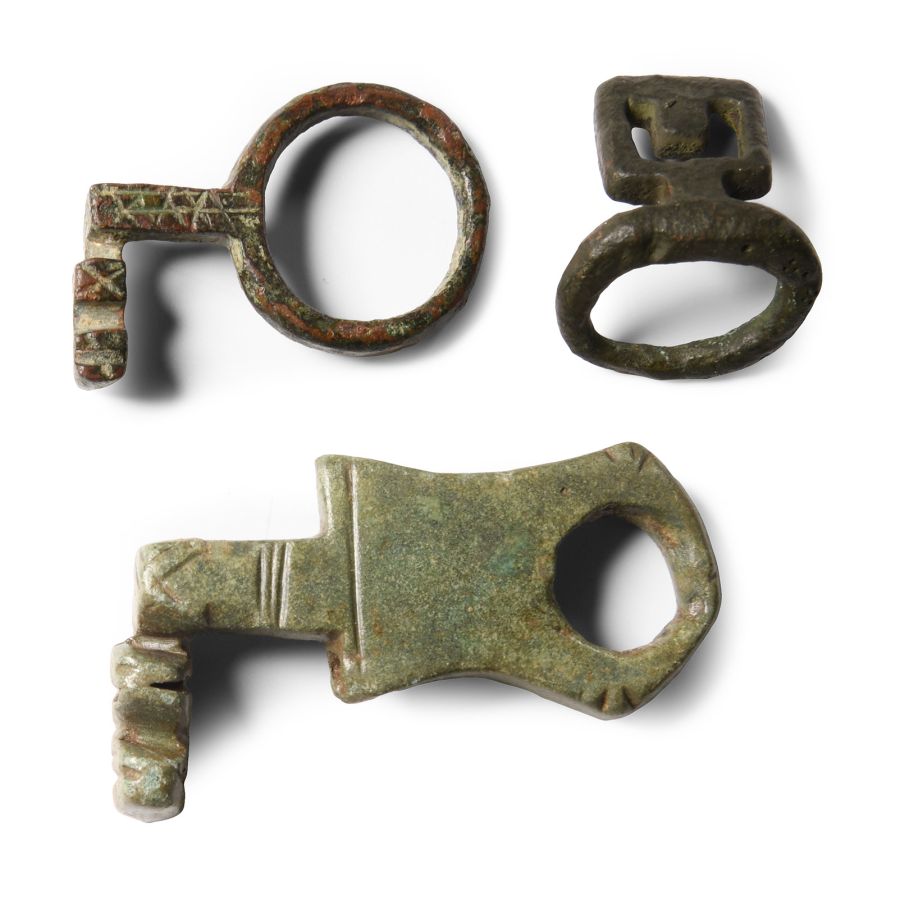
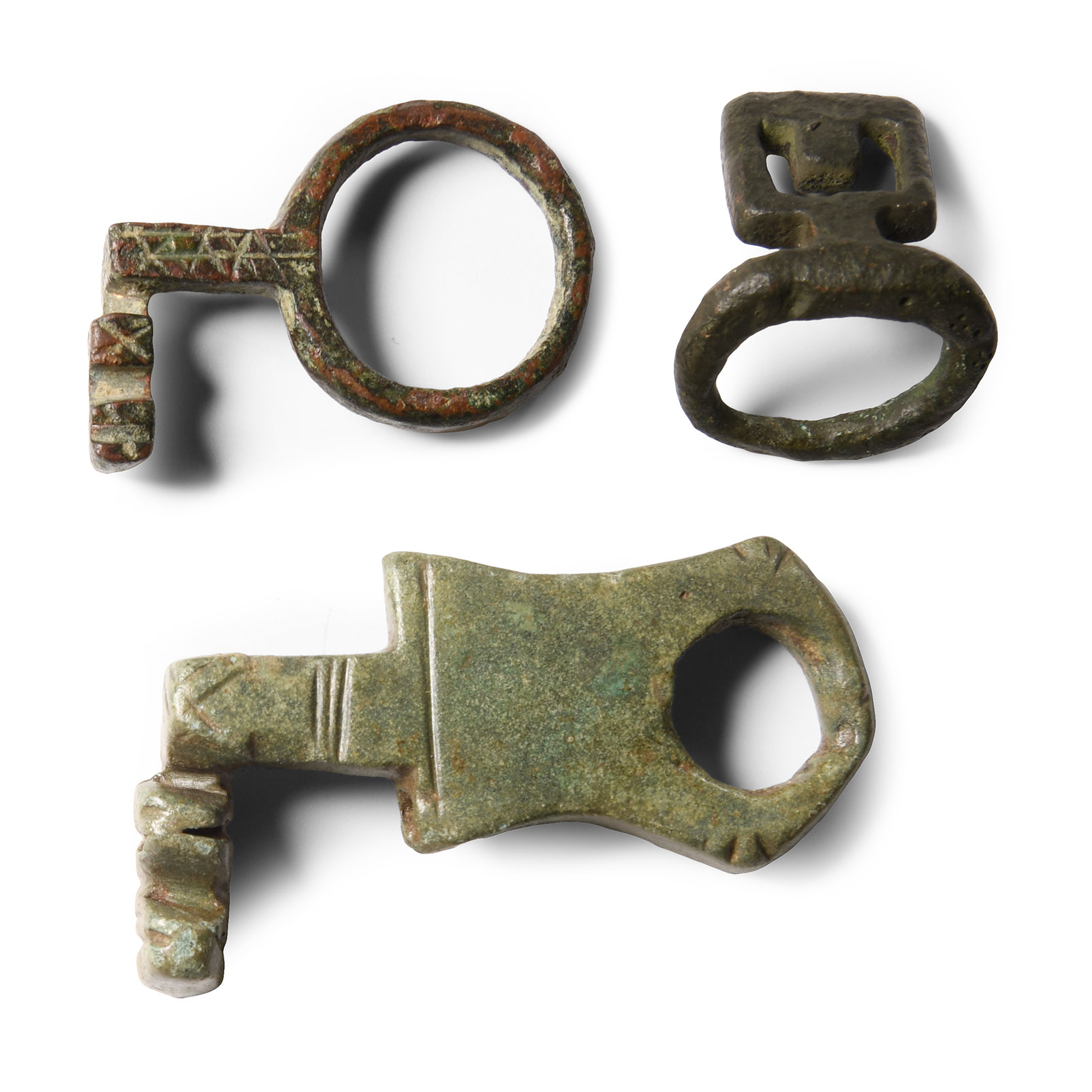
Roman Bronze Key Collection
2ND-4TH CENTURY A.D.
7/8 - 2 1/8 in. (68 grams total, 22-53 mm).
Including 'key-ring', waisted bow and other types. [3, No Reserve]
ProvenanceFrom the collection of the famous author, writer and speaker, Gordon Bailey, Essex, UK; formed since 1968.
CONDITIONTimeLine Auctions follows a vetting process to ensure the authenticity and legality of all items, reinforcing our commitment to integrity and responsible trading. Each antiquity, antique, and coin lot undergoes thorough examination by a vetting committee of at least ten external specialists, professional trade association members, scientists, and archaeologists: Our Vetting Process
AUCTIONS:
TimeLine is a leading auction house specialising in antiquities, ancient art, collectables, natural history, coins, medals, and books. Our auctions offer museums, collectors, historians, and enthusiasts the opportunity to acquire unique and historically significant pieces.
-
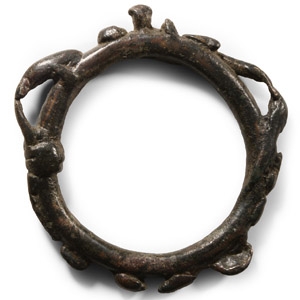
Roman Bronze Chariot Terret Ring with Animals
1st-4th century A.D.Sold for (Inc. bp): £195
Annular in form with integral collar and wreath detailing, animal forms to the outer edge; usage wear. 179 grams, 10.3 cm
From a collection acquired on the UK art market from various auction houses and collections mostly before 2000. From an important Cambridgeshire estate; thence by descent. -
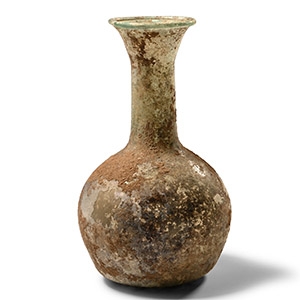
Roman Glass Toilet Bottle
1st century B.C.-1st century A.D.Estimate: £150 - 200 (+bp*)
Opening Bid: £83
With globular body, everted rim, cylindrical neck, rounded shoulder merging with concave wall, rounded base. 61 grams, 14 cm
Ex London, UK, collection, 1980-1990s.
This toilet bottle could be associated with the Isings form 6 and De Tommaso type 7. These small bottles are among the earliest known blown glass. The everted rim seems to distinguish examples made in Italy and the western Mediterranean provinces from those of the Eastern Mediterranean, on which the rim is usually folded in the form of a flange. -
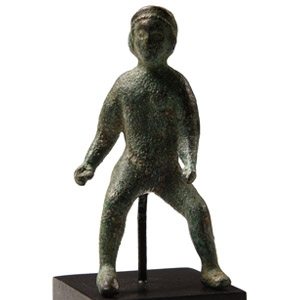
Gallo-Roman Bronze Rider Statuette
1st-2nd century A.D.Sold for (Inc. bp): £286
Modelled nude with legs thrust forward, left arm forward from the body, right arm held to the rear with hand forming a fist, diadem to the brow; mounted on a custom-made stand. 71 grams total, 78 mm including stand
From a collection acquired on the UK art market from various auction houses and collections mostly before 2000. From an important Cambridgeshire estate; thence by descent.
Unlike the British Museum statuette, our figure is represented in the heroic nudity of the warrior on horseback, even if the position is identical. It is very likely that the statuette represents one of the Dioscuri, Castor and Pollux, and perhaps it was part of a pair of twins on horseback.
