
Loading, please wait...
LOT 0139
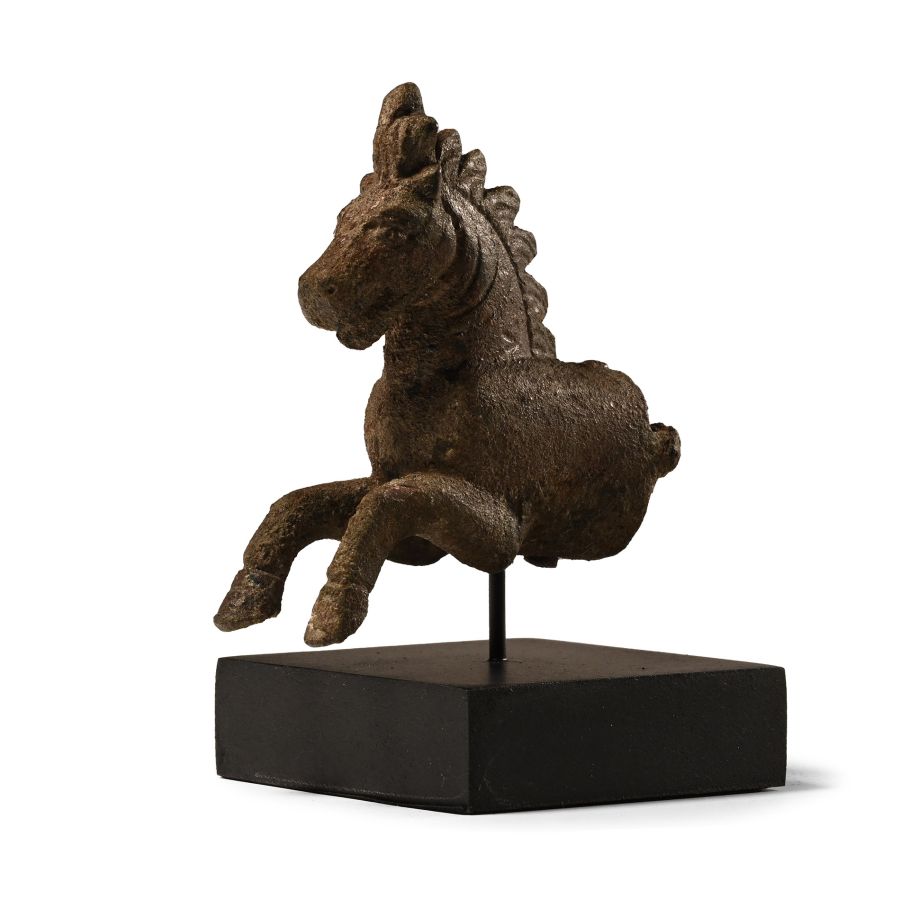
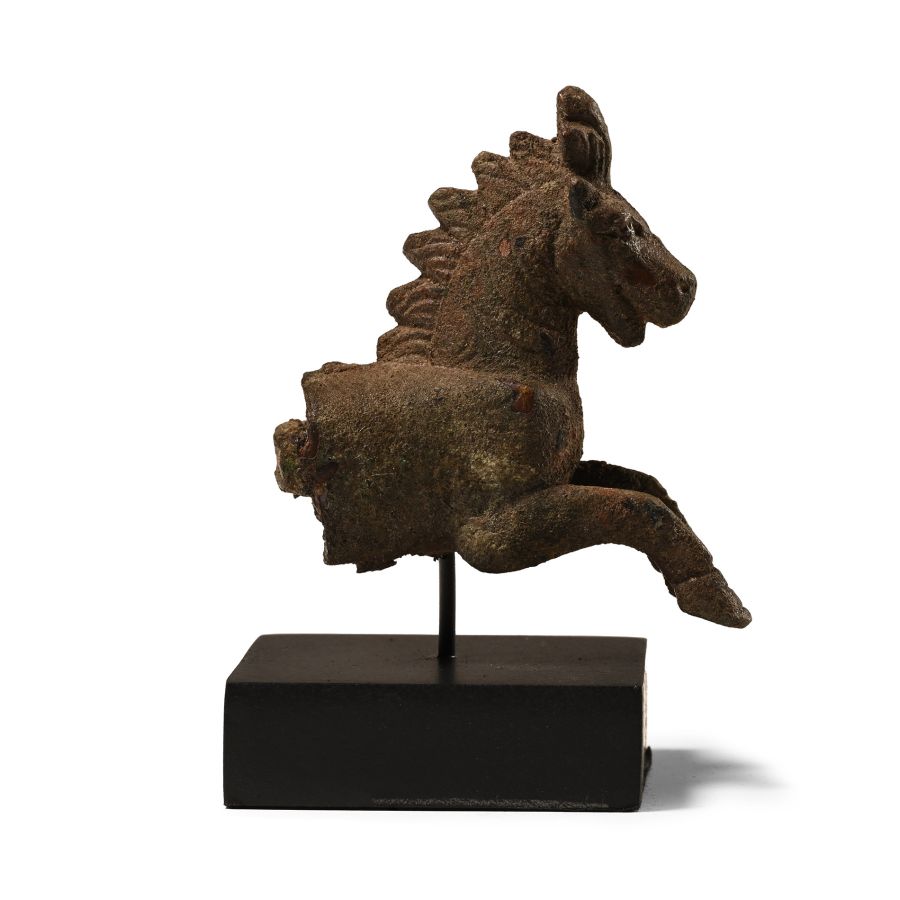
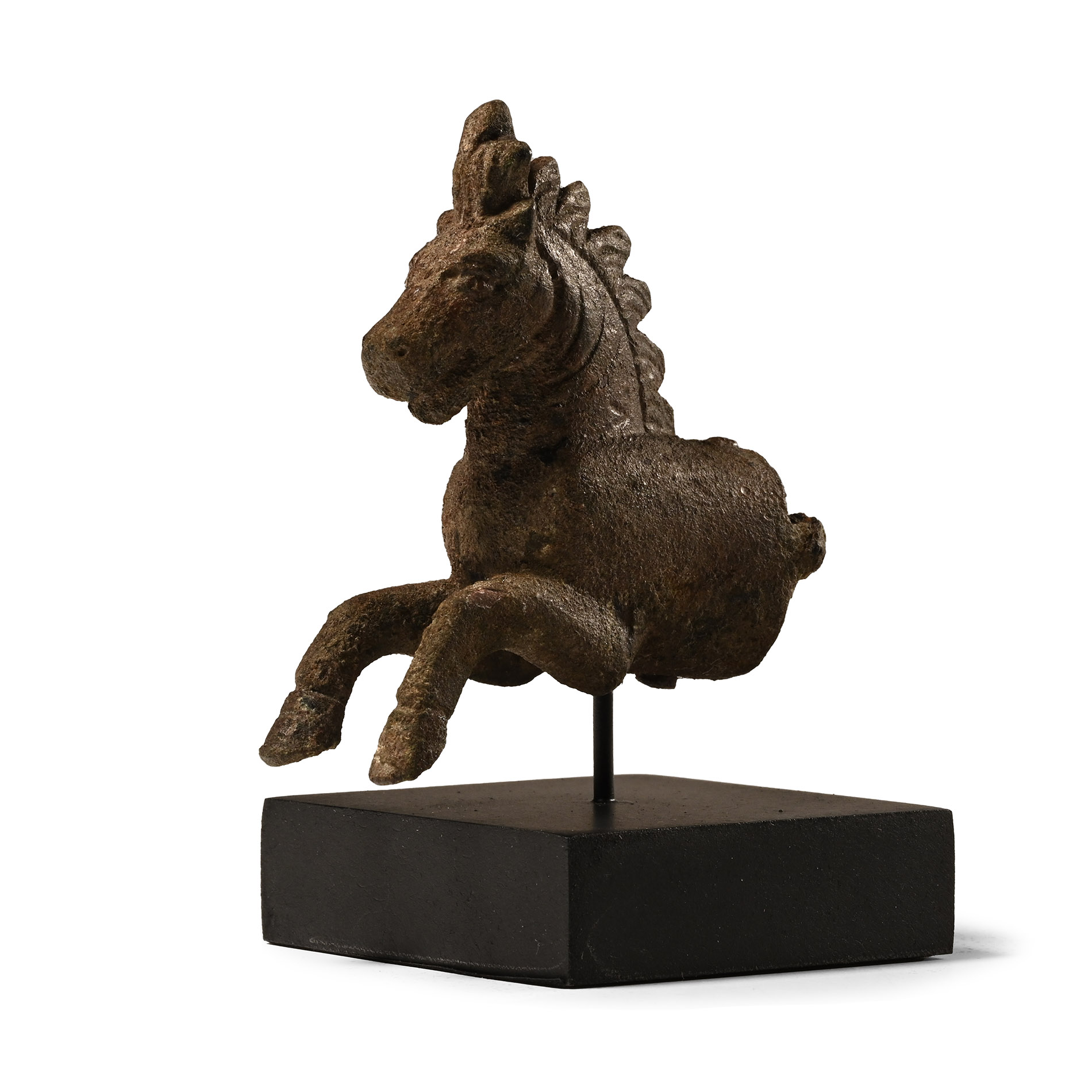
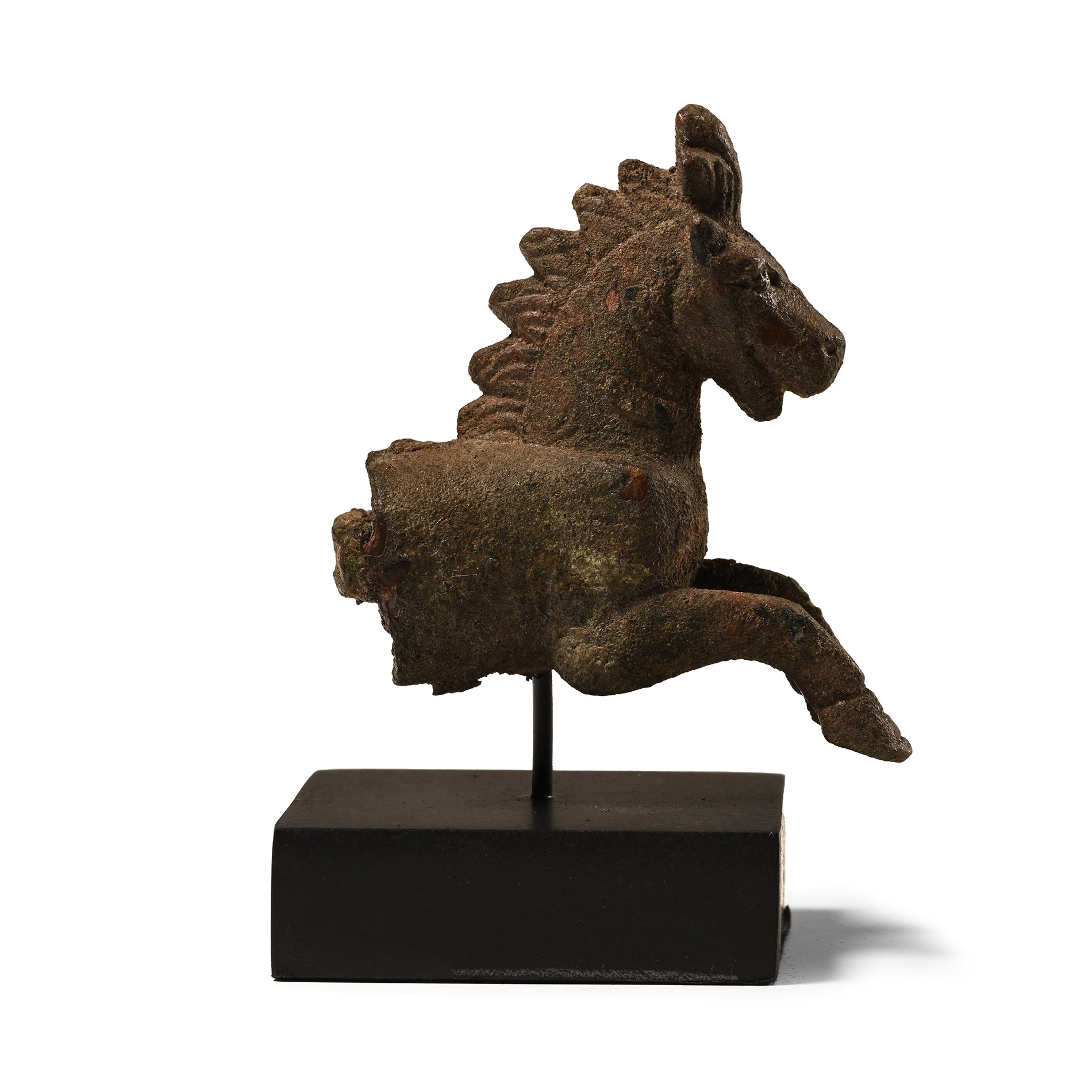
Roman Bronze Horse Protome
3RD CENTURY A.D.
3 3/8 in. (173 grams total, 85 mm including stand).
Modelled in active leaping pose with forelegs extended, mane flying and mouth slightly open; hollow to the reverse with two attachment lugs; mounted on a custom-made stand. [No Reserve]
ProvenanceFrom a collection acquired on the UK art market from various auction houses and collections mostly before 2000.
From an important Cambridgeshire estate; thence by descent.
See Rolland, H., Bronzes Antiques De Haute Provence, Paris, 1965, items 400-401, for similar.
CONDITIONTimeLine Auctions follows a vetting process to ensure the authenticity and legality of all items, reinforcing our commitment to integrity and responsible trading. Each antiquity, antique, and coin lot undergoes thorough examination by a vetting committee of at least ten external specialists, professional trade association members, scientists, and archaeologists: Our Vetting Process
AUCTIONS:
TimeLine is a leading auction house specialising in antiquities, ancient art, collectables, natural history, coins, medals, and books. Our auctions offer museums, collectors, historians, and enthusiasts the opportunity to acquire unique and historically significant pieces.
-
Roman Blue Glass Bead Necklace String
1st-4th century A.D. and laterSold for (Inc. bp): £52
Restrung group of graduated beads, mainly oblate and annular types. 16 grams, 41 cm
Acquired 1980-2015. Ex Abelita family collection. -
Roman Bronze Military Applique
1st-2nd century A.D.Sold for (Inc. bp): £169
Discoid in plan with low-relief facing bust. 4.75 grams, 16 mm
Acquired 1980-2015. Ex Abelita family collection. -
.jpg)
Roman Sidonian Mould-Blown Glass Flask in the Shape of a Date
3rd century A.D.Sold for (Inc. bp): £1,404
Mould-blown with elliptical body, short neck and thick everted rim in amber-tinted glass, with modelled wrinkles to resemble date fruit. 18.3 grams, 65 mm
German art market. Acquired by the present owner from the above in 2003.
