
Loading, please wait...
LOT 0681
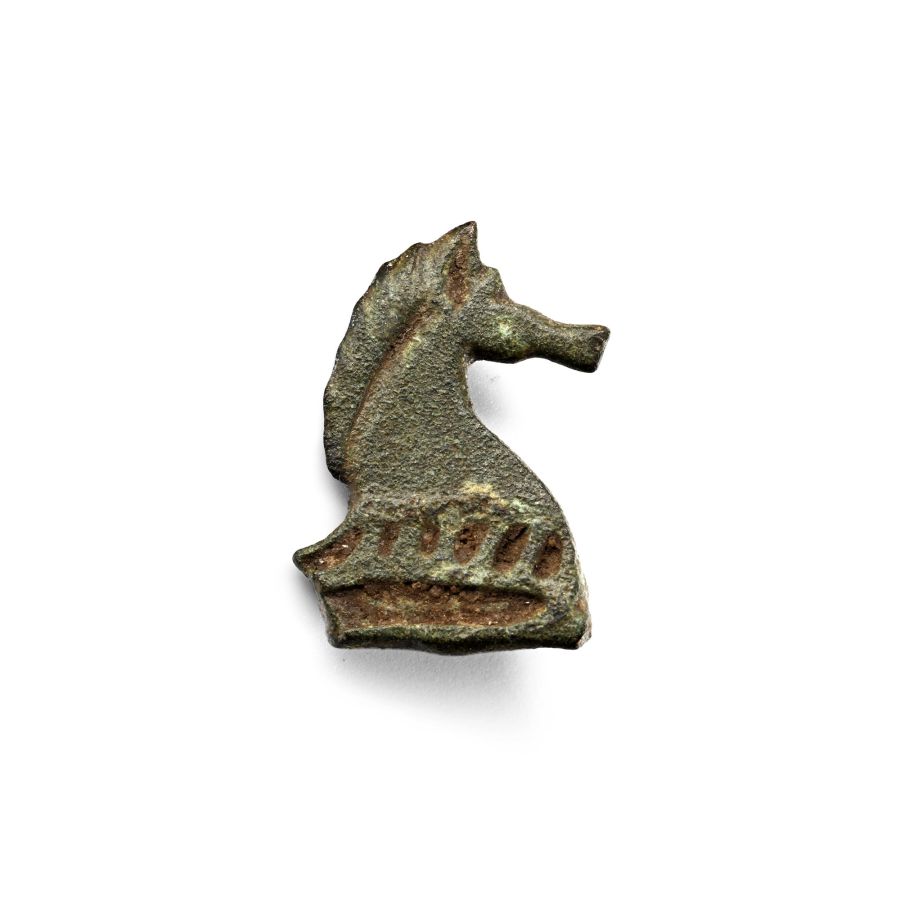
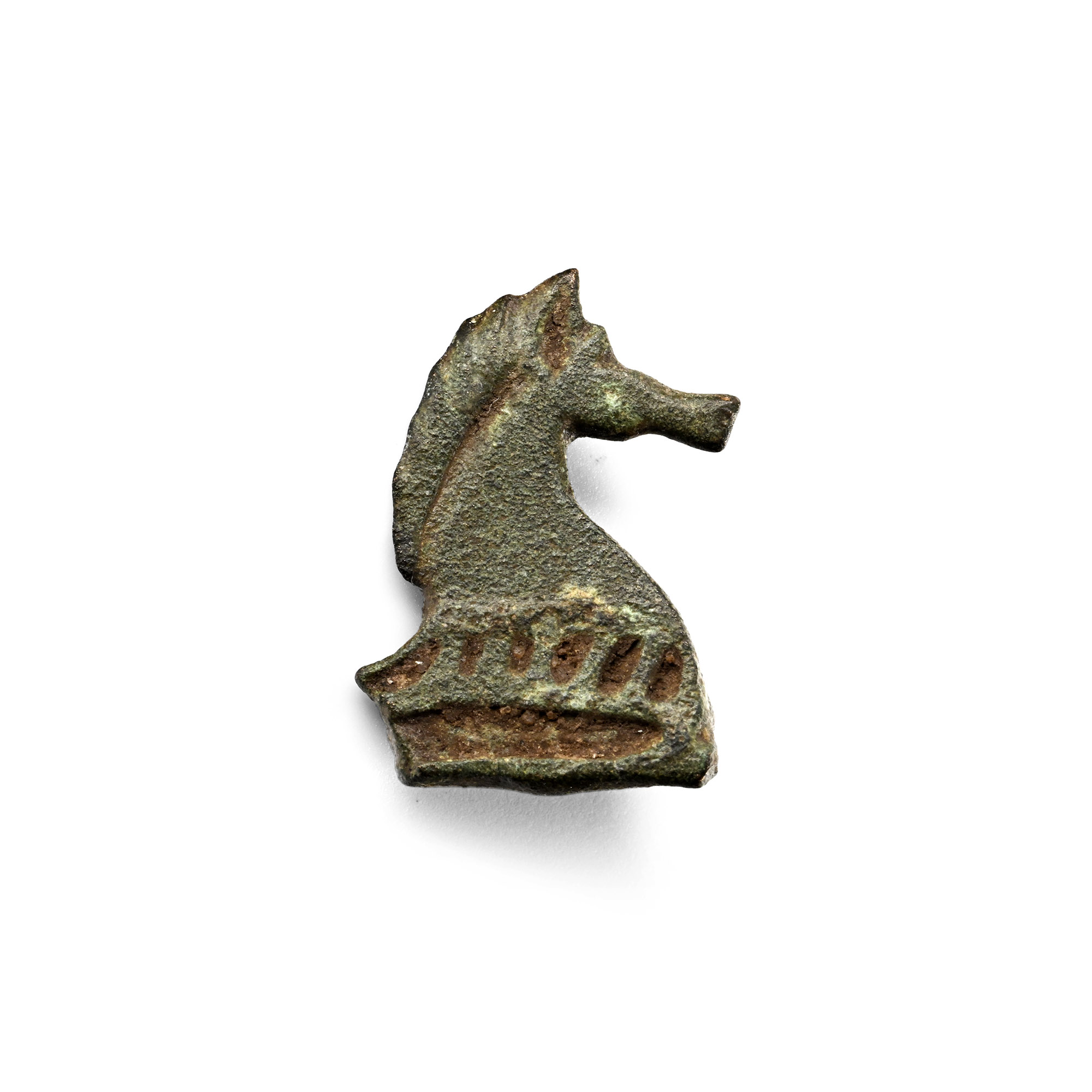
Roman Bronze Horse Plate Brooch
2ND CENTURY A.D.
7/8 in. (2.41 grams, 21 mm).
Formed as the foreparts of a horse in profile, with catch to verso. [No Reserve]
ProvenanceFrom the collection of a Buckinghamshire, UK, collector established from the earlier 1960s.
CONDITIONTimeLine Auctions follows a vetting process to ensure the authenticity and legality of all items, reinforcing our commitment to integrity and responsible trading. Each antiquity, antique, and coin lot undergoes thorough examination by a vetting committee of at least ten external specialists, professional trade association members, scientists, and archaeologists: Our Vetting Process
AUCTIONS:
TimeLine is a leading auction house specialising in antiquities, ancient art, collectables, natural history, coins, medals, and books. Our auctions offer museums, collectors, historians, and enthusiasts the opportunity to acquire unique and historically significant pieces.
-
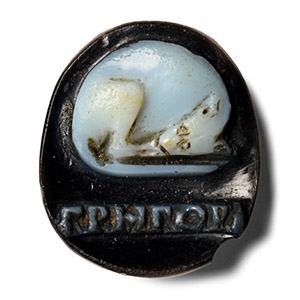
Roman Sardonyx Cameo of a Sleeping Dog with Greek Inscription
2nd-3rd century A.D.Sold for (Inc. bp): £1,690
With a cameo image of a lying dog curled to the right, ancient Greek lettering below 'ΓΡΗΓΟΡΙ (sic)': either 'Be wakeful' or '(ring/seal) of Gregory. 0.61 grams, 12 mm
Private English collection, formed between the late 1970s and early 1990s. Private collection, London, UK. -
.jpg)
Roman Gemstone and Glass Pendant Collection
2nd-3rd century A.D.Sold for (Inc. bp): £208
Comprising: a fragment of a glass pendant with impressed image of an advancing lion, crescent moon above; a conical agate intaglio with a profile of theatre mask; an oval carnelian intaglio with a dove holding an olive branch; a jasper intaglio with standing Asclepius holding a snake-staff. 4.35 grams total, 10-17 mm
Norfolk family collection, 1940s-1960s; thence by descent. -
.jpg)
Large Romano-British Bronze Dolphin Mount
2nd-3rd century A.D.Sold for (Inc. bp): £715
Modelled in the round, with dentilled fin and tail, hollow to the underside, scale detailing. 126 grams, 12.3 cm
Found Lincolshire, UK.
The dolphin was believed to ferry the souls of the dead to the afterlife. This type of bronze figure was probably intended to form a doorknob.
