
Loading, please wait...
LOT 0658
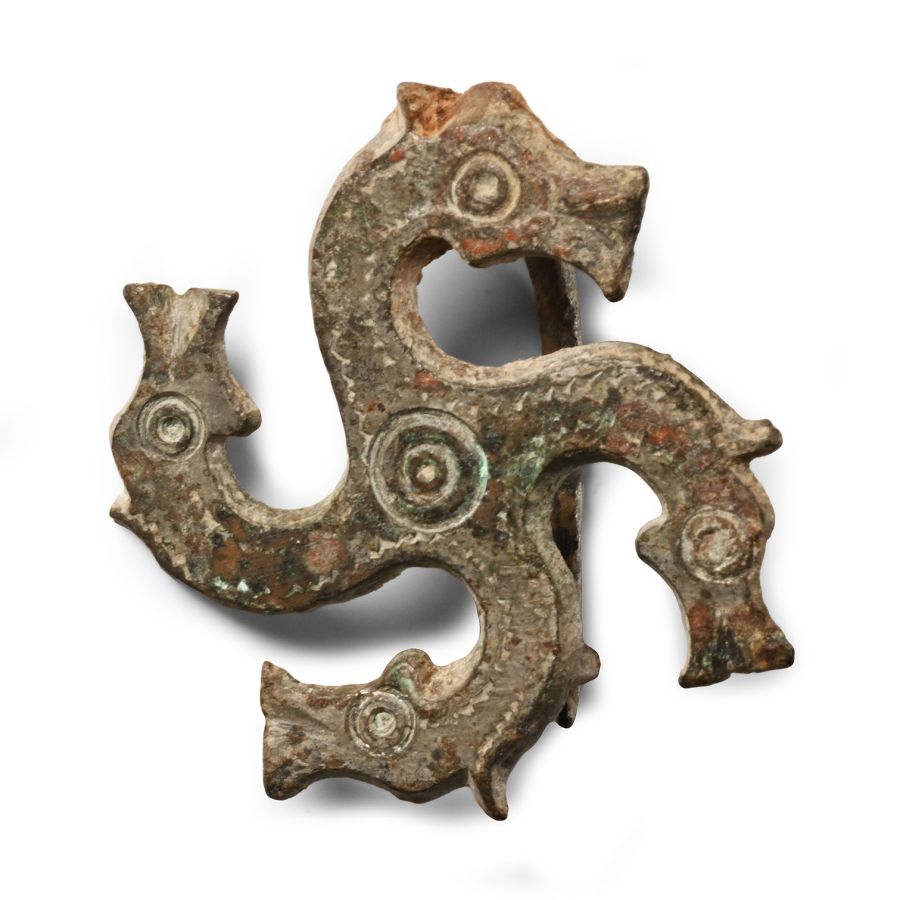
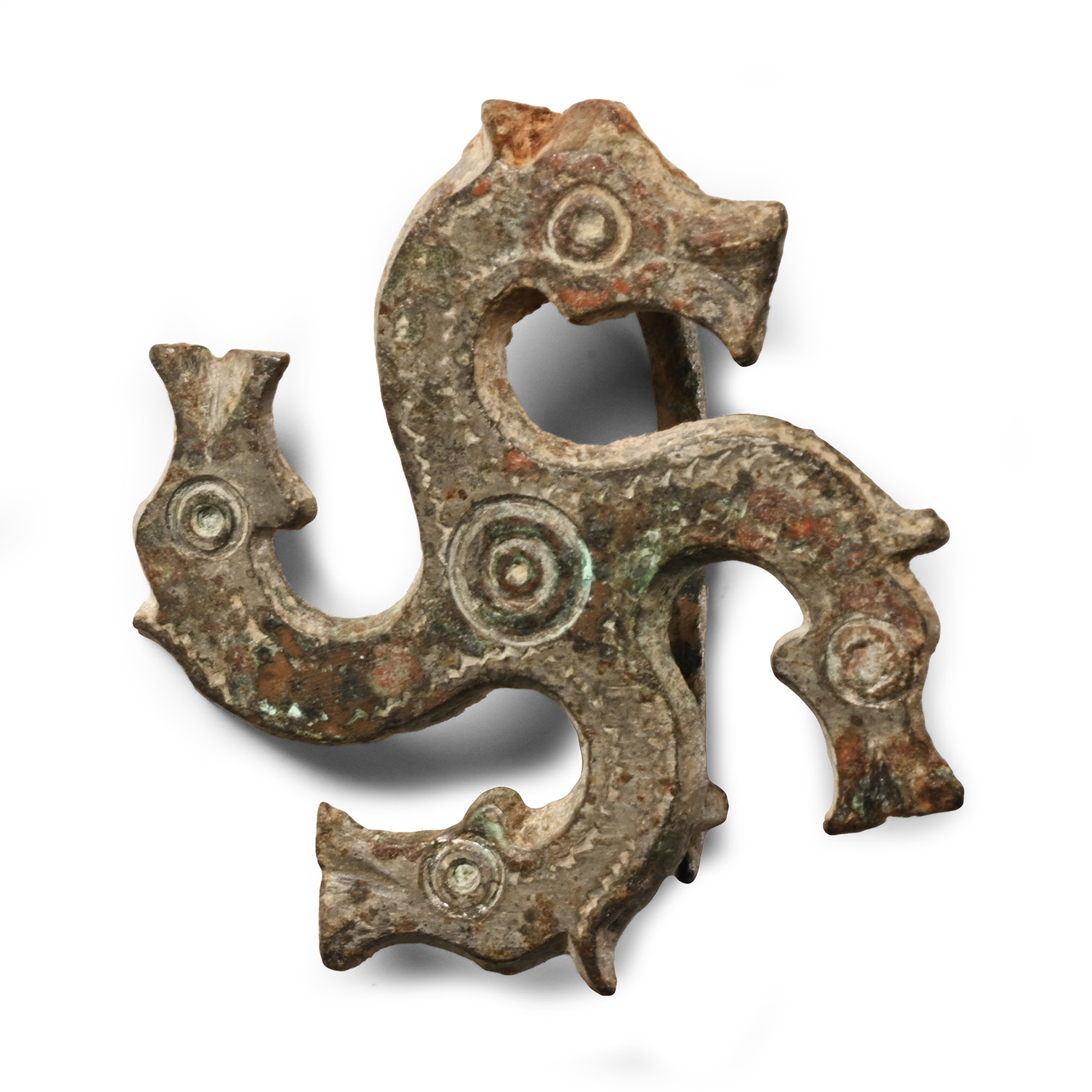
Roman Bronze Horse-Heads Plate Brooch
CIRCA 4TH CENTURY A.D.
1 5/8 in. (14.8 grams, 40 mm).
Formed as four profile horseheads emanating from a central roundel; each head with a ring-and-dot eye and chevron mouth, and incised borders to the neck; to the reverse, the pin and catchplate. [No Reserve]
ProvenanceAcquired in the early 1990s.
Ex Property of a Cambridgeshire Gentleman.
Property of a Kent lady collector.
Cf. Petcu, R., Swastika-shaped fibulae with horse-head decorations (Almgren 232) from the Roman period in Dobrudja (Moesia Inferior), in Studia Antiqua et Archaeologica 25(1); pp.113-122, fig.4.
CONDITIONTimeLine Auctions follows a vetting process to ensure the authenticity and legality of all items, reinforcing our commitment to integrity and responsible trading. Each antiquity, antique, and coin lot undergoes thorough examination by a vetting committee of at least ten external specialists, professional trade association members, scientists, and archaeologists: Our Vetting Process
AUCTIONS:
TimeLine is a leading auction house specialising in antiquities, ancient art, collectables, natural history, coins, medals, and books. Our auctions offer museums, collectors, historians, and enthusiasts the opportunity to acquire unique and historically significant pieces.
-
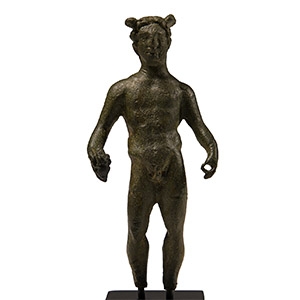
Published 'The Brixton Deverill' Romano-British Bronze Mercury Statuette
1st-2nd century A.D.Sold for (Inc. bp): £975
Modelled in the round, the god standing nude and wearing the winged petasos and holing the marsupium coin-purse in his right hand; left hand modelled with thumb and forefinger closed to grip the now absent caduceus; mounted on a custom-made display stand. 91 grams, 98 mm including stand
Found Wiltshire, UK, before 1974. Accompanied by a copy of an article titled A Figurine of Mercury from Brixton Deverill, by Martin Henig.
Mercury is often shown wearing a chlamys but the present figure is one of a known group which features his nude form. The modelling is of good quality. -
.jpg)
Roman Bronze Harpocrates Statuette
3rd century A.D.Sold for (Inc. bp): £247
Modelled nude in advancing pose with right arm bent across the body and fist clenched to support an attribute (absent); the facial details in light relief and small forelock to the brow; mounted on a custom-made display stand. 231 grams total, 12 cm high including stand
From a collection acquired on the UK art market from various auction houses and collections mostly before 2000. From an important Cambridgeshire estate; thence by descent.
The cult of Harpocrates, began in Ptolemaic times, expanding considerably in the Imperial Roman period, and absorbing influences from the cult of ram of Mendes, the ithyphallic Min, the crocodile god Sobek, and Hercules. The missing left hand probably held a small cornucopia. -
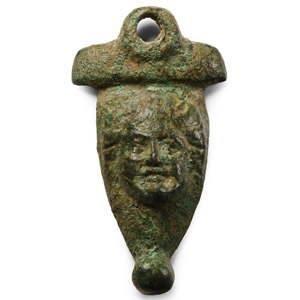
Roman Bronze Figural Escutcheon
1st-2nd century A.D.Sold for (Inc. bp): £85
With elliptical plaque and bulb finial, putto mask with radiating hair. 71.2 grams, 71 mm
Acquired 1950s-1970s. Ex London, UK, private collection. Property of a Kent lady collector.
