Loading, please wait...
LOT 0743
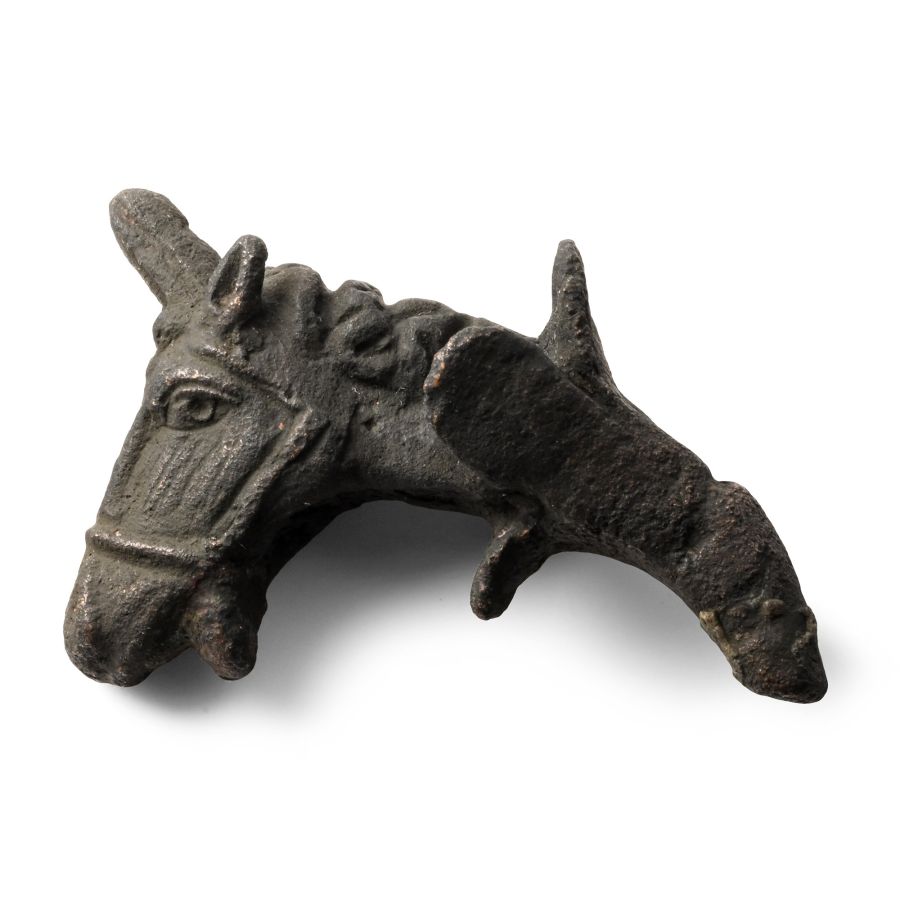
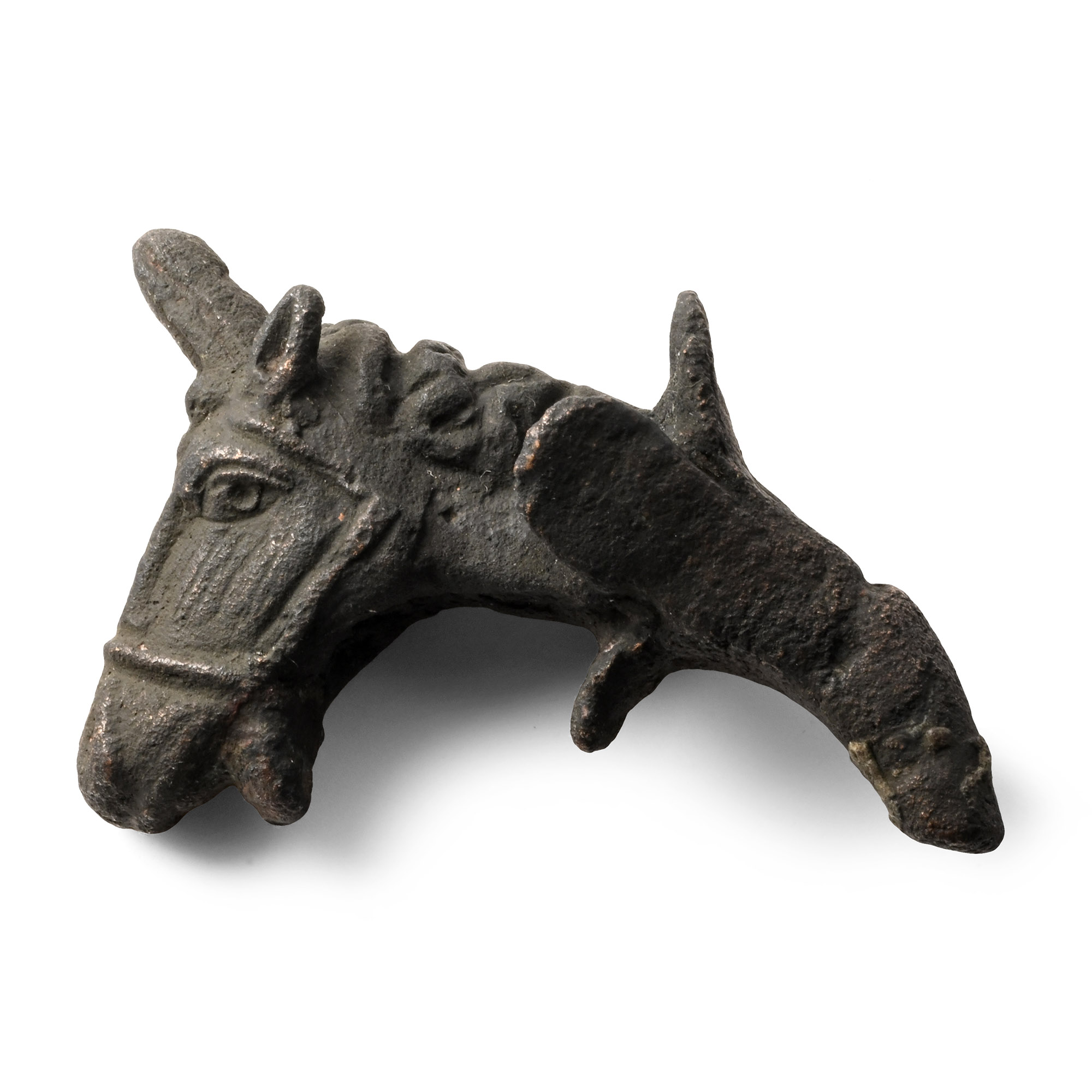
Roman Bronze Horse Head Terminal
1ST-4TH CENTURY A.D.
2 1/4 in. (60.1 grams, 57 mm).
Modelled as a caparisoned horse-head emerging from a four-petalled flower.
ProvenanceFrom the collection of a gentleman, acquired on the London art market in the 1990s.
CONDITIONTimeLine Auctions follows a vetting process to ensure the authenticity and legality of all items, reinforcing our commitment to integrity and responsible trading. Each antiquity, antique, and coin lot undergoes thorough examination by a vetting committee of at least ten external specialists, professional trade association members, scientists, and archaeologists: Our Vetting Process
AUCTIONS:
TimeLine is a leading auction house specialising in antiquities, ancient art, collectables, natural history, coins, medals, and books. Our auctions offer museums, collectors, historians, and enthusiasts the opportunity to acquire unique and historically significant pieces.
LOT 0743
Roman Bronze Horse Head Terminal
Estimate £400 - 600€460 - 700 (for guidance only)$540 - 810 (for guidance only)
-
Roman Bronze Votive Statue Leg
2nd-3rd century A.D.Estimate: £120 - 170 (‡+bp*)
Opening Bid: £60
Modelled as the lower left leg with anatomical detailing, sprue to the foot. 435 grams, 12.9 cm
Acquired in the mid 1980s-1990s. Private collection, Switzerland, thence by descent. Private collection, since the late 1990s. -
Late Roman Hinged Lidded Pyxis
4th-5th century A.D.Sold for (Inc. bp): £468
Sheet-bronze two-part pyxis with carinated sidewall to the base, lid with reserved octofoil on a pounced field, concentric pointillé rings; working hinge mechanism. 64 grams, 86 mm
Acquired in the 1990s. Ex Abelita family collection. This lot is accompanied by an illustrated lot declaration signed by the Head of the Antiquities Department, Dr Raffaele D'Amato.
Although pyxides were originally made of wood, as their name suggests, the term soon came to refer, in the Graeco-Roman world, to round containers used for both medicinal and domestic purposes. From the time of the Achaeans to the end of the Roman Empire, we find pyxides made of horn, ivory, bronze, silver, and gold. Women used them to store their ointments, makeup, and toiletries. A pyxis used for medical purposes was called a loculus, while the name pyxidicula designated a container for eye drops, and a tripuxium was a pyxis containing extracts from three different containers. -
Monumental Roman Bronze Left Hand
Circa 2nd-3rd century A.D.Sold for (Inc. bp): £40,300
A truly exceptional and imposing fragment, rendered with remarkable naturalism, the forefinger extended and gently bent, the thumb positioned for grip, and the remaining fingers elegantly curled inward, possibly from a life-sized statue of an emperor, magistrate or a general; presented on a custom-made display stand, the thumb and forefinger sympathetically restored. 4.75 kg total, 45 cm including stand
Ex Frits Phillips, Eindhoven, Netherlands, before 1980. Private European collection, 1980s. Private collection, London. Accompanied by an academic report by Dr Raffaele D’Amato. This lot has been checked against the Interpol Database of stolen works of art and is accompanied by a search certificate number no.12907-242493.
During the height of the Roman Empire, monumental bronze statues were not simply works of art; they were instruments of authority and prestige. By the 2nd and 3rd centuries A.D., Rome possessed the wealth and technical mastery to produce over life-sized figures in hollow bronze, a medium that required immense skill and resources. These statues were intended to impress and endure, often commemorating emperors, generals, and gods in a scale that placed them beyond the ordinary realm of mortals. Such bronzes were used to dominate public spaces and convey imperial power. In forums, baths, and temples, the towering images of rulers reminded citizens of Rome’s strength and the divine favour said to rest upon its leaders. The famous equestrian statue of Marcus Aurelius in Rome is perhaps the best surviving example of this tradition; its imposing scale and lifelike rendering conveyed both the emperor’s authority and his humanity. Another renowned piece, the fragments of the colossal bronze statue of Constantine the Great, once stood in the heart of the capital and would have dwarfed viewers, embodying the emperor’s near-divine status. Even earlier examples, like the Bronze of Germanicus or the over life-sized bronzes of emperors found at sites such as Herculaneum, illustrate how these works were strategically placed to broadcast messages of victory and control. Bronze was the perfect medium for such statements. Its ability to hold fine details gave these figures a vivid presence, while the sheer scale was designed to inspire awe. These statues were not simply commemorative; they were a visual language of power, cast in metal to endure beyond the individual and the age in which they were created.