
Loading, please wait...
LOT 0125
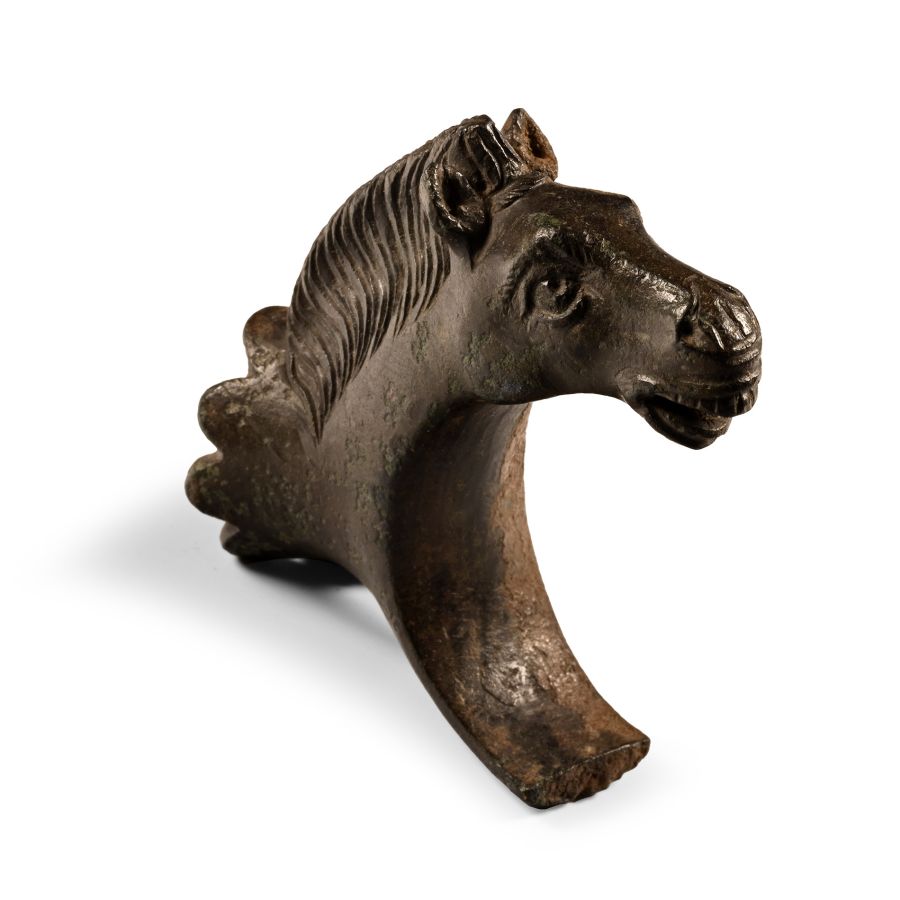
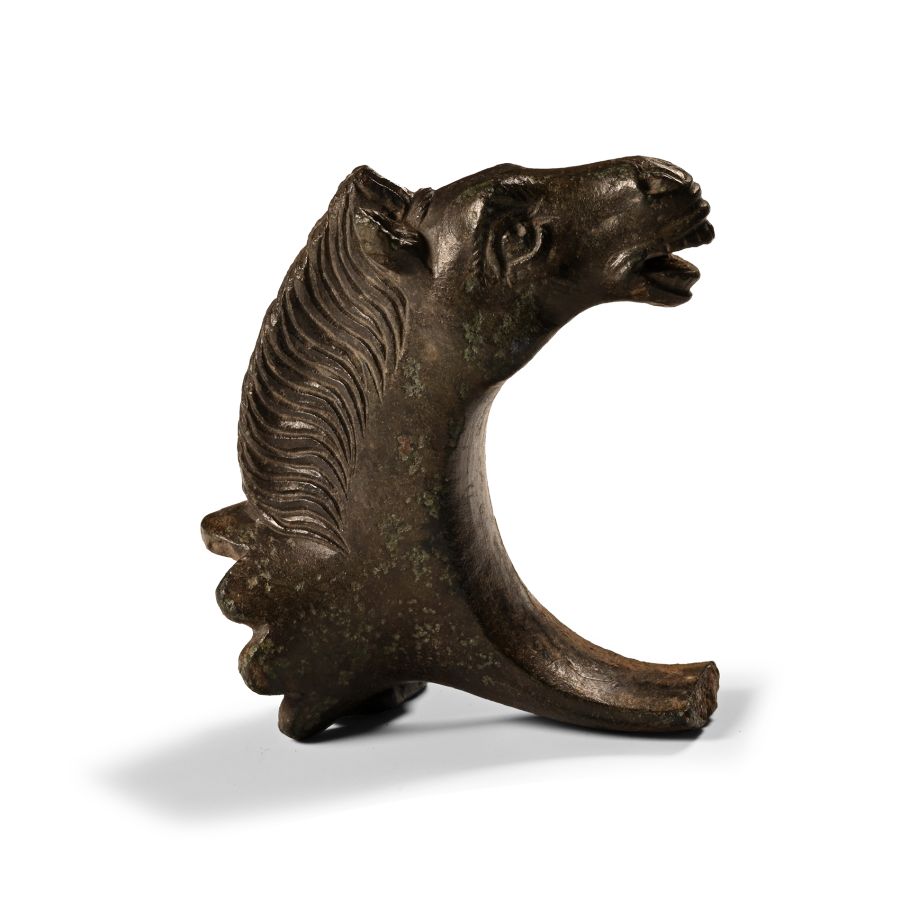
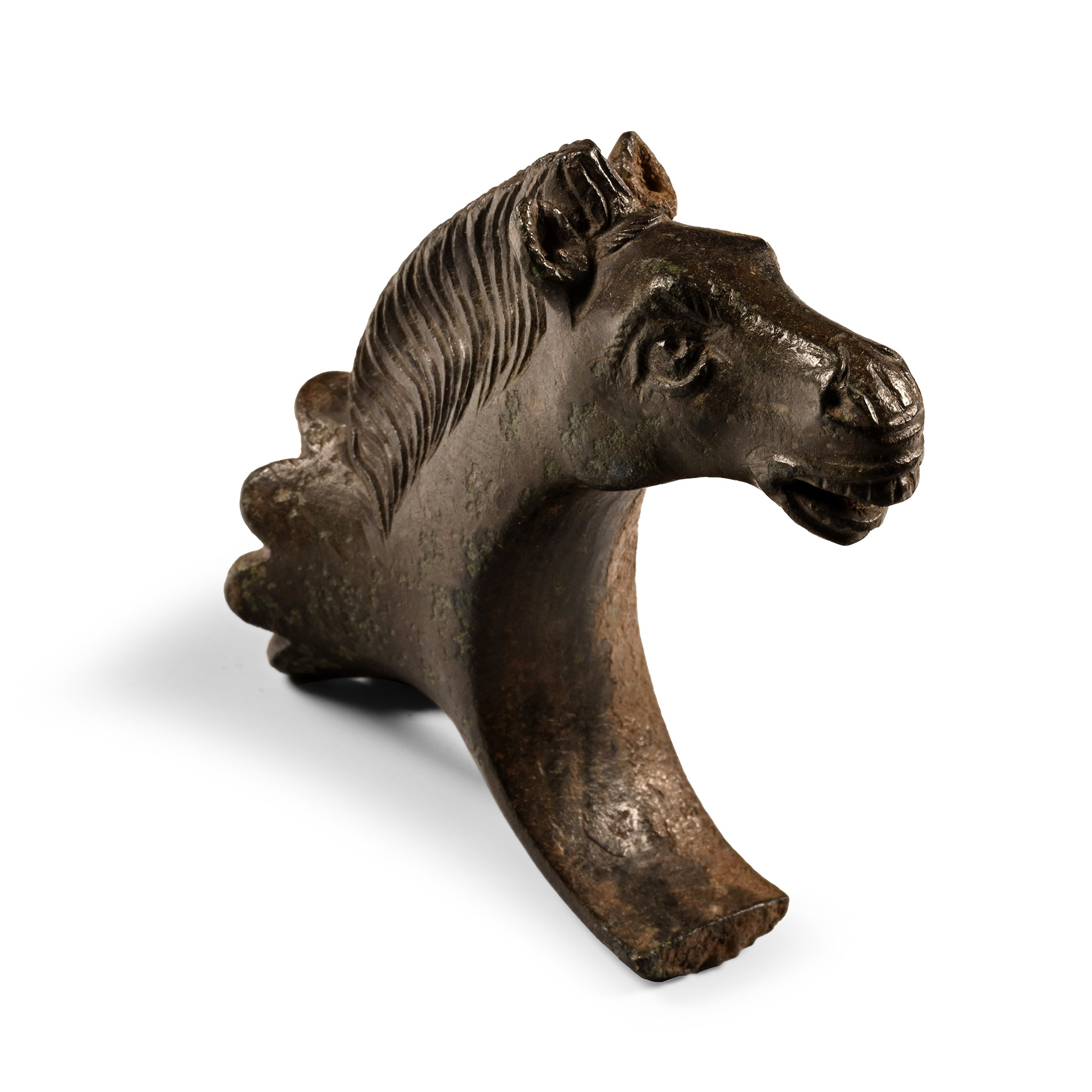
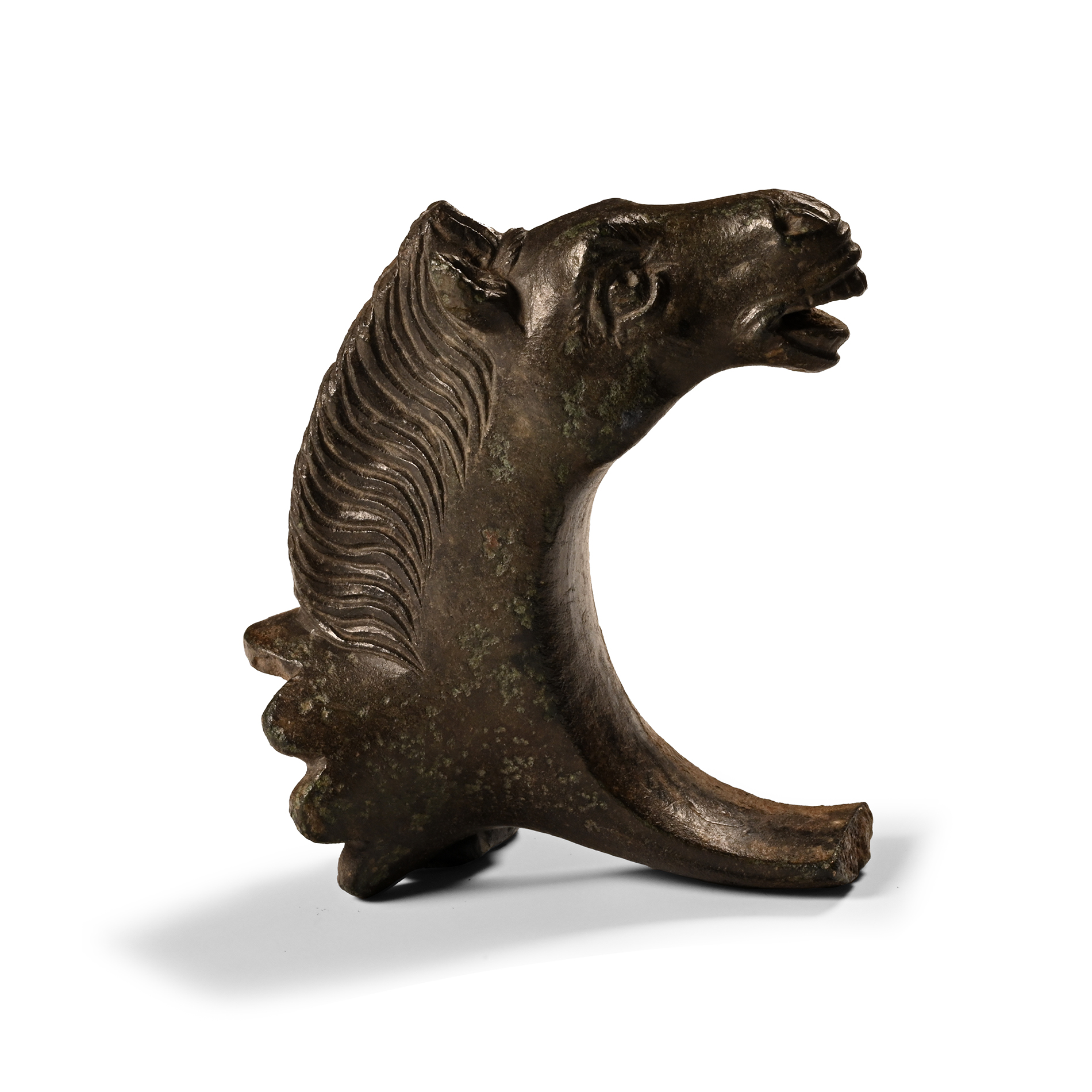
Roman Bronze Horse-Head Mount
2ND-3RD CENTURY A.D.
2 1/2 in. (106 grams, 63 mm).
Hollow-formed mount formed as a crescent with horse-head finial modelled with flying mane and mouth open; to the rear, a deep flared socket with dentilled rim.
ProvenanceAcquired on the German art market, 1989-1995.
with The Museum Gallery, 19 Bury Place, London, WC1A 2JB, 1998-2003.
Property of a London based academic, 2003-present.
Cf. Rolland, H., Bronzes Antiques de Haute Provence, Paris, 1965, item 250, for similar mount.
FootnotesThis is beautiful Roman workmanship, probably derived from Hellenistic prototypes, which finds comparisons in similar mounts at the Metropolitan Museum of Art in New York and the British Museum. It could be a bed mount (for bed or triclinium) or a furniture element. It is also possible that it was a cart or chariot element.
CONDITIONTimeLine Auctions follows a vetting process to ensure the authenticity and legality of all items, reinforcing our commitment to integrity and responsible trading. Each antiquity, antique, and coin lot undergoes thorough examination by a vetting committee of at least ten external specialists, professional trade association members, scientists, and archaeologists: Our Vetting Process
AUCTIONS:
TimeLine is a leading auction house specialising in antiquities, ancient art, collectables, natural history, coins, medals, and books. Our auctions offer museums, collectors, historians, and enthusiasts the opportunity to acquire unique and historically significant pieces.
LOT 0125
Roman Bronze Horse-Head Mount
Estimate £1,200 - 1,700€1,390 - 1,970 (for guidance only)$1,620 - 2,300 (for guidance only)
-
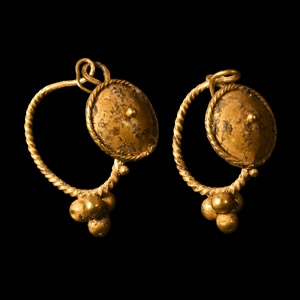
Roman Gold Earring Pair with Bosses
Circa 1st-2nd century A.D.Sold for (Inc. bp): £442
Comprising a matched pair of delicate earrings, each with a large circular boss with a central granule and fine filigree surrounding the perimeter, pyramidal cluster of granules to the base; twisted hook with a hook-and-loop closure. 1.01 grams total, 20 mm
From the collection of a London lady, UK. Accompanied by an old collection ticket. -
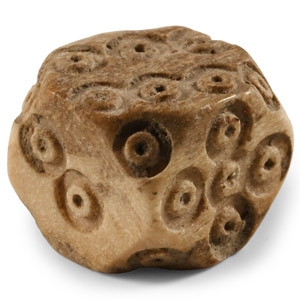
Roman Bone Gaming Dice
1st-4th century A.D.Sold for (Inc. bp): £130
Cuboid with chamfered corners each with a ring-and-dot motif, reserved pellet marks disposed 1:6, 2:4, 3:5. 1.7 grams, 10 mm
Acquired from Red House Antiques, York, UK, in 2006. Ian Wilkinson collection, Nottinghamshire, UK. -
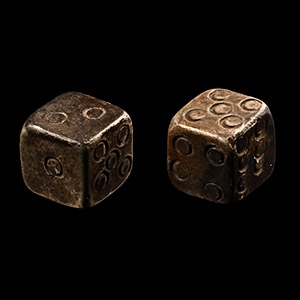
Roman Silver Gaming Dice Pair
1st-3rd century A.D.Sold for (Inc. bp): £572
Comprising two miniature dice with stamped annulet markings arranged 1:6, 2:4, 3:5. 5.95 grams total, 6-7 mm
Ex German art market, 2000s. Acquired from an EU collector living in London. From the collection of Surrey, UK, gentleman.
