
Loading, please wait...
LOT 0852
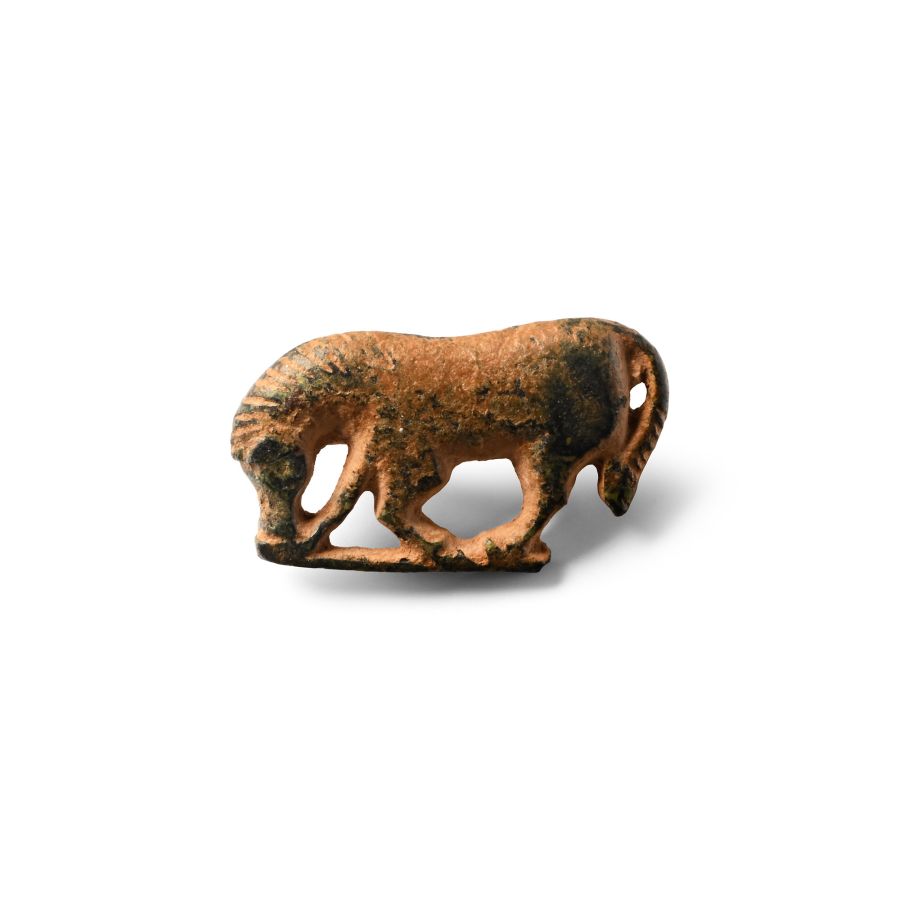
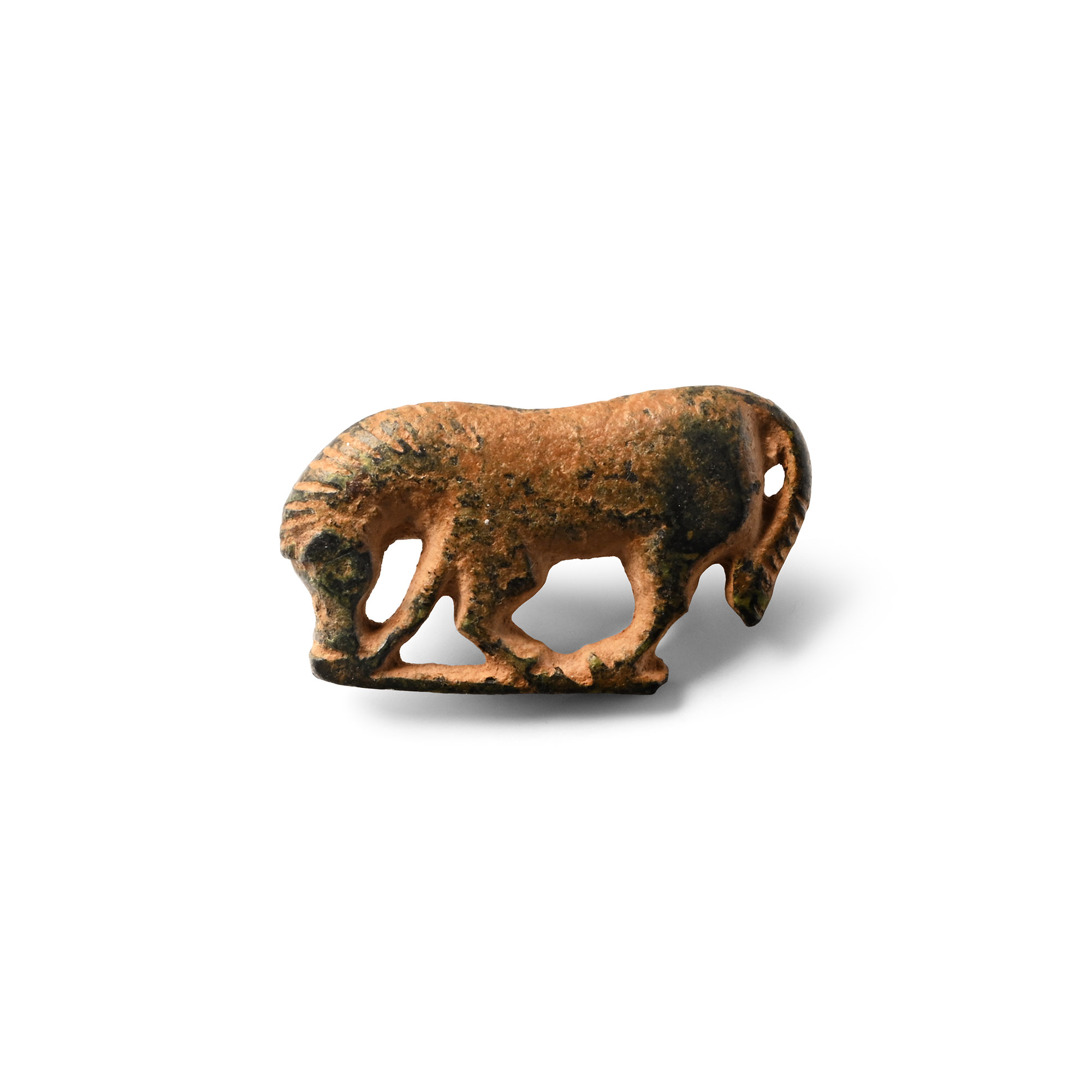
Roman Bronze Horse Brooch
2ND-3RD CENTURY A.D.
1 1/4 in. (13.2 grams, 34 mm).
Formed as a horse grazing on a baseline with shaggy mane and drooping tail; hinged pin and catch to the reverse. [No Reserve]
ProvenanceEx David Miller, Hemel Hempstead, London, UK.
From the private collection of a West London, UK, gentleman, formed since the early 2000s.
Accompanied by a hand written ticket.
Cf. Hattatt, R., Brooches of Antiquity, Oxford, 1987, item 1185, for type.
CONDITIONTimeLine Auctions follows a vetting process to ensure the authenticity and legality of all items, reinforcing our commitment to integrity and responsible trading. Each antiquity, antique, and coin lot undergoes thorough examination by a vetting committee of at least ten external specialists, professional trade association members, scientists, and archaeologists: Our Vetting Process
AUCTIONS:
TimeLine is a leading auction house specialising in antiquities, ancient art, collectables, natural history, coins, medals, and books. Our auctions offer museums, collectors, historians, and enthusiasts the opportunity to acquire unique and historically significant pieces.
-
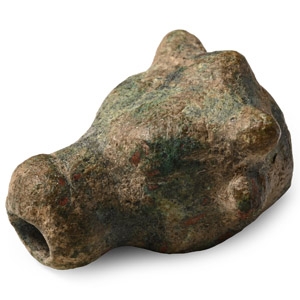
Roman Bronze Bull Head Attachment
1st-4th century A.D.Sold for (Inc. bp): £26
Modelled in the round with short horns and ears, circular socket extending from the back of the head to the beast's mouth. 23.5 grams, 25 mm
Ex German art market, 2000s. Acquired from an EU collector living in London. From the collection of a Surrey, UK, gentleman. -
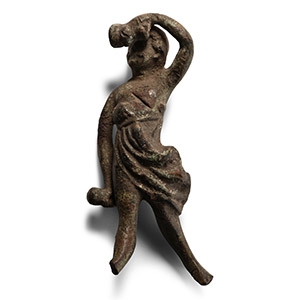
Roman Bronze Statuette
2nd-4th century A.D.Sold for (Inc. bp): £111
Modelled in the round, Bacchante standing, wearing a loose chiton gathered beneath the breasts, a drinking vessel in each hand. 121 grams, 94 mm
Ex T Hall collection, 1990s. -
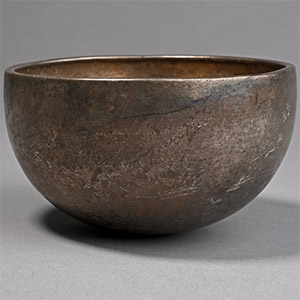
Roman or Gandharan Silver Cup
Circa late 1st century B.C.-early 1st century A.D.Estimate: £1,500 - 2,000 (+bp*)
Opening Bid: £750
Hemispherical in profile with rounded underside, thickened rim. 232 grams, 11.4 cm
Acquired from a private UK collection prior to 1979. Ex Julian Sherrier collection, a leading figure in Gandharan art. with Christie's, New York, sale 2337, 14th September 2010, no.41 (part). Accompanied by the original Christie's lot ticket.
