
Loading, please wait...
LOT 0894
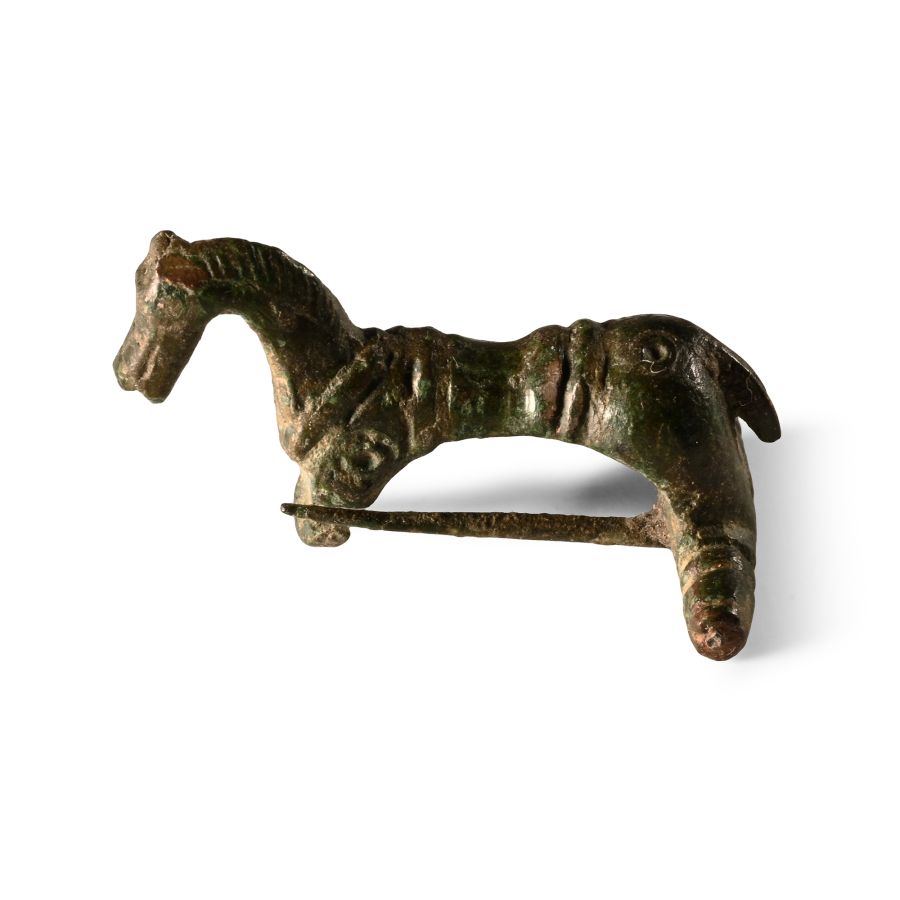
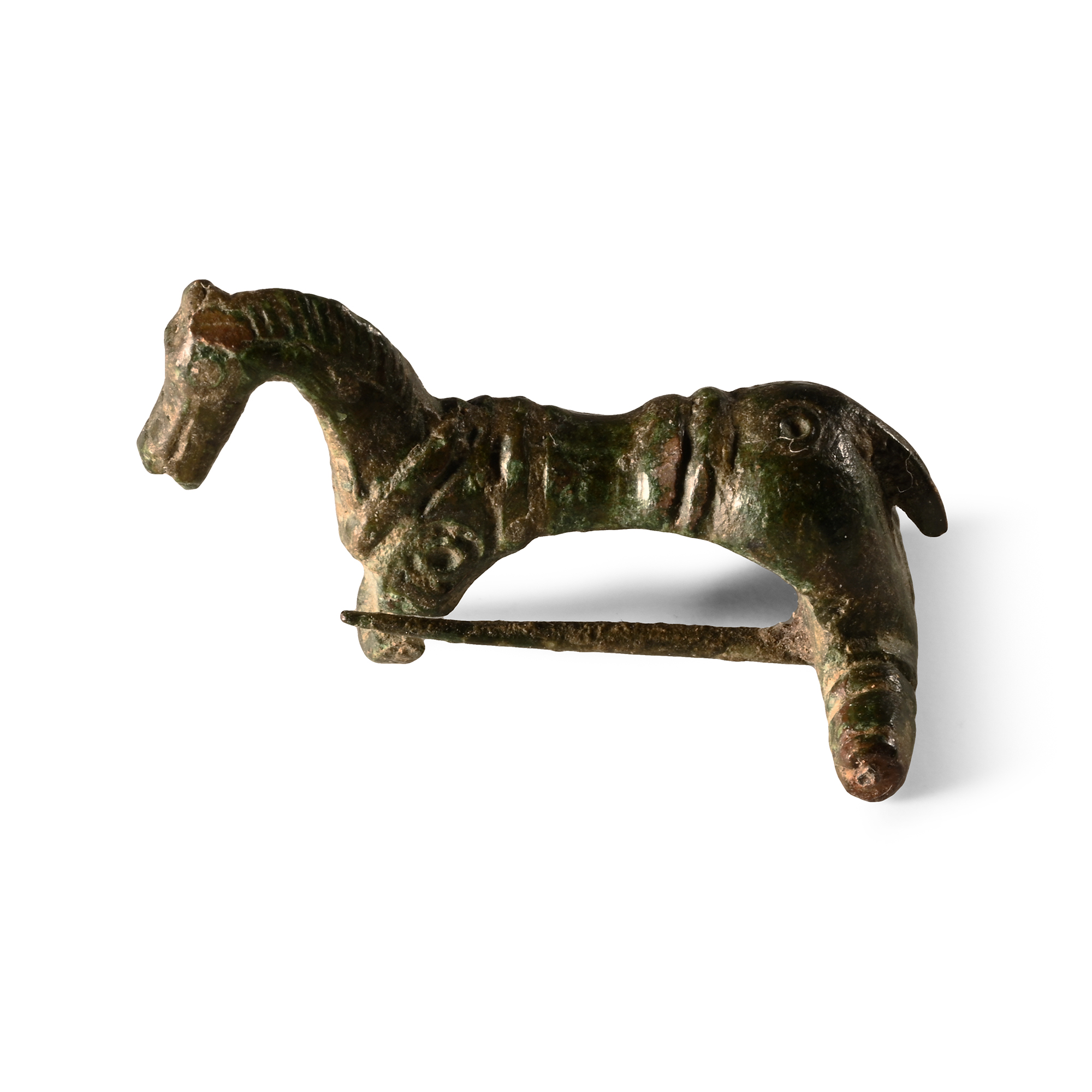
Roman Bronze Horse Brooch
CIRCA 2ND CENTURY A.D.
1 3/8 in. (11.8 grams, 35 mm).
Formed as a standing horse, the hindlegs forming crossbar, tail forming hinged pin, forelegs forming catchplate; ring-and-dot motifs to shoulders, linear detailing to the mane. [No Reserve]
ProvenanceFrom a collection acquired on the UK art market from various auction houses and collections mostly before 2000.
From an important Cambridgeshire estate; thence by descent.
Cf. Hattatt, R., Ancient Brooches and Other Artefacts, Oxford, 1989, item 1644.
CONDITIONTimeLine Auctions follows a vetting process to ensure the authenticity and legality of all items, reinforcing our commitment to integrity and responsible trading. Each antiquity, antique, and coin lot undergoes thorough examination by a vetting committee of at least ten external specialists, professional trade association members, scientists, and archaeologists: Our Vetting Process
AUCTIONS:
TimeLine is a leading auction house specialising in antiquities, ancient art, collectables, natural history, coins, medals, and books. Our auctions offer museums, collectors, historians, and enthusiasts the opportunity to acquire unique and historically significant pieces.
-
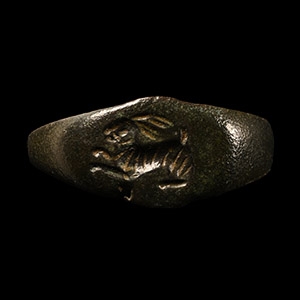
Roman Bronze Ring with Rabbit
3rd century A.D.Sold for (Inc. bp): £234
With integral ellipsoid bezel, intaglio crouching rabbit motif. 2.63 grams, 20.35 mm overall, 18.78 mm internal diameter (approximate size British P 1/2, USA 7 3/4, Europe 16.86, Japan 16)
Ex German art market, 2000s. Acquired from an EU collector living in London. From the collection of Surrey, UK, gentleman. -

Large Roman Marble Bull's Head Sculpture
Circa 2nd century B.C.- 2nd century A.D.Sold for (Inc. bp): £2,080
Life-size bull's head (bucranium) on a rectangular field with flattened upper face and small ledge overhang; modelled in the half-round with detailed eyes, muzzle and dewlap, plain background; tooled texture to the forehead and dewlap; Eastern Empire. 98 kg, 51 cm
From a collection acquired on the UK art market from various auction houses and collections mostly before 2000. From an important Cambridgeshire estate; thence by descent. Accompanied by an academic report by Dr Raffaele D’Amato. This lot has been checked against the Interpol Database of stolen works of art and is accompanied by search certificate number no.12081-213373.
The bucranium was used as a prominent motif on the exterior of Graeco-Roman temples where it replaced the use of genuine severed heads from the sacrificial rites. Garlands were draped over the heads on feast-days and occasions of special religious observance. The flattened upper face suggests an architectural use, perhaps as a corbel. -
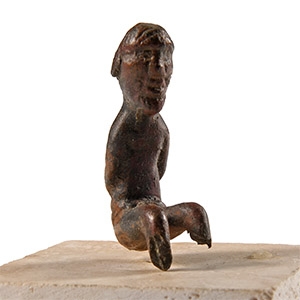
Roman Bronze Celtic Bound Captive Statuette
Circa 1st-2nd century A.D.Sold for (Inc. bp): £234
Modelled as a slender man with thick hair and beard, seated and naked with rope binding the hands together at his back; mounted on a custom-made stand. 104 grams total, 51 mm including stand
From a collection acquired on the UK art market from various auction houses and collections mostly before 2000. From an important Cambridgeshire estate; thence by descent.
