
Loading, please wait...
LOT 0869
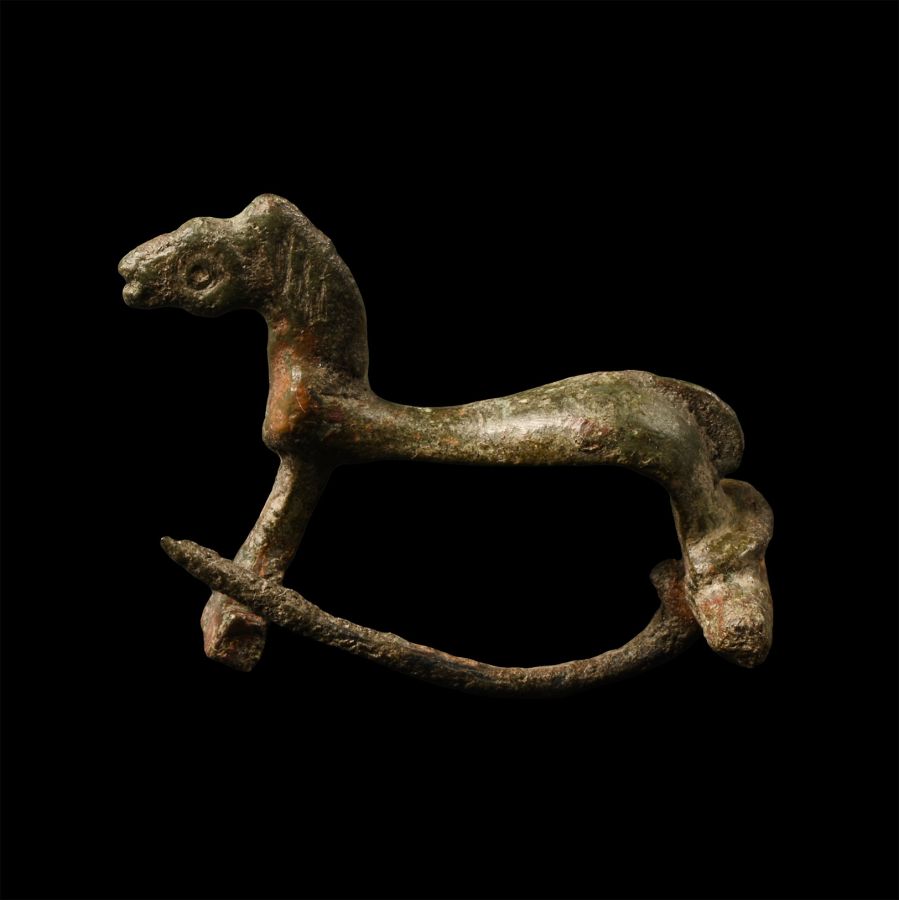
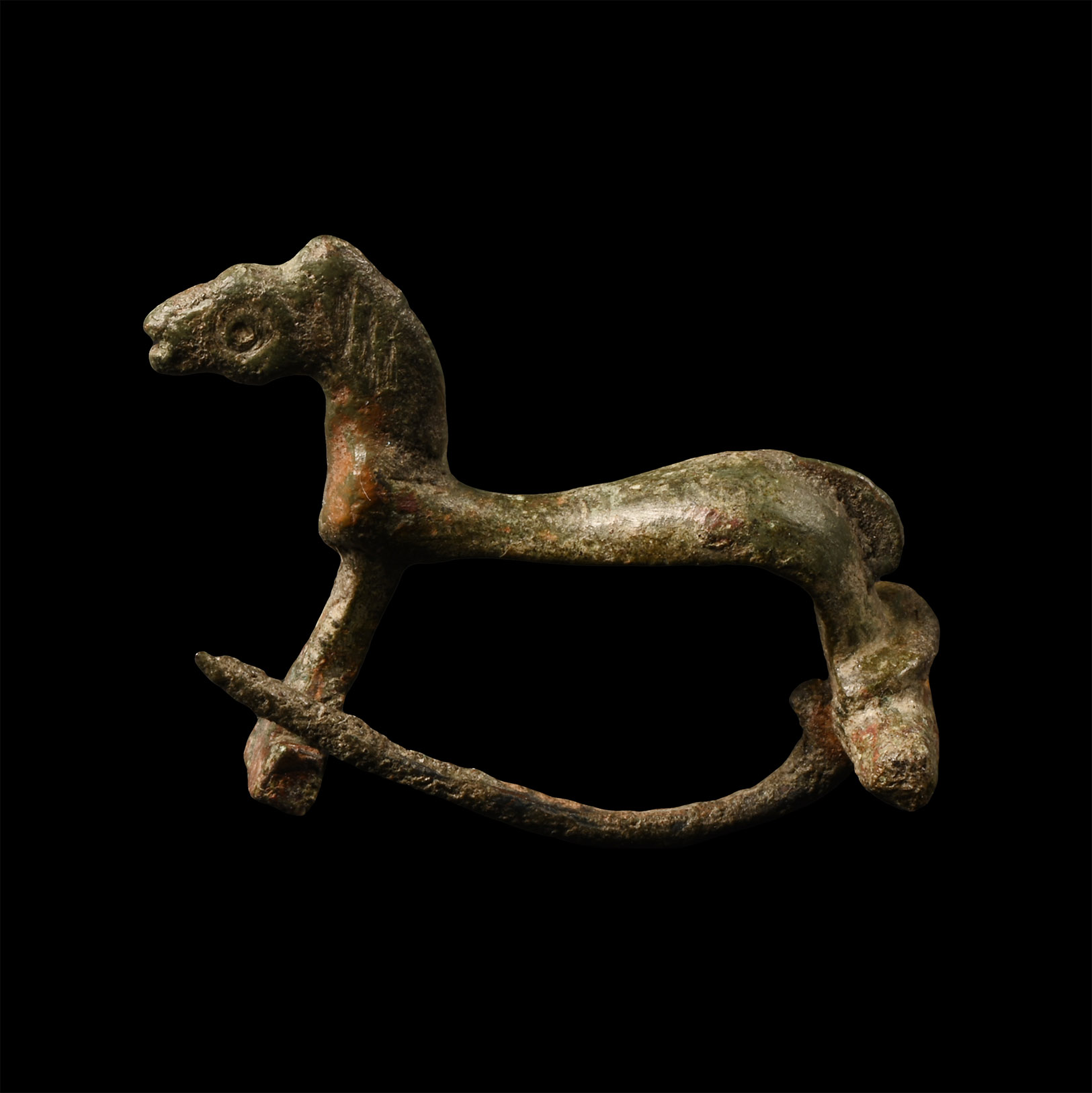
Roman Bronze Horse Brooch
2ND-3RD CENTURY A.D.
1 5/8 in. (9.98 grams, 41 mm).
Bow-brooch with hinged pin and fusiform headplate, the bow formed as the body of a horse with spur forming the arched neck and head, catch for the forelegs. [No Reserve]
ProvenanceFrom a collection acquired on the UK art market from various auction houses and collections mostly before 2000.
From an important Cambridgeshire estate; thence by descent.
Cf. Hattatt, R., Ancient Brooches and Other Artefacts, Oxford, 1989, item 1644, for type.
CONDITIONTimeLine Auctions follows a vetting process to ensure the authenticity and legality of all items, reinforcing our commitment to integrity and responsible trading. Each antiquity, antique, and coin lot undergoes thorough examination by a vetting committee of at least ten external specialists, professional trade association members, scientists, and archaeologists: Our Vetting Process
AUCTIONS:
TimeLine is a leading auction house specialising in antiquities, ancient art, collectables, natural history, coins, medals, and books. Our auctions offer museums, collectors, historians, and enthusiasts the opportunity to acquire unique and historically significant pieces.
-
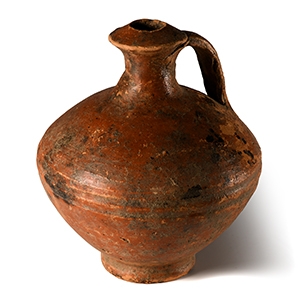
Roman Terracotta Wine Flagon
1st-2nd century A.D.Sold for (Inc. bp): £169
With globular body, thick basal ring, tall columnar neck with biconical collar, single strap handle to the rear. 275 grams, 13.5 cm high
Ex German art market, 2000s. Acquired from an EU collector living in London. From the collection of Surrey, UK, gentleman. -
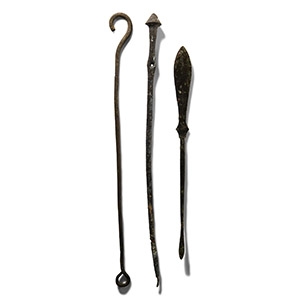
Roman Bronze Implement Group
1st-4th century A.D.Sold for (Inc. bp): £85
Group of three implements comprising: cloak pin with conical bulb finial and piercing; hooked rod; spear-shaped surgical blade with probe to the other end. 104 grams total, 19.7-25.5 cm
From a collection acquired on the UK art market from various auction houses and collections mostly before 2000. From an important Cambridgeshire estate; thence by descent. -
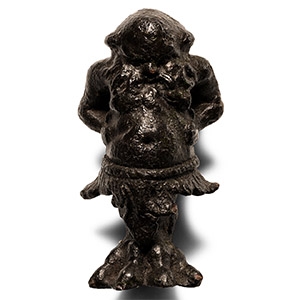
Roman Bronze Silenus Statuette Casket Fitting
2nd century B.C.-1st century A.D.Sold for (Inc. bp): £338
Standing wearing a hide skirt held up with rope, lion's claw foot below. arched bracket to rear. 124 grams, 63 mm
From a collection acquired on the UK art market from various auction houses and collections mostly before 2000. From an important Cambridgeshire estate; thence by descent.
