
Loading, please wait...
LOT 0731
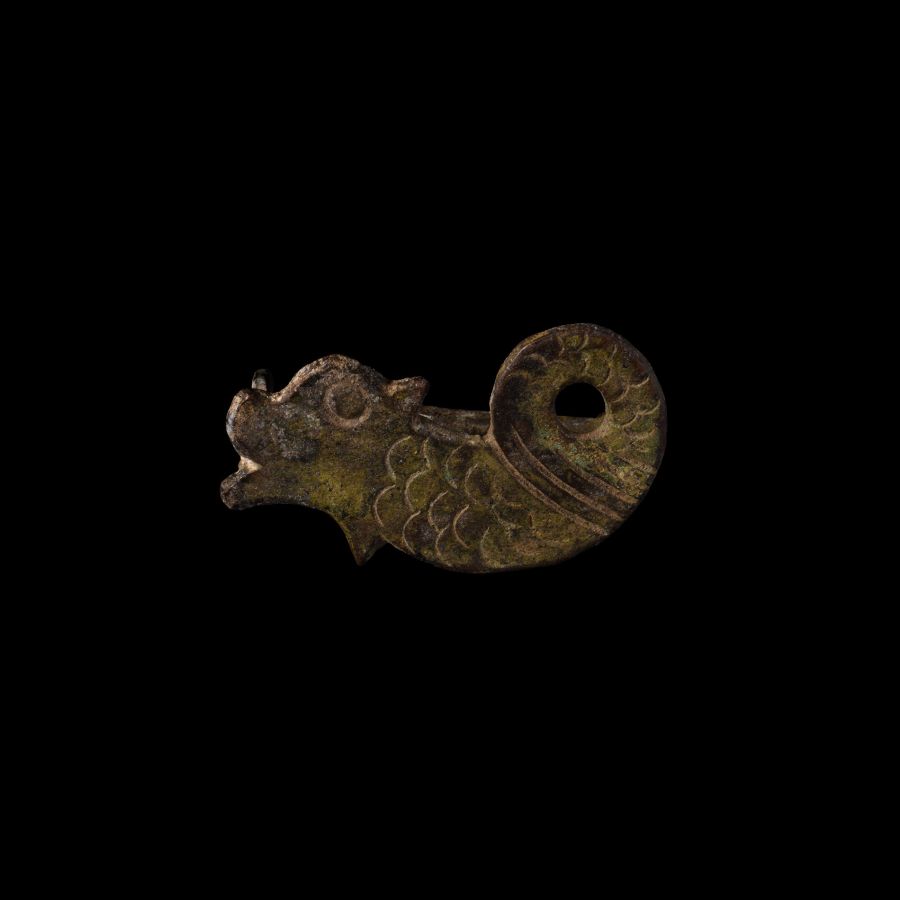
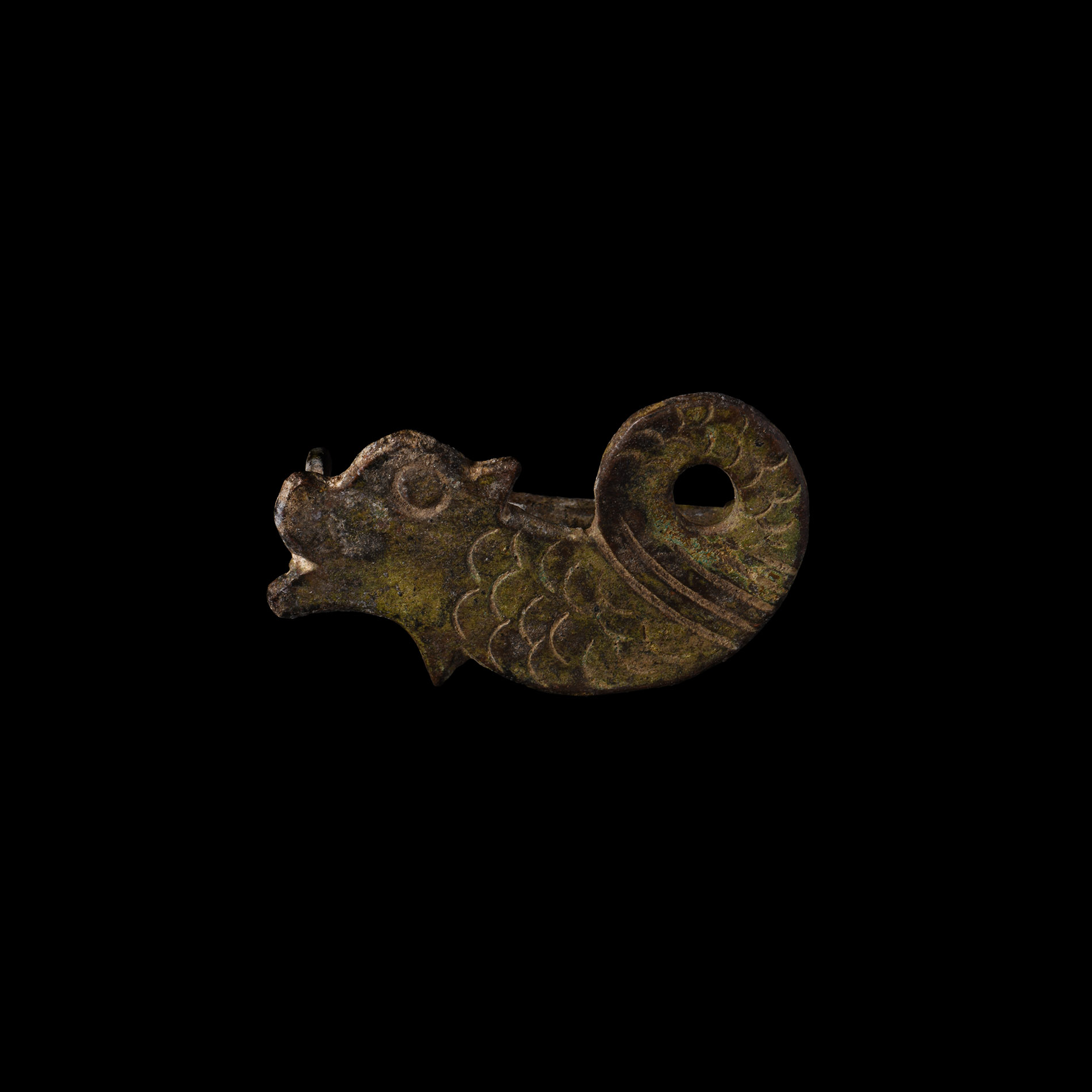
Roman Bronze Hippocamp Brooch
2ND CENTURY A.D.
1 1/2 in. (10.7 grams, 40 mm).
Complete with pin-lugs, pin and catchplate to the reverse; stylised scale detailing. [No Reserve]
ProvenanceAcquired before 1980.
Ex property of a London, UK, collector.
TimeLine Auctions follows a vetting process to ensure the authenticity and legality of all items, reinforcing our commitment to integrity and responsible trading. Each antiquity, antique, and coin lot undergoes thorough examination by a vetting committee of at least ten external specialists, professional trade association members, scientists, and archaeologists: Our Vetting Process
AUCTIONS:
TimeLine is a leading auction house specialising in antiquities, ancient art, collectables, natural history, coins, medals, and books. Our auctions offer museums, collectors, historians, and enthusiasts the opportunity to acquire unique and historically significant pieces.
-
.jpg)
Roman Silver-Gilt Military Strap End
Circa late 3rd century A.D.Sold for (Inc. bp): £624
Comprising scalloped outer faces, shallow dashed borders framing scrolling vines with gilt leaves to one face and horizontal bar of conjoined ellipses with pelta finial and pecked borders to the other, also with gilt elements. 39.8 grams total, 64-65 mm
Ex German art market in the late 1990s. -
.jpg)
Gemstone Group
Roman, circa 1st century A.D. and laterSold for (Inc. bp): £520
Comprising agate, carnelian, jasper and other stones, displaying intaglio busts and scenes including: Hercules wrestling the Nemean lion; female busts in profile; cockerel standing right; seated winged deity; an erotic scene; peacock or other bird; eagle grappling with a snake; two figures, possibly gladiators in combat; each accompanied by a museum-quality impression. 6.97 grams total, 11-15 mm
Ex property of a Bristol family collection formed between 1960-late 1970s. Two from a London collection, UK. -
.jpg)
Roman Blue Glass and Other Mixed Bead Group
Circa 1st century A.D. and laterSold for (Inc. bp): £33
A restrung designer necklace composed of graduated glass beads of various shades of blue, including annular, barrel-shaped, spherical and other types. 16 grams, 60 cm long
Fine condition.
Acquired 1980-2015. Ex Abelita family collection.
